 Posted by
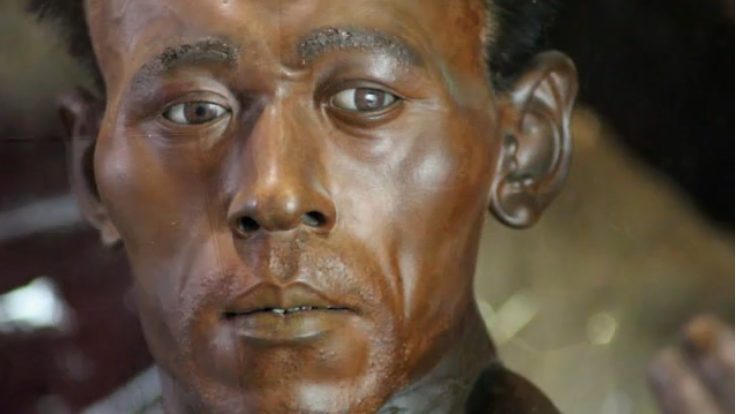
Hananuma Masakichi (1832-1895) was a Japanese sculptor of hyper-realistic dolls. According to legend, convinced he was dying of tuberculosis, in 1885 he created a perfect statue of himself, with his own hair, nails and teeth, to leave to the woman he loved. She left him and he recovered. Today the statue belongs to Ripley’s, but some experts doubt it is really a self-portrait.
In the dark depths of macabre art, few works can boast a story as compelling as that of Masakichi’s statue.
Hananuma Masakichi, a talented 19th-century Japanese sculptor, was a man destined to become a legend. When misfortune knocked on his door in the form of an incurable illness, his ardent and desperate love for a woman drove him to an extreme decision. He longed to create a work of art so real, so lifelike, that it could take his place in his beloved’s heart after his inevitable death.
And indeed, when he posed beside it, people struggled to tell who was the man and who was the work of art.
A dark creation
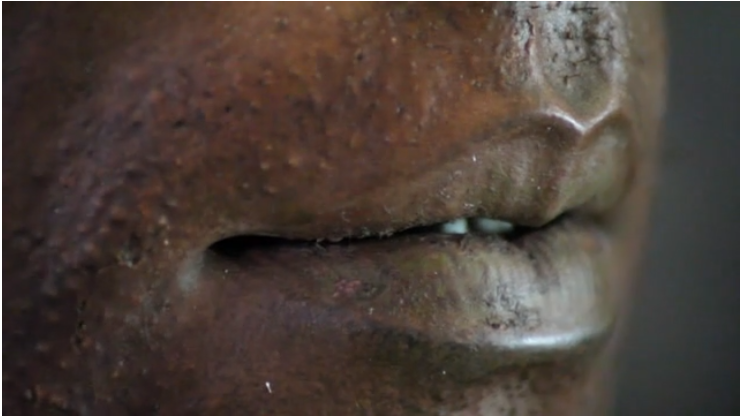
For three long and tormented years, Masakichi was obsessed with creating a perfect replica of himself. The artistry of Masakichi’s statue lies in its astonishing precision and realism, the result of a painstaking and meticulous process. Using his own body as a model, Masakichi studied himself intently through a series of mirrors, devoting countless hours to carving every detail. The statue is not carved from a single block; every detail was carved onto small pieces of wood, which were then joined without nails using dovetail joints and glue. Every vein, fold, and wrinkle of the skin was recreated with maniacal obsession.
But what made the statue so unsettling in its authenticity were the personal details the artist incorporated: his own hair was implanted onto the sculpture’s skull, the pores carved one by one with corresponding hairs implanted on the statue, and it is said that he even gave the statue his own fingernails, tearing them out, and his teeth. At least, that’s what the legend says.
This almost masochistic dedication to his art transformed the statue into something more than a mere representation; it became a fragment of his very essence, a hybrid of wood and man that continues to inspire both dread and admiration.
Masakichi, in his wooden form, seems alive; every vein, crease, and imperfection of the skin is rendered with almost unnatural precision. Eventually, he carved and painted glass eyes virtually identical to his own, as well as a pair of glasses.
But the true horror lies in the reason for its creation: a tribute to his beloved, an eternal representation of his love, destined to last far beyond death.
Masakichi Statue – the idea behind the creation
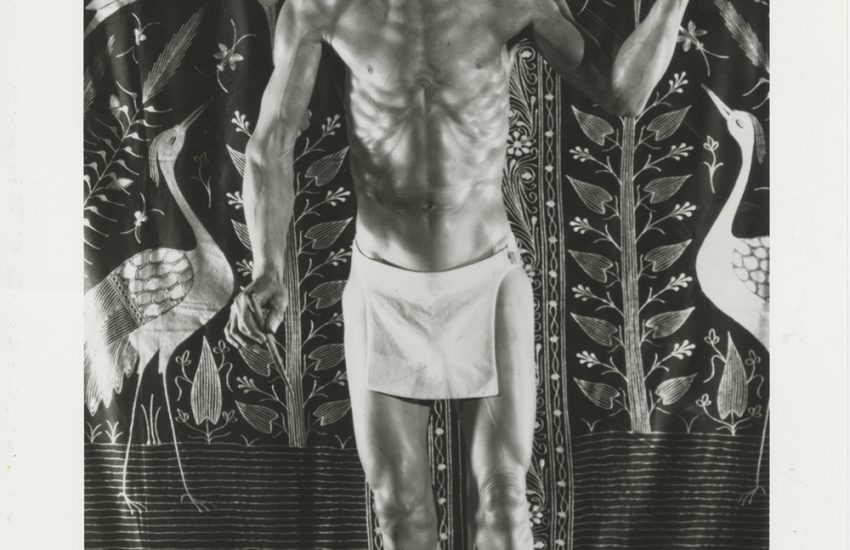
Behind the creation of his statue lies a love story as intense as it is tragic. Hananuma Masakichi, suffering from an illness he believed to be fatal, was overwhelmed by the thought of leaving his beloved alone in the world. Consumed by the idea of his imminent passing and driven by a burning desire never to be forgotten, he decided to sculpt a perfect replica of himself. This was not merely an artistic gesture, but an offering of love: he wanted to leave her an “eternal” version of himself, a tangible presence that could replace his physical absence. Thus, every carved detail, every implanted hair, every nail and tooth incorporated into the statue, was a message of love and eternity for his beloved, a way to ensure that his presence would remain by her side, in some form, forever.
A painful rejection
But as in every story of love and obsession, there is a tragic twist. After all the effort and pain that went into its creation, the woman for whom it was intended rejected it. Unable to bear the sight of that all-too-real replica, she left Masakichi and his “creation” to a fate of solitude.
According to the legend the artist believed he had tuberculosis, but he did not die. He recovered, lived another ten years, lost his beloved and died in poverty in 1895.
Legend or reality?
Hananuma Masakichi, born in 1832, was a sculptor specialising in iki-ningyo, the hyper-realistic “living dolls” that in 19th-century Japan were displayed to paying audiences, a bit like today’s waxworks. He had learned the craft in Tokyo in the 1870s, and several of his works ended up in American and British collections. The statue, completed in 1885, is life-size and shows him naked but for a loincloth, holding a small mask, the symbol of his trade. Not a single joint is visible, and the glass eyes are anatomically perfect.
Not everyone believes the love story, though. Some experts point out that there was no tradition of self-portraiture in Japan at the time, and that the statue may simply be a hyper-realistic doll, not necessarily with the sculptor’s face. The hair is probably real, but not necessarily his: back then it could be bought in shops. Articles of the period called it a self-portrait but said nothing of the illness or the beloved. Those details would appear later, in advertisements.
The statue’s journey
Between about 1895 and 1906 the statue was displayed in San Francisco, in a bar called the Art Saloon. That is where Robert Ripley saw it, fell in love with it, but couldn’t afford to buy it. By the time he became famous with his Believe It or Not!, the statue had vanished. He searched for it for years and in 1934, after the owner’s death, finally managed to buy it for just $10. It immediately became his favourite piece: he sent it to the Chicago World’s Fair and sometimes, at night, put it in guest rooms to scare his visitors.
In 1994 the statue was damaged in the Northridge earthquake in California: it stood on a rotating platform and the quake threw it off. It took four months of restoration to put it right. Today, according to Ripley’s, the original is in Ripley’s Odditorium in Amsterdam, on Dam Square, while a replica is shown in London. A warning to anyone who dares to challenge the boundaries of love, life, and death.
The statue of Masakichi reminds us that the most unsettling stories can arise from human truths and earthly passions. A creation that, in its strange and macabre beauty, continues to torment and fascinate anyone who meets its gaze.
🦋 Emadion lives through its readers. If this story kept you up at night, buy me a coffee: it helps me bring you the next nightmare.
☕ Support Emadion on Ko-fi