 Posted by
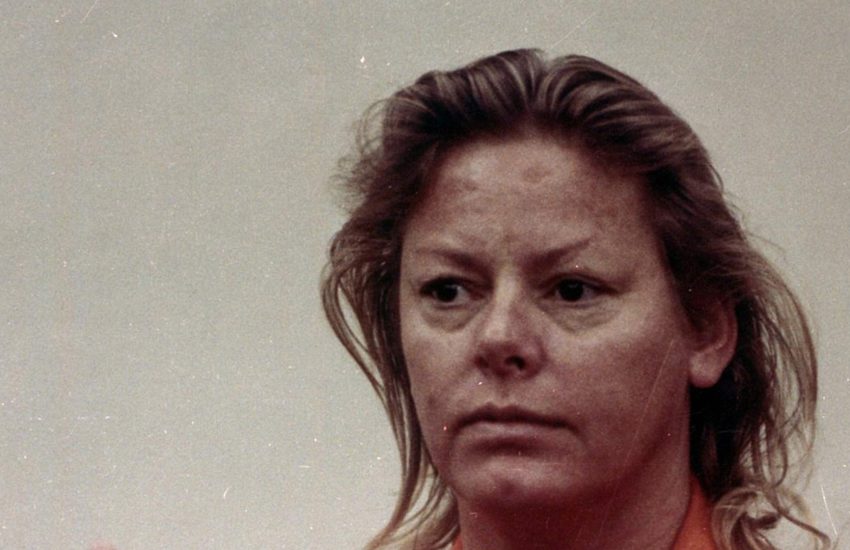
Aileen Wuornos (1956-2002) killed seven men in Florida between 1989 and 1990, clients who had picked her up while she was working as a prostitute along the highways. She claimed she had defended herself against rape attempts, but later admitted killing them to rob them. Given six death sentences, she was executed on 9 October 2002.
Aileen Wuornos, born on February 29, 1956, in Rochester, Michigan, became one of the most notorious serial killers in the United States, so much so that she is often, wrongly, called “America’s first female serial killer”. Between 1989 and 1990, she killed seven men in Florida, all of whom were clients who had picked her up while she was hitchhiking and working as a prostitute.
Her victims included Richard Mallory, David Spears, Charles Carskaddon, Troy Burress, Dick Humphreys, Walter Antonio, and Peter Siems (whose body was never found). Wuornos claimed she acted in self-defense, stating that the men had attempted to rape her. However, evidence and subsequent confessions revealed that many of the murders were premeditated and related to robberies.
Her childhood was marked by abandonment and abuse: her father, whom she never knew, died in prison, her mother left her with her grandparents and she suffered violence at home. At 14 she became pregnant and soon afterwards ended up living in the woods, surviving through prostitution and petty crime.
Arrested in 1991, she was sentenced to death in 1992 and executed on October 9, 2002. Her case raised questions about gender violence, mental health, and capital punishment, becoming a global media phenomenon.
Childhood and adolescence, a beginning marked by trauma
Aileen Carol Pittman was born on February 29, 1956, in Rochester, Michigan, to a family already marked by hardship. Her mother, Diane Wuornos, was only 15 when she gave birth to her. Her father, Leo Dale Pittman, was in prison for sex crimes against a child; Aileen never met him and he died by suicide in prison in 1969. At 4, Aileen and her brother Keith were abandoned by their mother and left with their maternal grandparents, Lauri and Britta Wuornos, who legally adopted them.
The home environment was devastating. Her grandfather was an alcoholic and violent, and according to Aileen she suffered mistreatment and abuse from him from an early age. Her grandmother, also an alcoholic, died in 1971. While still a young girl Aileen was sexually exploited, at 14 she became pregnant and the baby was given up for adoption. At 15 her grandfather threw her out of the house and she went to live in the woods of Michigan, surviving on occasional prostitution and petty theft.
These childhood traumas—abuse, abandonment, and sexual exploitation—laid the foundation for her emotional instability and future criminal life.
The encounter with Tyria Moore and the toxic relationship
In 1986, Aileen Wuornos met Tyria Moore, a 24-year-old woman, in a gay bar in Daytona Beach. Moore worked as a cleaning lady in a motel, while Wuornos prostituted herself along the highways of Florida. The two began a romantic relationship and moved in together, living in cheap motels and occasional makeshift shelters.
Wuornos supported the couple with her earnings from prostitution, while Moore stopped working, becoming increasingly financially dependent on her partner. According to Wuornos’ confessions, it was during this period—between 1989 and 1990—that she began killing, robbing her victims to pay for rent and living expenses.
Moore, while not physically participating in the murders, was aware of Wuornos’ criminal activities. After some of the murders, Wuornos would tell her that she had “found a dead body” or that she had acted in self-defense. When the police began investigating, Moore fled to Pennsylvania but was tracked down in January 1991.
In exchange for immunity, she cooperated with investigators, recording phone calls in which Wuornos confessed to the murders. These confessions were decisive in Wuornos’ arrest and conviction, while Moore disappeared from the public eye after the trial.
The trail of blood: the murders of Aileen Wuornos (1989-1990)
Between December 1989 and November 1990, Aileen Wuornos killed seven men in Florida, all of whom were clients she picked up while working as a prostitute along the highways. Each murder followed a similar pattern: after they got into her car, she drove them to isolated locations, shot them, and stole their belongings.
1. Richard Mallory (November 30, 1989)
First victim, 51, owner of an electronics store in Clearwater. Wuornos claimed he had beaten and raped her and that she killed him in self-defence. It later emerged that Mallory had previously been convicted of attempted rape in Maryland, but Wuornos did not mention this until her trial. His car was found abandoned two days later, his body on 13 December in a wooded area, shot several times. Two bullets to the left lung killed him.
2. David Spears (body found June 1, 1990)
A 47-year-old construction worker from Winter Garden, missing since 19 May. He was found naked along US 19, in Citrus County, shot six times with a .22 pistol.
3. Charles Carskaddon (body found June 6, 1990)
A 40-year-old part-time rodeo worker, killed on 31 May with nine shots. His naked body, wrapped in an electric blanket, was badly decomposed. Witnesses saw Wuornos with his car, and she pawned a gun that belonged to him.
4. Peter Siems (June-July 1990)
A 65-year-old retired merchant seaman who left Jupiter, Florida, for Arkansas in June. On 4 July his car was found in Orange Springs: Moore and Wuornos were seen abandoning it after a crash, and Aileen’s handprint was on the inside door handle. His body has never been found.
5. Troy Burress (missing July 31, 1990, found August 4)
A 50-year-old sausage salesman from Ocala, found in a wooded area along State Road 19 in Marion County, shot twice.
6. Dick Humphreys (killed September 11, 1990)
Charles Richard “Dick” Humphreys, 56, a retired US Air Force major, former state child abuse investigator and former police chief. He was found the next day in Marion County, fully clothed, shot seven times in the head and torso. Wuornos used his credit card after the murder.
7. Walter Antonio (body found November 19, 1990)
A 61-year-old trucker, security guard and reserve police officer, found nearly naked near a remote logging road in Dixie County, shot four times. His car was found five days later in Brevard County. This was the last murder before her arrest.
Wuornos initially justified each murder as self-defense, but later admitted: “I killed them to steal. Period.” The victims were chosen at random, and their personal belongings (watches, tools, jewelry) were sold to finance her life with Tyria Moore. The last body, that of Antonio, was discovered just 51 days before the police captured her.
Arrest and confession
Aileen Wuornos was arrested on January 9, 1991, at the Last Resort, a biker bar in Port Orange, Florida. The police identified her thanks to fingerprints left on receipts from pawn shops where she had sold items stolen from her victims, including a camera and radar detector belonging to Richard Mallory.
The role of Tyria Moore
Tyria, Wuornos’s partner, played a crucial role. After fleeing to Pennsylvania, she was persuaded to cooperate with investigators. Under police supervision, she called Wuornos from Florida, pretending to be in danger. In those recorded phone calls, Wuornos gradually admitted to the murders, saying, “I had to do it, they were going to report me.”
The final confession
On January 16, 1991, Wuornos signed a detailed confession. She described each murder, initially claiming that all of the victims had attempted to rape her. However, inconsistencies emerged:
- Some men were shot in the back, with no signs of a struggle.
- The bodies were systematically stripped and robbed.
She later partially recanted: “Only Mallory raped me. The others… I wanted their money.”
The overwhelming evidence
In addition to the confessions, police found:
- The murder weapon (a .22 caliber pistol) thrown into a lake.
- The victims’ personal belongings in a storage unit rented by Wuornos.
The arrest put an end to a wave of panic in Florida, but the case was only just beginning. The confessions, albeit contradictory, became the basis for six death sentences.
The Trial and Death Sentence
The trial for the murder of Richard Mallory began on January 14, 1992, in Daytona Beach, Florida. Wuornos, represented by court-appointed attorneys, initially maintained a self-defense argument, claiming that Mallory had raped her. However, the prosecution presented overwhelming evidence:
- Ballistic evidence: the bullets found in the victims’ bodies matched her gun.
- Testimony: Tyria Moore confirmed that Wuornos had planned the robberies after the murders.
- Physical evidence: The victims’ personal belongings were found in her storage unit.
On January 27, 1992, the jury found her guilty of first-degree murder and armed robbery. During sentencing, Wuornos insulted the jurors, shouting, “I hope you get raped!”
On January 31, 1992, the judge sentenced her to death. In the following months, Wuornos pleaded guilty to five more murders (Burress, Humphreys, Spears, Carskaddon, and Antonio), receiving five more death sentences. There was no trial for the murder of Siems, as the body was never found.
On October 11, 2001, Wuornos waived all appeals, stating: “I am a serial killer, I would kill again. There is no point in keeping me alive.” Her execution was set for October 9, 2002.
The execution of Aileen Wuornos
Aileen Wuornos was executed by lethal injection on October 9, 2002, at the Florida State Prison in Starke. At 9:47 a.m., after refusing the traditional last meal, she accepted only a cup of coffee.
Before the execution, she was given her last words: “Yes, I’m sailing with the Rock and I’ll be back, like Independence Day with Jesus. I’ll be back, like in the movie, with the big mother ship,“ a biblical and cinematic reference that left those present perplexed.
The procedure lasted 6 minutes. Wuornos, strapped to the execution table, initially grimaced at the witnesses, then closed her eyes after the injection. The victims’ families, who were present at the execution, commented: ”She died too easily compared to what she did.” .
She was the tenth woman executed in the US since 1976 and the second in Florida after Judy Buenoano (1998). Her ashes were scattered in Michigan by her childhood friend Dawn Botkins.
The cultural impact of Aileen Wuornos
The case of Aileen Wuornos has left a deep mark on popular culture and legal debate. Her story has been the subject of numerous works, including:
- Film: Monster (2003) starring Charlize Theron, who won an Oscar for her performance
- Documentaries: two works by Nick Broomfield (The Selling of a Serial Killer and Life and Death of a Serial Killer)
- Opera: Wuornos by Carla Lucero, performed in San Francisco in 2001
The case has reignited discussions on:
- Death penalty: Wuornos was the tenth woman executed in the US since 1976
- Mental health: her documented psychological disorders (borderline and antisocial personality)
- Gender-based violence: the controversial relationship between prostitution and self-defense
🦋 Emadion lives through its readers. If this story kept you up at night, buy me a coffee: it helps me bring you the next nightmare.
☕ Support Emadion on Ko-fiSources
- Aileen Wuornos, Wikipedia
- Nick Broomfield, Aileen. Life and Death of a Serial Killer, documentary, 2003