 Posted by
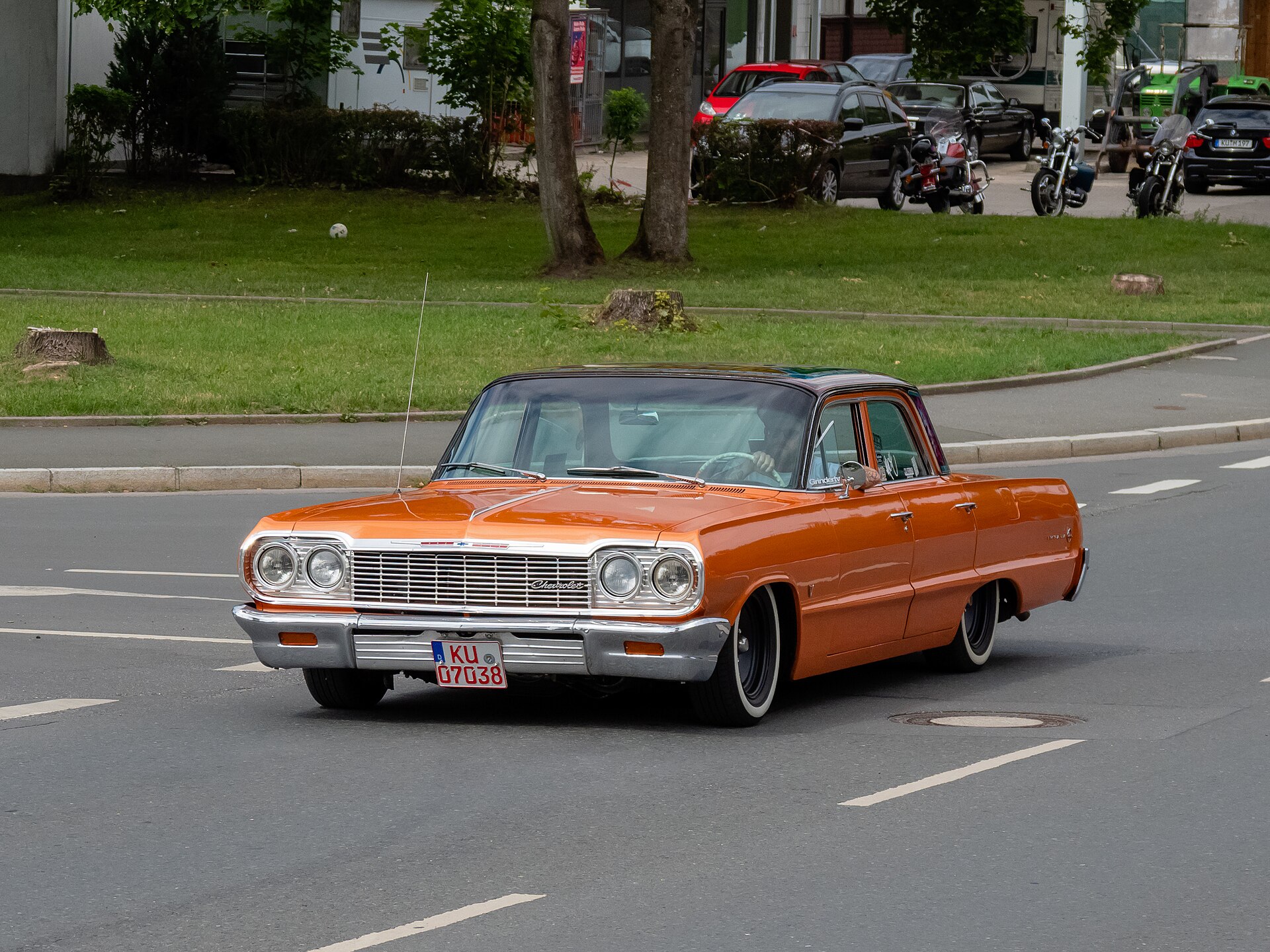
On 9 April 1982 in Lawrenceville, Georgia, Angela Cavallo lifted a 1964 Chevrolet Impala that had fallen on her son Tony by a few centimetres, allowing a neighbour to put the jacks back and pull him out. It is the most famous example of so-called “hysterical strength”, which science explains with adrenaline but has never been able to measure.
Some stories sound like legends, tales passed down to impress, and yet they really happened. One of them is the story of Angela Cavallo, an American mother who in 1982, faced with her son trapped under a car, found a strength inside herself that still has doctors and scientists talking.
Over the years the story has been told a thousand times, often with wrong or exaggerated details. Let’s try to reconstruct what really happened, and what it actually tells us about the human body.
Lawrenceville, Good Friday 1982
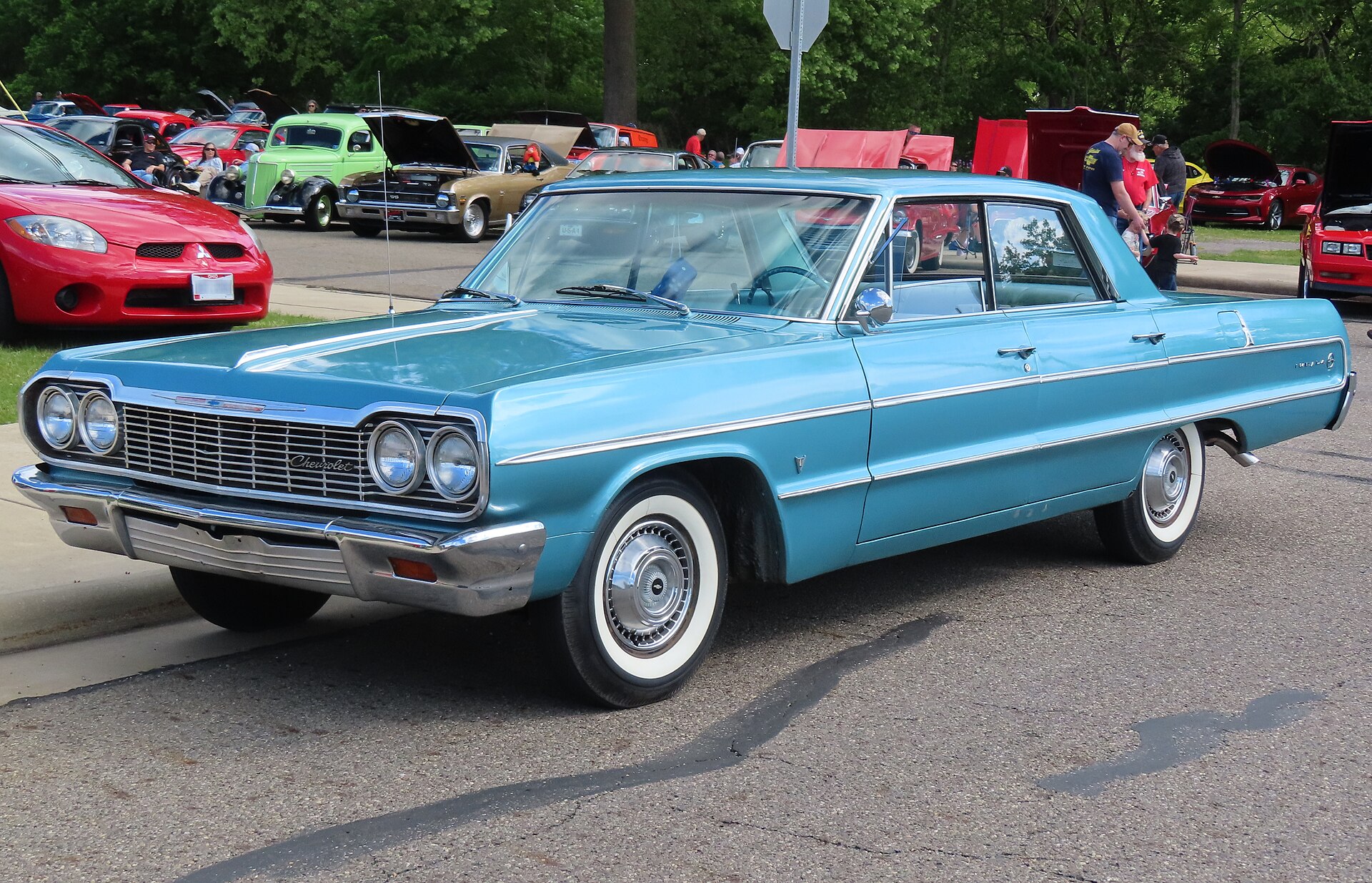
It is 9 April 1982, Good Friday. We are in Lawrenceville, a town in Gwinnett County on the outskirts of Atlanta, Georgia. In the Cavallo family’s driveway sits a 1964 Chevrolet Impala, a big American sedan weighing almost 1,700 kilograms (about 3,700 pounds). Underneath it, working on the suspension, is Tony, Angela’s teenage son.
Tony has raised the car on a jack and removed one of the rear wheels. Something is stuck. He pulls, pushes and shakes the part to free it. That very movement makes the car slip off the jack. The Impala drops suddenly and Tony is trapped under the rear wheel well: from outside, only the lower half of his body is visible. He has lost consciousness.
What saves him in those first moments is a mechanical detail: the space inside the wheel well keeps him from being completely crushed. But the car’s weight is pressing down on him, and time is running out.
Five minutes
The alarm is raised by a neighbourhood boy, who runs to the kitchen door. Angela rushes outside. She is no athlete: she is in her late fifties, about 5 feet 8 inches tall, sturdily built, a woman used to hard work but nothing more. She sees her son’s legs sticking out from under the car and doesn’t stop to think.
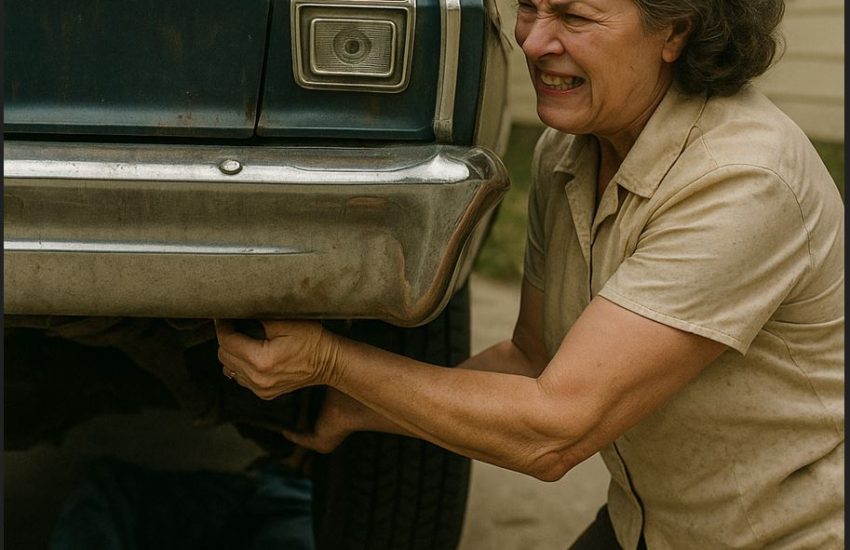
She grabs the side of the car with both hands and pulls up. According to the Associated Press, which reported the story a few days later, she raised it about four inches. Years later she would say she doubted it was that high, but it was enough to take the weight off Tony’s body.
And she holds it there. By her own recollection, she keeps the car raised for about five minutes. Meanwhile two neighbours run over, put the jack back under the car and drag the boy out. Angela would later say she remembers almost nothing of the rescue: only the effort, and the fear.
Tony is taken to hospital. He will make a full recovery.
From local news to legend
The story reached the papers on 14 April 1982 through an Associated Press wire, and from there it spread across the United States. A mother lifting a car to save her son: it is the kind of news people clip and keep, that preachers retell in sermons, that ends up in collections of “incredible but true” stories.
Over time, though, the details became distorted. In many versions the accident happens in another town, on Mother’s Day, or Angela lifts the whole car off the ground like a superhero. In reality things went in a less spectacular but perhaps more interesting way: an ordinary woman lifted part of a very heavy car by a few inches and held it up long enough to save a life.
American columnist Cecil Adams, author of the famous The Straight Dope column that debunks myths and urban legends, decided to check. He tracked Angela down, interviewed her by phone and found the original AP story. His conclusion was cautious: the story sounded like an urban legend, but it wasn’t one. It really happened.
What is “hysterical strength”?
Angela Cavallo’s case has become the most cited example of what is known as “hysterical strength”: the ability, in situations of extreme danger, to perform physical feats that would seem impossible under normal conditions. The name comes from the old diagnosis of “hysteria”, whose supposed symptoms included unusual strength.
Does it really exist? The honest answer is: partly yes, but not in the way we imagine.
As early as 1961, two researchers, Michio Ikai and Arthur Steinhaus, published a now-famous experiment in the Journal of Applied Physiology. They measured the maximum strength of volunteers’ arm muscles and then tried to “unlock” it with various stimuli: a sudden noise, a shout, alcohol, adrenaline, amphetamines, even hypnosis. In some conditions strength increased on average by more than 25-30%. Their conclusion was that our usual limit is not our real one: it is a “learned” limit, a kind of safety brake.
Adrenaline, brakes and leverage
Today the most widely accepted explanations are three, and they probably work together.
- Adrenaline. In a dangerous situation the body releases adrenaline and other stress hormones. The heart beats harder, breathing speeds up, muscles get more blood and more energy. Exercise physiologist William Kraemer of the University of Connecticut estimates that under these conditions muscles can become 5-15% stronger: a lot, but not enough to turn an ordinary person into a weightlifter.
- The brain’s “brake”. According to the “central governor” theory, proposed among others by South African physiologist Tim Noakes, the nervous system never lets us use all our muscle fibres at once, to protect muscles, tendons and bones. In an extreme emergency that brake may loosen for a few moments, at the risk of injury.
- The physics of the car. Nobody really lifts an entire car. A car’s weight is spread over four wheels, and lifting one side or corner moves only a fraction of the total, using the wheels still on the ground as a pivot. In Angela’s case she only needed to raise the rear of one side by a few inches. That is still several hundred kilograms.
There is also another interpretation, less spectacular but perhaps closer to the truth. A doctor consulted by Cecil Adams pointed out that an adrenaline rush rarely lasts five minutes. In his view, Angela’s feat was not so much a burst of superhuman strength as an extraordinary endurance of pain and fatigue: the ability not to let go when every muscle in the body is begging to. Many people involved in similar episodes later report torn muscles, injured backs and days of pain.
She was not the only one
Since Angela Cavallo, newspapers around the world have reported dozens of similar cases. Some of the best known:
- Tucson, Arizona, 2006. Tom Boyle sees a Chevrolet Camaro hit an 18-year-old, Kyle Holtrust, and drag him under its body. Boyle lifts the car enough for the driver to pull the young man out.
- Ivujivik, Quebec, 2006. Lydia Angiyou confronts a polar bear bare-handed as it threatens her seven-year-old son and his friends, holding it off until a hunter arrives with a rifle.
- Glen Allen, Virginia, 2012. Lauren Kornacki, 22, lifts a BMW that had fallen off a jack onto her father, then performs CPR and saves his life.
- Virginia, 2016. Teenager Charlotte Heffelmire lifts a pickup truck that had pinned her father in the family garage and drags him out as the vehicle catches fire.
They are different stories, but with one thing in common: almost always, the person performing the feat is saving someone they love, or someone in mortal danger right in front of them.
From the news to the comics
Stories of mothers lifting cars have also left their mark on pop culture. Comic book artist Jack Kirby said in a 1990 interview that he came up with the Incredible Hulk after seeing a mother lift a car to save her child; his former assistant Mark Evanier, however, has always doubted the anecdote. And the TV series Warehouse 13 even invented an “artifact” inspired by Angela Cavallo: a piece of her car’s bodywork that gives superhuman strength to whoever touches it.
A sign that what happened in Lawrenceville has become, to all intents and purposes, a modern legend. With one difference from the others: this one really happened.
The limit we don’t know
Angela Cavallo was not a superhero, and she did not lift a car off the ground like in the movies. She did something more human: she raised the weight crushing her son by a few inches and held it up, minute after minute, until someone managed to pull him out.
Science tells us that inside each of us there is a reserve of strength that usually stays locked away, to protect us. We don’t know exactly how big it is, or what it takes to unlock it. Perhaps that is just as well. But Angela’s story reminds us that, at certain moments, the human body can surprise even the person who lives in it.
🦋 Emadion lives through its readers. If this story kept you up at night, buy me a coffee: it helps me bring you the next nightmare.
☕ Support Emadion on Ko-fiSources
- SuperMom: Could a mother actually lift a car to save her child? – The Straight Dope
- Hysterical strength – Wikipedia
- FYI: Can a Woman Really Lift a Car Off Her Pinned Child? – Popular Science
- Angela Cavallo’s Car Fender – Warehouse 13 Artifact Database