 Posted by
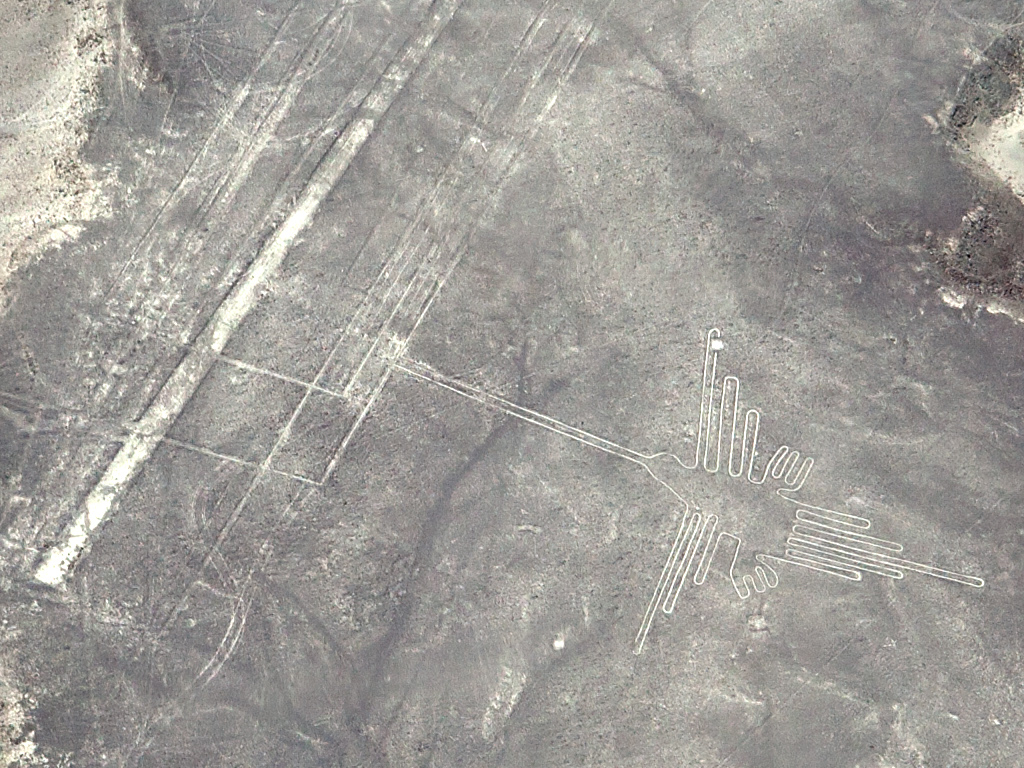
In the heart of the Peruvian desert, about 400 kilometres from Lima, lies one of archaeology’s greatest riddles: the Nazca Lines. Gigantic geoglyphs etched into the ground between 500 BC and AD 500, they depict animals, plants, geometric shapes and even a mysterious humanoid figure nicknamed “the astronaut”.
These works, which can only truly be appreciated from above, raise questions that have been debated for almost a century: why were they made? How did an ancient civilisation draw such immense shapes so precisely? And who were they meant for?
Declared a UNESCO World Heritage Site in 1994, the Nazca Lines still divide scholars and enthusiasts. And in recent years artificial intelligence has led to the discovery of hundreds of new ones.
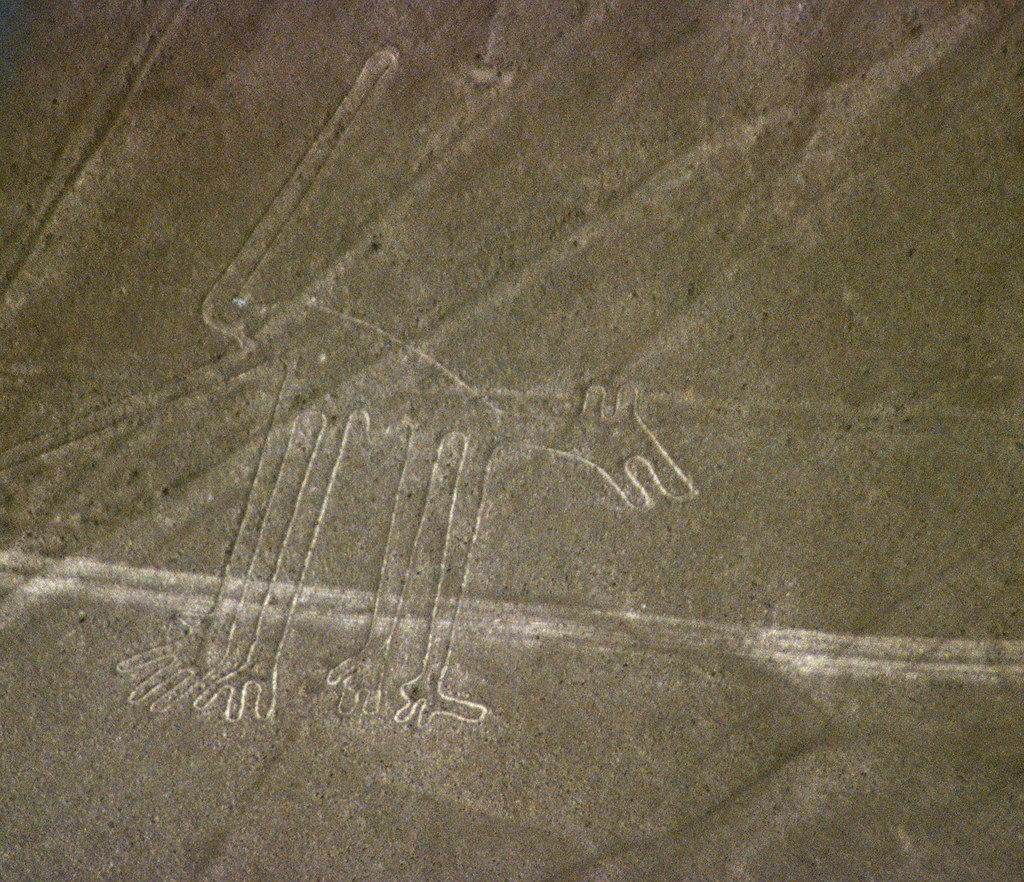
The Nazca Lines are geoglyphs made by the Nazca culture in the desert of southern Peru between 500 BC and AD 500, by removing the dark stones to expose the pale ground beneath. They depict lines, geometric shapes, animals and human figures. Thanks to artificial intelligence, hundreds of new geoglyphs have been discovered since 2019: in 2025 the known total reached 893.
The discovery of the Nazca Lines
For centuries the lines lay hidden in plain sight. The first to notice them carefully, in the 20th century, were Peruvian military and civilian pilots. In 1927 Peruvian archaeologist Toribio Mejía Xesspe spotted them while hiking in the foothills and discussed them at a conference in Lima in 1939.
The first to really study them was the American historian Paul Kosok. In 1940–41 he was in Peru to study ancient irrigation systems; he flew over the lines and realised that one of them was shaped like a bird. Another chance observation showed him that some lines converged on the horizon where the sun set at the southern winter solstice. He brought in the German mathematician and archaeologist Maria Reiche, who lived in Lima.
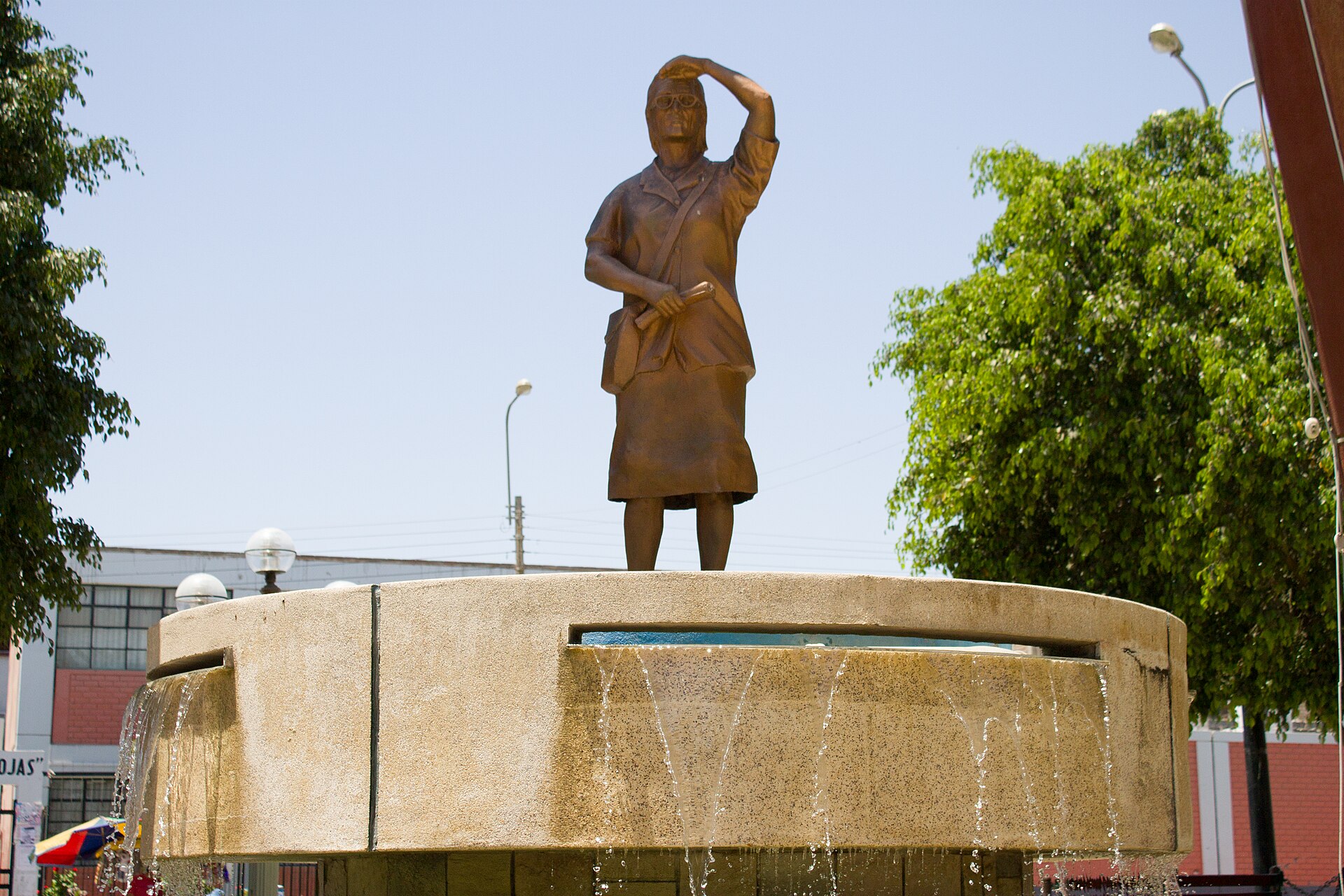
Reiche devoted the rest of her life to the lines. She cleaned them, measured them, documented them one by one, earning the nickname “the Lady of Nazca”, and fought to protect them. Archaeologists working at Nazca today still regard her as the starting point of everything.
How they were made
The Nazca desert is covered with dark stones rich in iron oxide. The Nazca made their drawings by removing those stones to uncover the pale ground beneath. In one of the driest places on Earth, with almost no wind or rain, those furrows have survived for two thousand years.
The biggest mystery has always seemed to be the how: how do you draw figures hundreds of metres long without seeing them from above? In fact the answer is simpler than it seems. Stakes, ropes and some calculation are enough. The American investigator Joe Nickell, an expert on mysteries and myths, reproduced some of the figures using only tools and techniques available to the Nazca, disproving the idea that an “impossible” technology was needed.
The enigmatic Nazca “astronaut”
Among the hundreds of geoglyphs, one has a special aura: the figure known as “the Astronaut”. About thirty metres tall and carved into a hillside, it shows a being with a round head, two large eyes and one arm raised as if waving. Its appearance has fuelled the wildest theories about ancient contact with aliens.
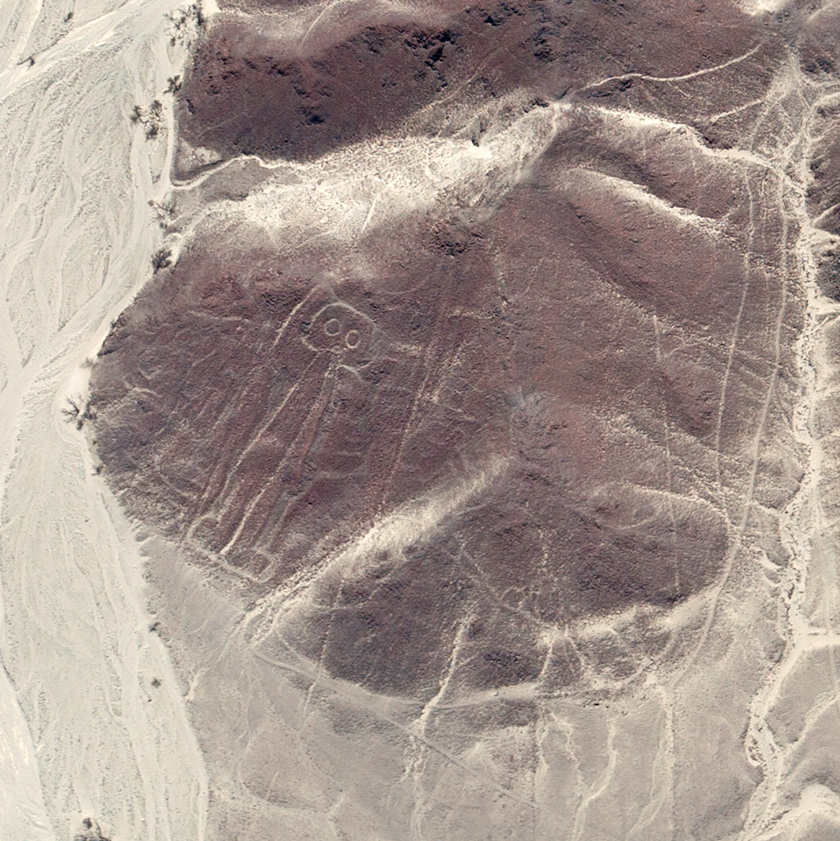
Archaeologists offer more earthly explanations: it might represent a shaman, a deity or even an owl-man, as its other nickname, “Owlman”, suggests. Its position on a slope, unlike the figures on the plain, hints at a particular ritual meaning.
Theories and interpretations
The astronomical calendar. Kosok and Reiche believed the lines were astronomical markers, showing on the horizon where the sun and other celestial bodies rose on significant dates. Later studies, however, showed that only some lines actually correspond to celestial events.
Ritual paths and water. In such an arid region survival depended on water. In 1985 archaeologist Johan Reinhard showed that the worship of mountains and water sources was central to Nazca religion: in his view the lines and figures were linked to the cult of water and fertility and to the sacred mountains, and were walked during rituals.
Aliens. In the late 1960s Swiss writer Erich von Däniken, in his bestseller Chariots of the Gods?, suggested the lines were landing strips or signals for visitors from space. An idea that captured the public imagination, but has no scientific support.
Artificial intelligence and new discoveries
In recent years the study of the lines has taken a huge leap thanks to the research team at Yamagata University in Japan, led by archaeologist Masato Sakai, which has been working at Nazca since 2004. In collaboration with IBM, the team trained an AI system to analyse thousands of high-resolution aerial photographs and flag spots where unknown geoglyphs might lie. Each candidate is then checked on the ground, on foot.
The results have been astonishing. In September 2024 the journal PNAS published the discovery of 303 new figurative geoglyphs, found in a matter of months: almost as many as had been found in the entire previous century. In July 2025, at Expo Osaka, the team announced another 248, bringing the known total to 893. The new figures include humans, llamas, birds, a killer whale holding a knife and a series of human sacrifice scenes, including a priest carrying a human head. According to Sakai, hundreds of spots remain to be checked, and the geoglyphs could exceed a thousand.
The new discoveries have also clarified an important point. The large line-type figures, hundreds of metres long and mostly depicting wild animals, cluster around Cahuachi, the great ceremonial centre of the Nazca culture. The small “relief-type” figures, usually about ten metres long and made of light and dark areas, lie instead along ancient footpaths, as if telling stories to passers-by. For Sakai the geoglyphs are not isolated artworks, but a way of conveying the faith and memories of those who made them.
The challenge of conservation
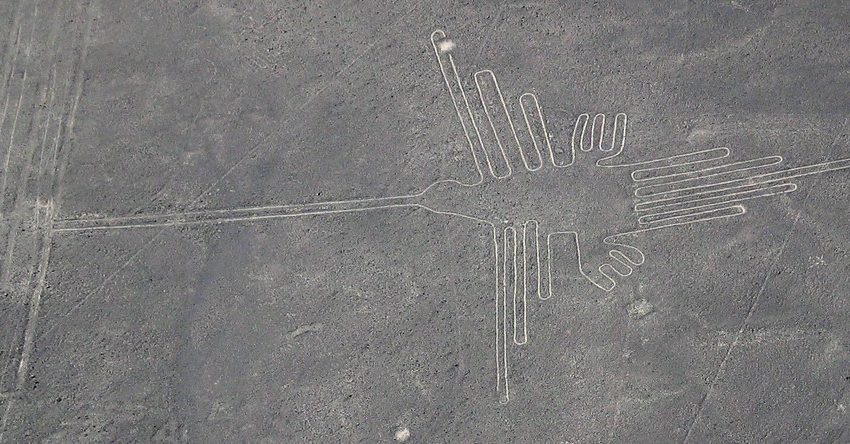
The lines are fragile and have been damaged several times. In 2012 and 2013 Dakar Rally off-road vehicles damaged some outside the protected area. In December 2014 Greenpeace activists laid a banner next to the hummingbird, damaging the ground: the organisation apologised and one activist was convicted. In January 2018 a truck driver left deep tyre marks across three geoglyphs; he was arrested but released, as it was a mistake.
In 2025 the lines faced another threat: the Peruvian government had decided to shrink the protected area by almost half, but in June it reversed the decision after protests. Good news, because every year the discoveries show that the Nazca desert still holds many secrets.
The Nazca Lines are certainly the most famous, but there are other figures drawn on the ground and best seen from above, such as the White Horse of Uffington, the Long Man of Wilmington, the Cerne Abbas Giant and the Sajama Lines.
🦋 Emadion lives through its readers. If this story kept you up at night, buy me a coffee: it helps me bring you the next nightmare.
☕ Support Emadion on Ko-fiSources
- Wikipedia – Nazca Lines
- The Art Newspaper – More than 200 geoglyphs discovered in Nazca Desert with help of AI (2025)
- Andina – Peru’s Nasca Lines: Geoglyphs discovered with AI exceed 500 (2025)
- Futura Sciences – How an algorithm found what a century of fieldwork missed