 Posted by
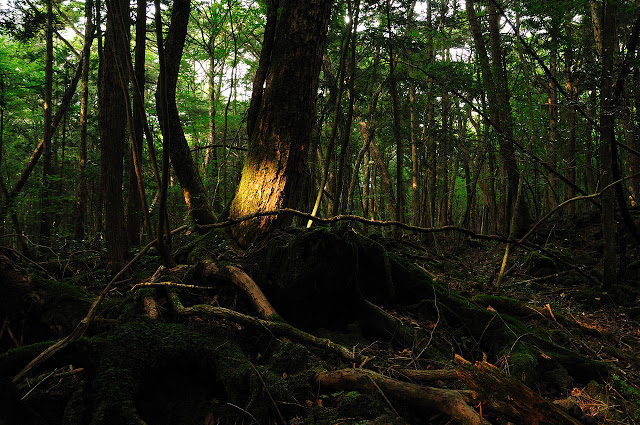
Aokigahara is the name of a Japanese forest at the foot of Mount Fuji. In Japan it is also known as “Jukai”, the “Sea of Trees”, but to the rest of the world it is known as the Suicide Forest.
Aokigahara
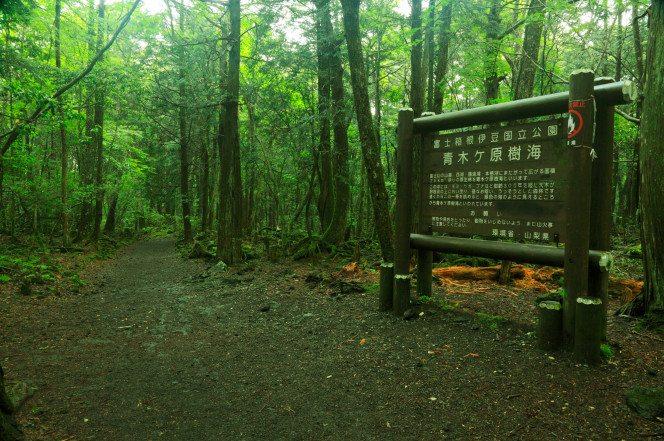
This name is due to the huge number of people who decide to take their own lives in this very forest. The authorities have even put up signs in Japanese and English urging people thinking of suicide to think of their families and contact a prevention service, but they do not seem to have had much effect.
Aokigahara is considered one of the places in the world where most suicides occur, and is often described as the first in Japan.
The first documented cases date back to the 1950s, and since then there have been an estimated at least 30 suicides a year. Since 1970 police and volunteers have searched the forest every year for bodies.
Local authorities kept statistics and made them public, reporting each year the number of suicides, but seeing the number of cases rise every time they stopped releasing them, precisely so as not to feed the forest’s reputation.
In 2003, 105 bodies were found in the forest, beating the previous year’s record of 78. In 2010 police recorded 54 suicides out of more than 200 attempts. Cases rise especially in March, when the Japanese fiscal year ends.
The origin of the grim custom
Although the first cases date back to the 1950s, an increase could be explained by the release in 1961 of the novel Nami no Tō (“Tower of Waves”) by Seichō Matsumoto, in which two lovers end up taking their lives in the forest.
The 1993 publication of a controversial bestseller on suicide by Wataru Tsurumi, which mentioned the forest, is also said to have added to its sad fame.
But that’s not all. Some say that Aokigahara is also the most haunted forest in Japan, and that people who visit it do not go there intending to take their lives. Once inside the forest, ghosts and spirits would appear to the victim and push them to the extreme act.
Legend and reality
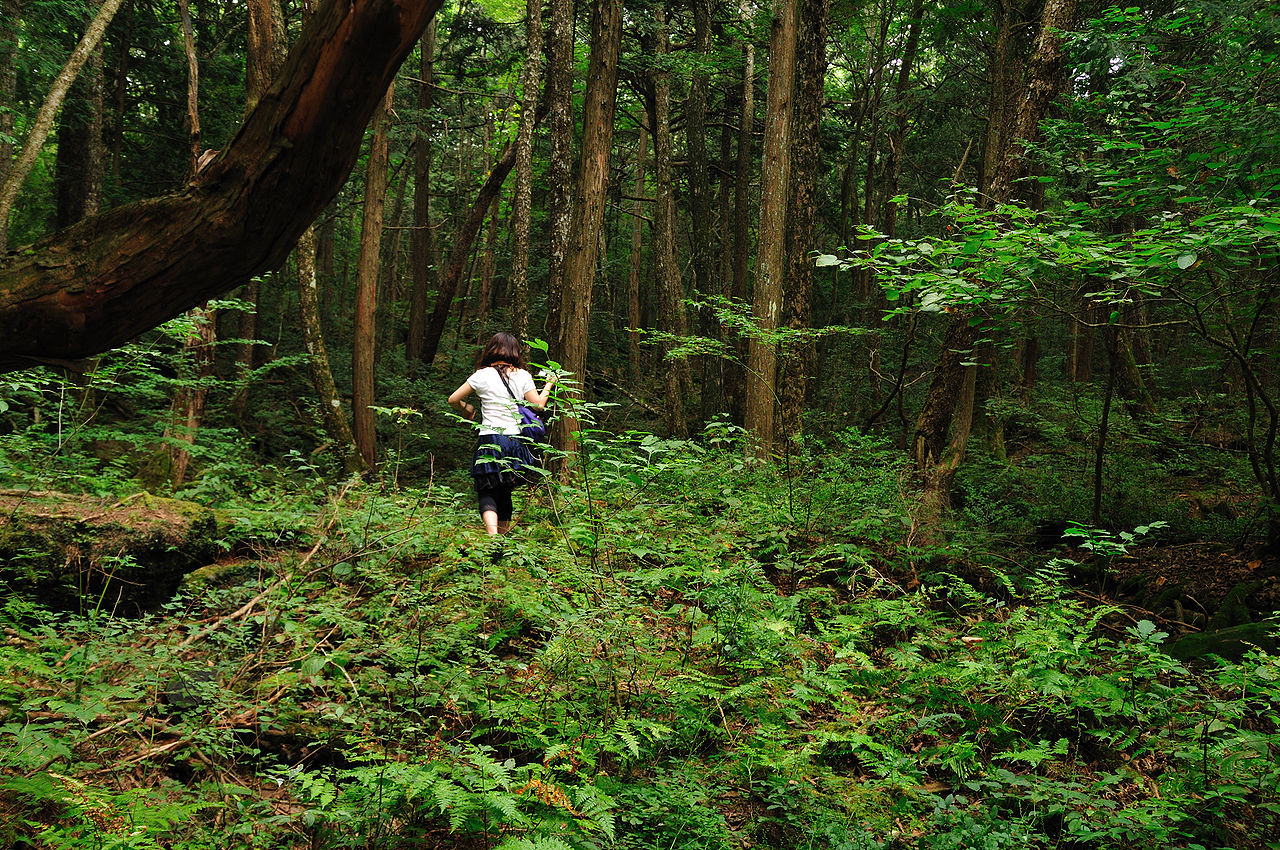
While it is true that many people choose Aokigahara as their last destination, it is also true that many legends hover around this forest.
First of all, the spirits that supposedly haunt it. The ghosts in the forest would be those of abandoned elderly people (ubasute), who went into the forest to die. Once dead, they became yūrei, “angry spirits” that pushed people who ventured into the forest to take their lives.
Other urban legends about this disturbing place concern compasses and electronic equipment malfunctioning. It is true that the forest grows on a lava flow that solidified after Mount Fuji’s eruption of 864 and that the iron in the rocks can make a compass needle deviate, but only if the compass is placed directly on the rock. Held in the hand, it works normally: so much so that since 1956 the Japanese army has used the forest for its navigation courses.
As for electronic equipment, a GPS may not work if it is a low-performance one. Digital watches and other devices, on the other hand, work perfectly.
The forest is not only a byword for death: it is a very rich ecosystem, with bears, deer, foxes and dozens of bird species, and there are guided walks on marked trails leading to lava caves such as the Narusawa Ice Cave, frozen all year round, which of course do not go deep into the forest, very dense and silent because the porous rock absorbs sound.
The sad forest
That said, Aokigahara remains a place where many suicides have taken place, the result of suffering in life so great it could no longer be borne. A macabre place, but perhaps also spiritual and decidedly sad.
And you, would you visit Aokigahara? Would you have the courage to venture, alone, into the depths of the suicide forest?
If you are going through a difficult time or are having thoughts of harming yourself, you don’t have to face it alone. In the UK and Ireland you can call the Samaritans on 116 123, in the United States call or text 988, and in an emergency call your local emergency number. In Italy you can call Telefono Amico on 02 2327 2327.
🦋 Emadion lives through its readers. If this story kept you up at night, buy me a coffee: it helps me bring you the next nightmare.
☕ Support Emadion on Ko-fi