 Posted by
In short
- When: 25 April 1977.
- Where: off Christchurch, New Zealand.
- Who: the Japanese trawler Zuiyō Maru, captain Akira Tanaka.
- What: a carcass about 10 metres long and weighing 1,800 kg, nicknamed “New Nessie”.
- Most likely explanation: a basking shark in an advanced state of decomposition.
When we talk about strange creatures, the first images that come to mind are classic monsters like werewolves, bigfoot and Nessie, but the creature I want to tell you about today is one of the least known and, at the same time, one of the most unsettling.
The Zuiyo-maru carcass
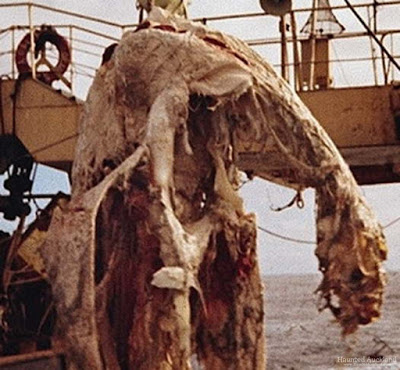
All we really have of this creature are a few photos of its carcass, hauled up by the Japanese commercial trawler Zuiyō Maru on 25 April 1977.
The trawler was off the coast of New Zealand, east of Christchurch, when something got caught in its nets. Once they were pulled on board, the crew found the carcass of an unknown animal.
The body was badly decomposed and gave off an unbearable stench: it weighed about 1,800 kg and was around ten metres long. According to the crew it had a neck about one and a half metres long, four large reddish fins and a tail about two metres long. The internal organs were gone, because the chest cavity and abdomen had burst open from decay, but flesh and fat were still partly attached to the bones.
Because of the body’s poor condition, and fearing it would spoil the catch, captain Akira Tanaka decided to throw the strange animal’s corpse back into the sea. Before that, however, a company employee on board, Michihiko Yano, photographed it, measured it, sketched it and kept some samples of skin and fin fibres. When the news reached Japan, the company ordered all its ships to try to find the carcass again, without success.
The “New Nessie”
In Japan the discovery triggered a real plesiosaur craze, and the creature was called Nyū Nesshii, “new Nessie”. Back on land, the photos were shown to several professors:
Professor Tokio Shikama of Yokohama National University was convinced it was a plesiosaur, and Dr Fujiro Yasuda of the Tokyo University of Fisheries agreed that in his view the photos showed the remains of “a prehistoric animal”.
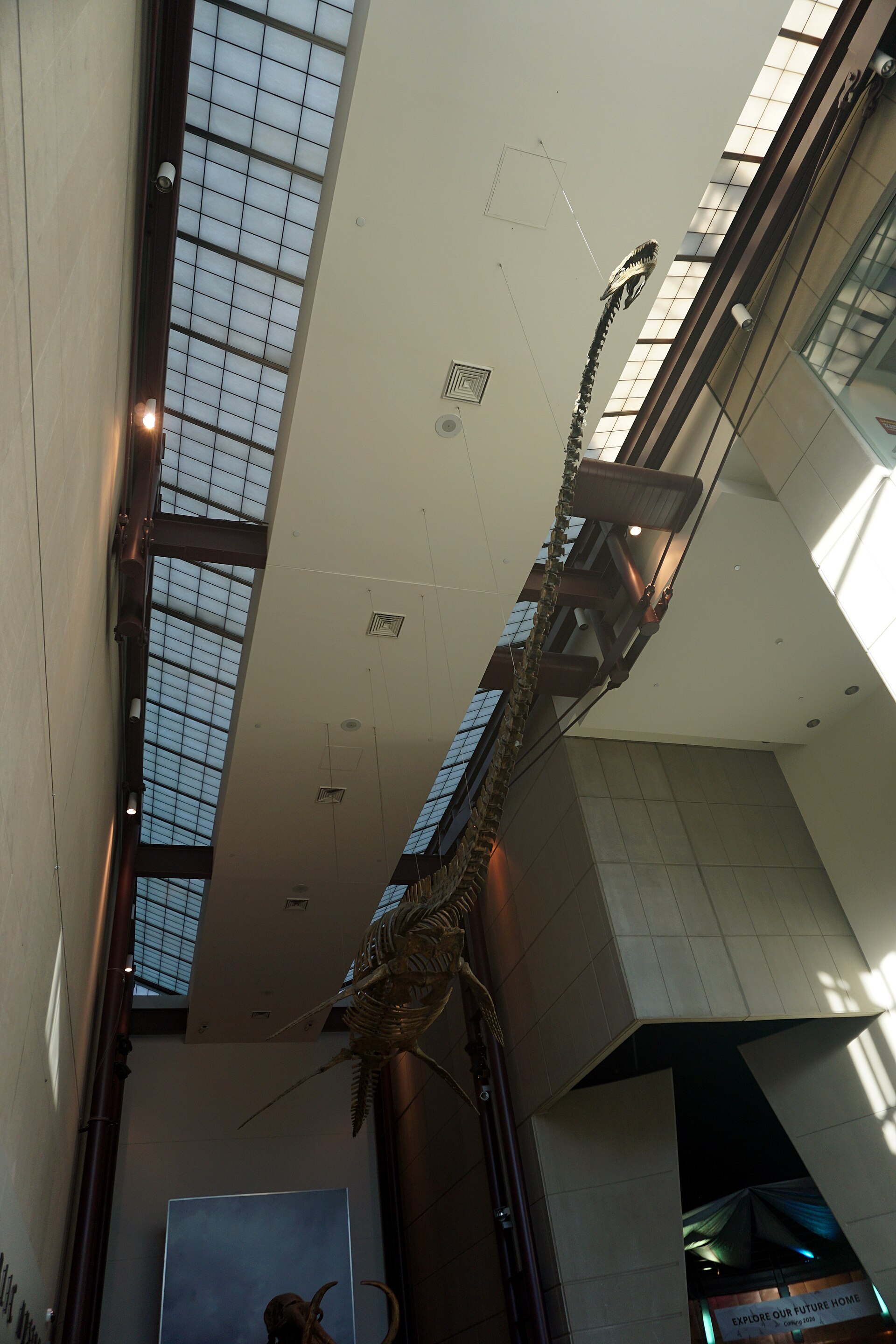
Many other scholars agreed that it was not a fish, nor a whale, nor any other mammal.
Not everyone agreed, though. Swedish palaeontologist Hans-Christian Bjerring pointed out that if there really were fin and skin samples, a microscope could settle the matter, and that it would be as sensational a discovery as the coelacanth in 1938. His colleague Ove Persson recalled instead that other “plesiosaur-like” carcasses in the past had turned out, on closer inspection, to be simply large decomposing sharks.
The basking shark explanation
After studying the samples kept by Yano, a group of Japanese scientists from the Tokyo University of Fisheries, the National Museum of Nature and Science and the University of Tokyo’s Ocean Research Institute reached a joint conclusion: amino acid analysis of the muscle tissue indicated it was most likely a basking shark, or a closely related species.
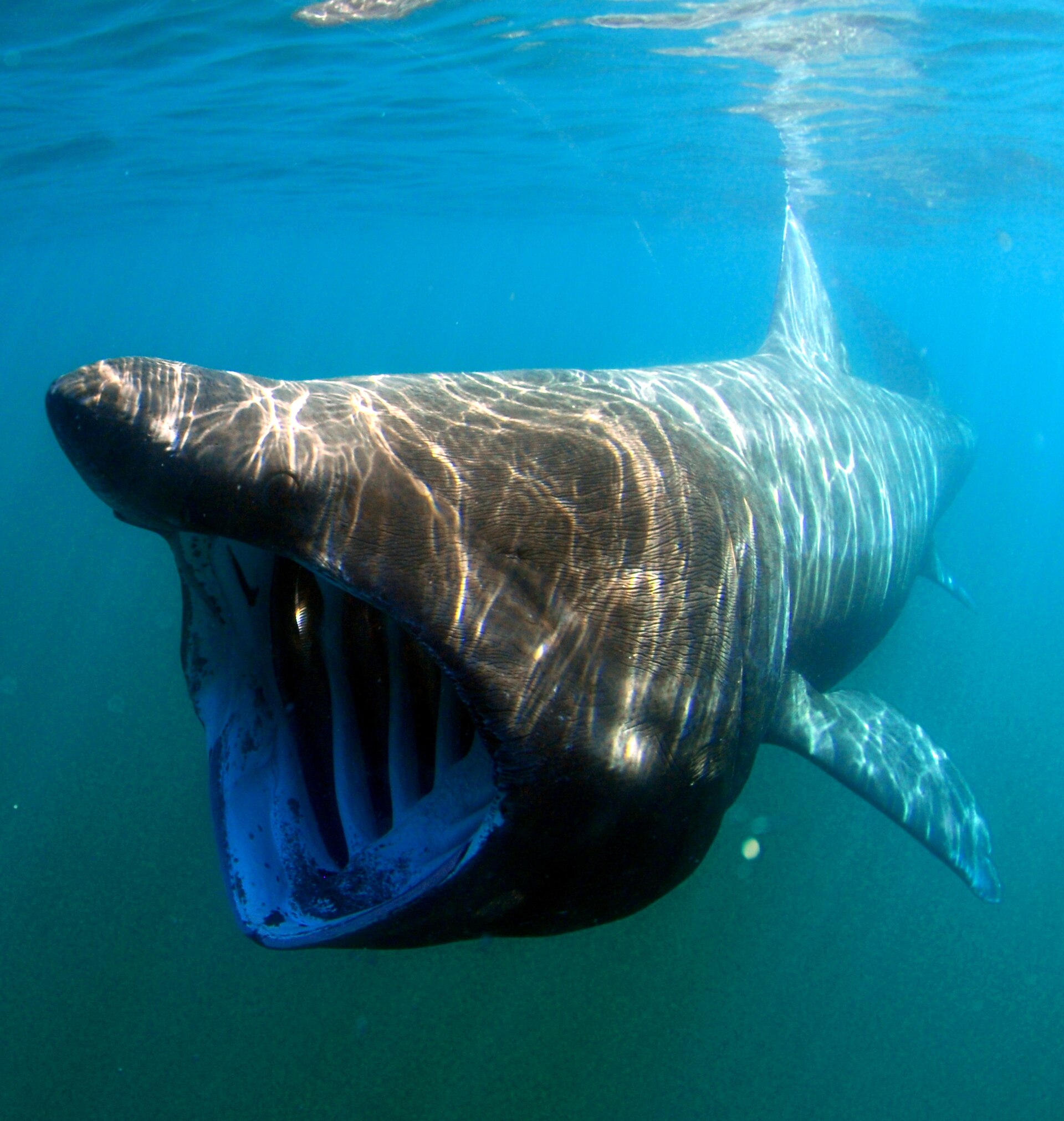
The reason a basking shark carcass can look like a plesiosaur lies in how it decomposes. The first parts to fall off are the lower jaw, the gill area and the dorsal and caudal fins: what remains is a small “head” (the cartilaginous skull) attached to a long “neck” (the spine), a bulky body with four fins and a thin tail. Exactly the outline of a plesiosaur.
Yano’s measurements support this too: the tail much longer than the neck, the proportions between front and rear fins and the size of the “head” do not match any known plesiosaur, but do match a large basking shark. A closer look at the photos also shows a dorsal fin, which nobody noticed at first, and the cartilaginous fibres visible in the fin are found only in fish.
It was not the first time, either. As early as 1808 the so-called Stronsay Beast washed ashore in the Orkney Islands, Scotland. It was taken for a sea serpent and described by naturalists of the time as a new species, but later it too turned out to be a decomposing basking shark.

We don’t know for sure whether the “new Nessie”, as it was called, was a prehistoric animal or not. Some still argue that the remains that were tested may have been contaminated by the other fish caught in the net, skewing the results, but the measurements, the photos and the dorsal fin all point in the same direction.
The carcass has never been forgotten, though: it is referenced in the 1991 film Godzilla vs. King Ghidorah, it inspired an unused scene from The Lost World: Jurassic Park and it even appears in the credits of the 2014 Godzilla.
🦋 Emadion lives through its readers. If this story kept you up at night, buy me a coffee: it helps me bring you the next nightmare.
☕ Support Emadion on Ko-fi