
 Posted by
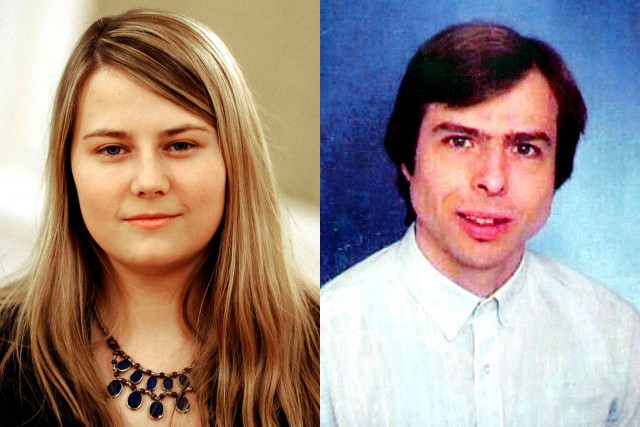
On 2 March 1998 Natascha Kampusch, aged 10, was abducted in Vienna on her way to school by Wolfgang Priklopil, who held her prisoner for 3,096 days in a secret room under his garage in Strasshof. On 23 August 2006, aged 18, she managed to escape. Priklopil took his own life that same evening. Natascha has since written books about her experience, and the house now belongs to her.
Natascha Kampusch is an Austrian woman known for having been abducted at the age of 10 and managing to escape 8 years later.
Natascha Kampusch
On 2 March 1998 Natascha, then ten, was walking to school. It was one of the first times she had been allowed to go alone, a freedom she had wanted badly. She was a shy child and thought walking to school by herself might make her a bit more confident.
Unfortunately for her, that same day she would cross paths with 35-year-old Wolfgang Priklopil, who would rob her of her newly won independence and of her freedom for 8 long years.
The abduction
As she walked, Natascha saw a man ahead of her standing by a white van. She was scared and thought about crossing to the other side of the street, but changed her mind. She was a big girl now and could not keep being afraid of every odd thing she saw.
Sadly, the decision to keep walking would change her life forever. As soon as she passed the man, he grabbed her in a flash and threw her into the van. Then he got behind the wheel and drove off.
He told her to keep quiet and not move, that she had been kidnapped on the orders of a group of people and that he was going to hand her over to them.
It was 1998, and at that time there had been many abductions of young girls in Germany, Belgium and France, almost all ending in the victim’s death. That is exactly what she thought would happen to her. At only ten, she was sure that what awaited her was abuse and then death, but she was wrong.
Priklopil took her to his house in Strasshof an der Nordbahn, a small town about half an hour’s drive from Vienna, wrapped her in a rug and carried her into a secret room under his garage. This small room would be her prison for eight years.
The secret room
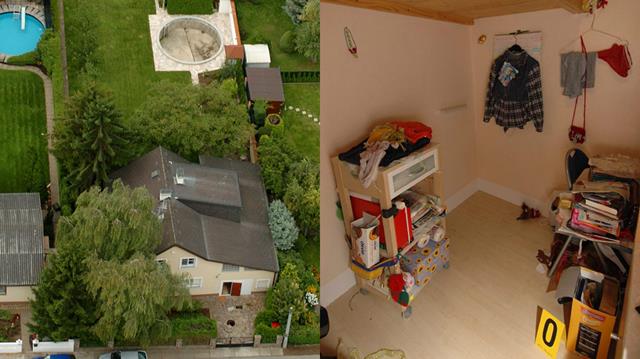
With no light or windows, Natascha found herself alone on a concrete floor, surrounded by the smell of mould. At first her captor gave her nothing but a thin mattress to sleep on, but later he added a few small comforts.
Over the years he installed a sink, a small stove, a real bed, and painted the walls. He gave Natascha a television, videotapes, books, games and a radio, but all of this was taken away whenever, in Priklopil’s view, she did not “behave”.
The room was a few metres underground, separated from his garage by two wooden doors with no handles on the inside and by a safe-like concrete door weighing many kilos and 50 cm thick. Escaping was truly impossible. And if anything had happened to her captor, Natascha would have stayed locked in there until she starved, as if in a sarcophagus.
The abuse
During the first months she never left her cell. Priklopil brought her meals every day and in the evening stayed to play with her.
Almost from the start he also began psychological work aimed at destroying Natascha’s will and sense of self. He told her that her parents did not want her any more, did not love her, and that nobody was looking for her. To keep her quiet he also kept talking about the “other” kidnappers who could come for her at any moment.
After just under a year Natascha left her room for the first time and realised where she was: a concrete tomb.
Over time her captor let her into his house to do housework and cook. He was a perfectionist and made her clean the house until every corner shone. Every day he insulted her and belittled her. To him Natascha was just a slave who had to obey him at all times. In his sick mind, though, he thought the two of them could one day have a life together.
When she reached her teens he made her do heavier work. Priklopil was renovating the house and Natascha was the perfect labourer.
As a teenager Natascha began to rebel, and Priklopil decided to crush it at once, beating her every day and depriving her of food. She ended up dangerously malnourished. That life was so unbearable for Natascha that she tried several times to take her own life.
Chances to escape and freedom
Priklopil never let Natascha out of his sight when she was not in her cell. He followed her everywhere and, to stop her running away, told her the windows were wired with dynamite: if she tried to escape she would be blown up. On top of these lies he kept up the psychological destruction, telling her nobody out there wanted her and he was the only one who could take care of her.
When Natascha was 17 her captor took her with him to some shops. She was so dominated by him that she did not even try to escape. Priklopil had also told her that if she tried, he would kill anyone who helped her. She knew how violent he could be and never tried. The walls of her psychological prison were far thicker and higher than those of her real one.
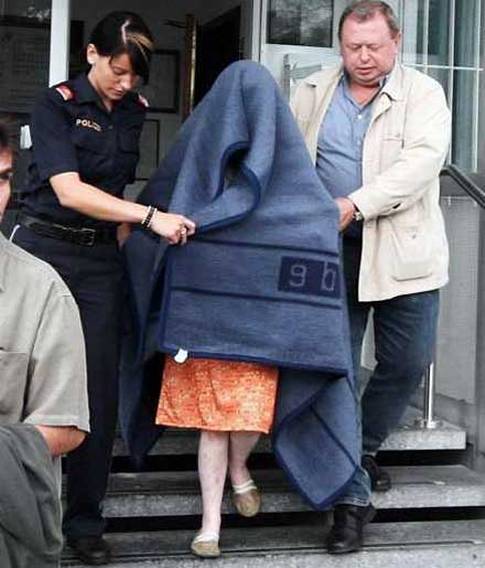
After 3,096 days, on 23 August 2006, she finally managed to escape while she was in the garden cleaning her captor’s car. Priklopil stepped away for a few seconds to take a phone call and Natascha seized the chance to run.
Once he discovered she had escaped, Priklopil took his own life that same evening, knowing he was being hunted.
After the escape
After her escape Natascha was hounded by the press for a long time. A few years later she wrote a book, 3096 Days, about her years in captivity. The book, published in 2010, was also made into a film, 3096 Tage, in 2013. In 2016 she published a second book about her first ten years of freedom.
For years it was suspected that Priklopil had accomplices, but in the end investigators concluded he had acted alone.
And there is one striking detail: today the house where Natascha was held prisoner belongs to her. She claimed it from her captor’s estate to prevent it from being vandalised or demolished, and has said she went back there several times after her escape.
In this article I have summarised as much as possible the story of this abducted girl, now a woman. I do recommend reading her book, though, in which she tells not only of her days in captivity but also of her psychological journey up to her freedom and of her relationship with her captor, whom today she does not simply condemn.
I had already read her story in the newspapers and I remember the news of her escape well. Being almost the same age, it had stuck with me. Her book, however, let me get to know a little more of the real Natascha, not the one painted by the papers.
Do not think of her as a victim, because she has immense strength.
🦋 Emadion lives through its readers. If this story kept you up at night, buy me a coffee: it helps me bring you the next nightmare.
☕ Support Emadion on Ko-fi