 Posted by
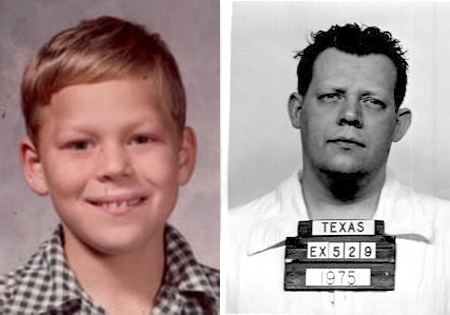
On Halloween night 1974, in Texas, Ronald Clark O’Bryan laced Pixy Stix with cyanide and killed his son Timothy, 8, to collect the life insurance on him. To cover up the crime he also gave poisoned candy to his daughter and three other children, who luckily did not eat it. Sentenced to death in 1975, he was executed on 31 March 1984.
Ronald Clark O’Bryan is sadly known in American criminal history as “The Candy Man” or “The Man Who Killed Halloween”, for a cruel murder committed on Halloween night 1974. In this article we look at his life, the crime, the trial, the execution and the impact his crime had on the way Americans experience trick-or-treating.
The life of Ronald Clark O’Bryan
Ronald Clark O’Bryan was born on 19 October 1944. He lived in Deer Park, near Houston, Texas, with his wife Daynene and their two children, Timothy, born on 5 April 1966, and Elizabeth, born in 1969. He worked as an optician for the Texas State Optical chain in Sharpstown, Houston. To everyone around him he was a decent man: a deacon at the Second Baptist Church, he sang in the choir and ran the church’s bus programme.
Behind that façade, though, was a man buried in debt, over $100,000, who couldn’t hold down a job: in ten years he had had 21. When he was arrested he was suspected of theft at work and was about to be fired, his car was about to be repossessed, he had defaulted on several bank loans and the family home had been foreclosed on.
In January 1974 he took out two $10,000 life insurance policies on the children. A month before Halloween he added two more of $20,000, despite the misgivings of the insurance agency, and in the days just before the crime yet another $20,000 policy on each child. In all, about $100,000. His wife would say she knew nothing about them.
The murder of Timothy O’Bryan
On the evening of 31 October 1974 O’Bryan took his children trick-or-treating in a Pasadena, Texas neighbourhood, together with a neighbour and his two children. It was raining, and the group only covered two streets. At one point they knocked on a door where nobody answered, and the impatient children ran ahead to the next house while O’Bryan stayed behind. When he caught up with them he was holding five Pixy Stix, long paper straws filled with powdered sugar, which he said the owner of the silent house had given him.
At the end of the evening he gave one to each of the neighbour’s two children, one to Timothy and one to Elizabeth. Back home, he gave the fifth to a 10-year-old boy he knew from church. Before bed Timothy asked to eat something from his haul and, according to O’Bryan, chose the Pixy Stix. The boy had trouble getting the powder out and his father helped him. Timothy complained that it tasted bitter, and O’Bryan gave him some Kool-Aid to wash it down. Right after, the little boy said his stomach hurt, ran to the bathroom and began vomiting and convulsing. He died on the way to the hospital, less than an hour after eating the candy.
At first panic spread through the town, and many parents in Deer Park and the surrounding area handed in the sweets their children had collected to the police. It was the autopsy that revealed Timothy had been poisoned with potassium cyanide. Police quickly recovered four of the five Pixy Stix, which no child had eaten. The parents of the fifth child, alerted by officers, couldn’t find the candy and panicked. They rushed upstairs and found their son asleep, still holding the Pixy Stix: he hadn’t been able to open the staples sealing it. All five had been opened, topped up with cyanide and resealed with a staple. According to the pathologist, the one Timothy ate contained enough poison to kill two adults, the others enough for three or four.
The investigation and arrest
At first O’Bryan was seen simply as a devastated father, but his story didn’t hold up. First he said he couldn’t remember which house the Pixy Stix came from, then, after walking the neighbourhood with police three times, he pointed to the house where nobody had answered. He said the owner, without turning on the light, had opened the door a crack and handed him the five sweets, and that he had only seen his arm, which was “hairy”. The owner, Courtney Melvin, was an air traffic controller at Houston’s Hobby Airport and didn’t get home from work until 11 pm that night. More than 200 people confirmed he was at work, and he was quickly cleared. Besides, none of the houses visited that night had given out Pixy Stix.
Then the debts and the policies came out. Police also discovered that the morning after his son’s death O’Bryan had called the insurance company to ask how to collect on Timothy’s policy, and that shortly before Halloween he had gone to a chemical supply store in Houston to buy cyanide, leaving empty-handed when he found the smallest amount sold was five pounds. Investigators became convinced he had meant to kill both children and had given candy to the others to make it look like the work of a maniac. O’Bryan protested his innocence, but on 5 November 1974 he was arrested. He was charged with capital murder and four counts of attempted murder. Police never found out where or when he got the poison.
Trial and sentence
The trial opened in Houston on 5 May 1975. A chemist who knew O’Bryan said that in the summer of 1973 he had contacted him to ask about cyanide and how much it would take to kill. A chemical supply salesman testified that he had asked him how to buy it. Friends and co-workers said that in the months before Timothy’s death he had shown an “unusual interest” in cyanide. His in-laws said that on the day of the boy’s funeral he talked about using the insurance money for a long holiday and other purchases. His wife also denied that Timothy had chosen the Pixy Stix: according to her, his father made him.
The defence relied on the old urban legend of the stranger who hands out poisoned candy or apples with razor blades at Halloween, a story that keeps circulating even though there is no documented case of a stranger poisoning Halloween sweets. The press dubbed him “The Candy Man”. On 3 June 1975 the jury took 46 minutes to find him guilty of capital murder and the four attempted murders, and 71 minutes to sentence him to death by lethal injection. Shortly after the conviction his wife filed for divorce. She later remarried, and her new husband adopted Elizabeth.
The execution
O’Bryan ended up on death row at the Ellis Unit, near Huntsville. According to Reverend Carroll Pickett, a former Texas prison chaplain, he was despised by the other inmates for killing his own child and was “absolutely friendless”. His fellow death row prisoners reportedly even asked to be allowed to demonstrate their hatred on the day of his execution.
The first execution date, 8 August 1980, was stayed, and so was the second, 25 May 1982. Judge Michael McSpadden set a third for 31 October 1982, the eighth anniversary of the crime, offering to drive him to the death chamber himself, but the Supreme Court postponed it to let him seek a new trial. The final date was 31 March 1984. His lawyer sought another stay, arguing that lethal injection was “cruel and unusual punishment”, but on 28 March a federal judge turned it down.
On 31 March 1984, shortly after midnight, Ronald Clark O’Bryan was executed by lethal injection at the Huntsville Unit, aged 39. In his last words he called the execution “wrong”, forgave those who took part in it and asked forgiveness of anyone he had offended. Outside the prison around 300 demonstrators cheered, some shouting “Trick or treat!”, and some threw candy at those protesting against the death penalty. He is buried in Forest Park East Cemetery in Webster, Texas, while little Timothy rests in Forest Park Lawndale in Houston.
The legacy of Ronald Clark O’Bryan
O’Bryan’s crime left a deep mark on American society and on the way Halloween is celebrated. It fuelled parents’ fears for their children’s safety during the holiday and gave new life to the legends about candy poisoned by strangers. The truth, though, is that Timothy wasn’t killed by a stranger, but by his father.
To prevent similar tragedies many communities introduced initiatives to make trick-or-treating safer, such as parties and events held in public, supervised places like shopping centres, schools and churches. Local authorities and police launched campaigns urging parents to check the sweets their children collect, not to accept candy from strangers and to explain the possible dangers to children.
🦋 Emadion lives through its readers. If this story kept you up at night, buy me a coffee: it helps me bring you the next nightmare.
☕ Support Emadion on Ko-fiSources
- Ronald Clark O’Bryan, Wikipedia
- Ron Franscell, The Crime Buff’s Guide to Outlaw Texas, Globe Pequot, 2010
- Mike Glenn and Ruth Rendon, “Man Who Killed Halloween” still haunts holiday, Houston Chronicle, 29 October 2004