 Posted by
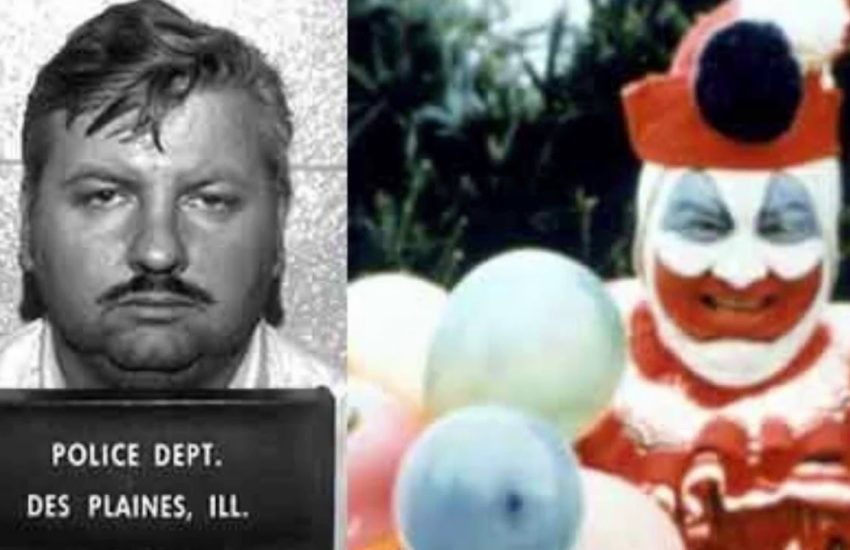
John Wayne Gacy (1942-1994), the “Killer Clown”, raped, tortured and murdered at least 33 boys and young men at his house near Chicago between 1972 and 1978, burying 26 under the floor. By day he was a respected businessman who dressed up as Pogo the Clown for parties and hospitals. He was executed on 10 May 1994. Five victims still have no name.
John Wayne Gacy is a famous serial killer, also known because, when he was not luring and killing young men, he entertained at neighbourhood parties dressed as Pogo the Clown.
John Wayne Gacy
Gacy was born on 17 March 1942 in Chicago, Illinois, the second of three children and the only boy. As a child he desperately sought his father’s approval, which never came. His father, an alcoholic, often beat and humiliated him, even in front of his friends, and when his mother tried to defend him he mocked him even more, insulting him and calling him a mummy’s boy.
At 11 he was hit on the head by a swing and suffered blackouts and severe headaches until he was 16, when a health problem was diagnosed and treated.
The relationship with his father
The relationship with his father, according to Gacy, was always difficult. When his son was ill, the father was convinced he was faking it, despite long hospital stays that added up to about a year.
At 18 Gacy got involved in politics with the Democratic Party, and his father gave him a car, which he kept in his own name until his son had paid it all back. When he got angry, he took the keys away.
Tired of the constant arguments, Gacy moved to Las Vegas, where he found work at a funeral home, in contact with dead bodies.
The salesman career and the first conviction
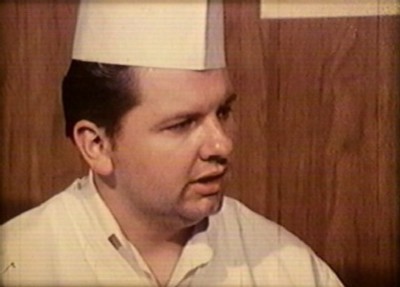
After three months he realised Las Vegas was not for him and asked his father if he could come home. He took a business course and found work as a shoe salesman. Thanks to his incredible talent for selling, he was soon promoted.
At work he met Marlynn Myers, whom he married in 1964, and moved to Waterloo, Iowa, to manage some of his father-in-law’s restaurants. There he became an active member of the community, but also began sexually assaulting some of the boys who worked for him. One of them reported him.
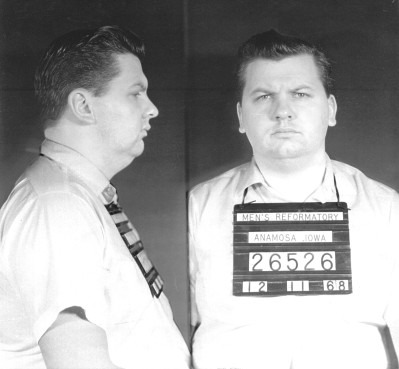
In 1968 Gacy pleaded guilty to sodomy on a teenage boy and was sentenced to 10 years. He lost his job and his wife filed for divorce. He told her he never wanted to see her or their two children again.
Gacy’s new life and Pogo the Clown
Gacy served only 18 months in prison, then was paroled. He went back to Chicago to live with his mother and found work as a cook.
In 1971 a youth reported him for sexual assault, but did not turn up in court and the charges were dropped. Had police checked Gacy’s situation more carefully, they would have realised he was on parole and those charges could have sent him back to prison. Sadly, that did not happen.
In 1972 he married Carole Hoff and became a respected member of the community of Norwood Park, on the outskirts of Chicago. He left his job and founded a building company. From 1974 he threw big themed parties every summer for the whole neighbourhood.
He also became organiser of the Polish Constitution Day parade (Gacy was of Polish descent) and even met the then first lady Rosalynn Carter. The photo of the two together is famous, and later became a big embarrassment for the Secret Service.
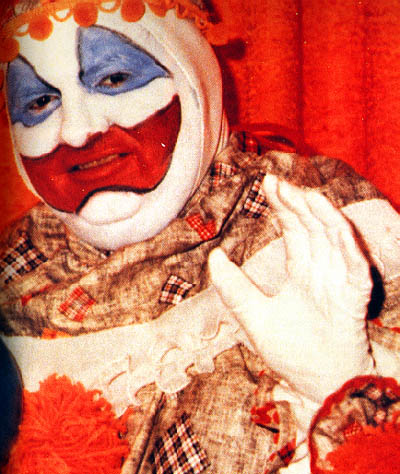
In 1975 he joined the “Jolly Jokers”, volunteers who dressed up as clowns for charity events and to visit sick children in hospital. His characters were Pogo the Clown and Patches the Clown, whose make-up and costumes he designed himself. Everyone considered Gacy a good man, always ready to help others.
That same year he confessed to his wife, who had found gay magazines in the house, that he was bisexual, and told her they would no longer have sex. In 1976 they divorced by mutual agreement.
The murders
Gacy’s first victim, in 1972, was 16-year-old Timothy McCoy, who was travelling by bus to Omaha. Gacy offered him a tour of Chicago and a place to sleep, promising to take him to the station the next morning.
According to his confession, the next morning he found Timothy in the bedroom doorway with a knife in his hand. He overpowered him, took the knife and stabbed him to death. Only afterwards, in the kitchen, did he realise the boy had made breakfast and had simply come to wake him. Gacy buried him in the crawl space under the house.
With later victims his method became almost always the same: he lured them home, persuaded them to put on handcuffs on the pretext of showing them a magic trick, then raped, tortured and killed them by asphyxiation or strangulation.
The second victim was a boy who has never been identified, aged between 15 and 18. On 31 July 1975 he killed 18-year-old John Butkovich, one of his employees who was demanding two weeks’ back pay, and buried him under the garage.
Most of the murders took place between 1976, the year of his divorce, and 1978. Many victims were young men he met at the bus station or who were hitchhiking; others worked for him. A few weeks after the divorce he killed 18-year-old Darrell Samson. Then, within hours of each other, 15-year-old Randall Reffett and 14-year-old Samuel Stapleton, who were buried in the same grave.
Arrest and sentence
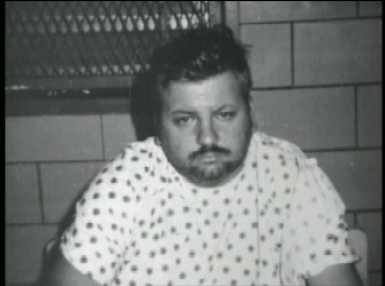
Gacy kept killing until 11 December 1978. That day 15-year-old Robert Piest disappeared after telling his mother he had to talk to a contractor about a summer job. Des Plaines police traced the contractor to Gacy and searched his house.
Officers noticed a nauseating smell, which Gacy blamed on sewer problems. In reality it was the stench of the bodies buried under the house. Without realising it, police found clues linking the man to several disappearances.
After days of constant surveillance, Gacy was arrested on 21 December 1978 and confessed to more than 30 murders. Twenty-six bodies were found in the crawl space, three more were buried elsewhere on the property and four, including Robert Piest, had been dumped in the Des Plaines River.
The community was shocked: they could not believe that the friendly neighbour who played the clown for sick children was a killer.
In prison Gacy claimed to have alter egos and that one of them was really responsible for the murders, in an attempt to be declared insane. It did not work: on 13 March 1980 he was sentenced to death for 33 murders, at the time the most ever attributed to a single person at trial in the United States.
In prison he painted many pictures, often of clowns; some were later publicly burned by those who bought them, while others were exhibited or sold.
It is said that Stephen King, although he never stated it, was inspired partly by Gacy for his novel “IT”, with the killer clown Pennywise.
In the interviews he gave in prison he never showed remorse, and on 10 May 1994 he was executed by lethal injection. His last words were:
Kiss my ass
Update: the nameless victims
For decades eight of Gacy’s victims remained nameless, buried under gravestones inscribed “We Are Remembered”. In 2011 Cook County Sheriff Thomas Dart reopened the investigation using new DNA techniques.
Since then three have been identified: William Bundy, 19, in 2011, James Byron Haakenson, 16, in 2017, and Francis Wayne Alexander in 2021, thanks to genetic genealogy. Five victims still have no name, and the sheriff keeps asking anyone who lost a male relative in the 1970s to come forward.
🦋 Emadion lives through its readers. If this story kept you up at night, buy me a coffee: it helps me bring you the next nightmare.
☕ Support Emadion on Ko-fiSources
- John Wayne Gacy, Wikipedia
- John Wayne Gacy Victim Identified, Cook County Sheriff, 25 October 2021
- Unknown Gacy Victim Identified, Cook County Sheriff, 19 July 2017
- Gacy unknown victims, A&E