 Posted by
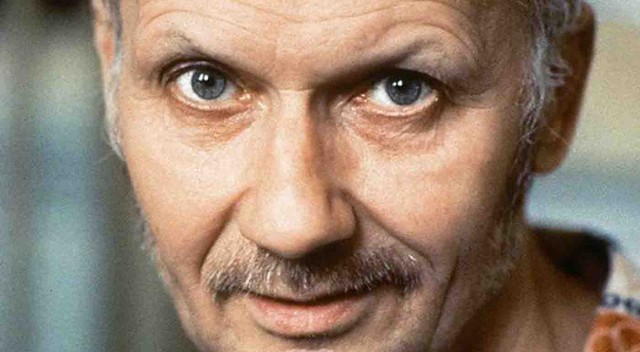
Andrei Chikatilo (1936-1994), the “Butcher of Rostov”, killed and mutilated at least 52 people, mostly women, boys and children, between 1978 and 1990 in the Soviet Union. An innocent man was executed for his first murder. Stopped in 1984, he was released because of a misleading blood test. Arrested in November 1990, he confessed to 56 murders and was shot on 14 February 1994.
Andrei Chikatilo is one of the most famous Soviet serial killers. He is nicknamed the Monster of Rostov, the Butcher of Rostov or the Red Ripper and, although he is often considered a cannibal, there is no evidence to support this.
Andrei Chikatilo
Chikatilo was born on 16 October 1936 in the Ukrainian Soviet Socialist Republic. His family was extremely poor, and one day his mother told him he had had an older brother who, during the great famine, had been kidnapped and eaten by neighbours. Nobody knows if the story is true, but in Ukraine in those years hunger was terrible and cases of cannibalism were not rare.
When he started primary school, Chikatilo often fainted from hunger and, also because of his shyness, was teased by his classmates. During the war his father was at the front and the boy lived with his mother in a one-room house.
As a teenager he discovered he was impotent, and relationships with girls became a source of humiliation for him. After school he became a telecommunications technician and tried to have relationships, which ended quickly. When one of the girls asked friends for advice about her boyfriend’s problem, word spread and everyone mocked him. Chikatilo went as far as attempting suicide, but was saved by his mother and some neighbours.
The move to Rostov
Later he moved to the area of Rostov-on-Don, in Russia, where his sister joined him and soon married. Seeing that her brother struggled with women, she introduced him to a young woman and the two married after just two weeks. Despite the difficulties they had two children.
In Rostov Chikatilo worked as a technician but also studied to become a teacher. He was, however, pushed out of several schools after various accusations of molesting pupils.
The first murders
On 22 December 1978, in Shakhty, Chikatilo committed his first murder: he lured 9-year-old Lena Zakotnova to an isolated shack and stabbed her to death.
Another man, Aleksandr Kravchenko, who had already served a sentence for a similar murder, was arrested for the crime. Kravchenko had a solid alibi, but police pressured his wife and a friend into changing their statements and he ended up confessing. He was convicted and executed, while the real killer remained free.
Chikatilo’s new job as a supply clerk let him travel a lot and kill again. In 1981 he killed his second victim, 17-year-old Larisa Tkachenko, lured into a wood with an excuse. In June 1982 he killed a 13-year-old girl on her way home from shopping. From then on the killer stopped resisting his urges and, between June and September 1982, killed five more people.
The modus operandi
Chikatilo’s method was almost always the same: he approached his victims at train or bus stations, persuaded them with some excuse to follow him into a wood or an isolated spot, and attacked them there. His victims were women as well as boys and children, often vulnerable people, homeless or runaways.
He killed them with a knife, with extreme ferocity, and mutilated them, sometimes removing organs. He often filled their mouths with earth to stop them screaming. Many bodies also had wounds to the eyes.
In 1983 the bodies were linked and it became clear to police that they were dealing with a serial killer. A team from Moscow led by Major Mikhail Fetisov arrived, and the investigation, called Operation Forest Path, was entrusted to forensic expert Viktor Burakov. For a while people suspected organ trafficking or a Satanic cult. Many people confessed, mostly vulnerable individuals or suspects subjected to long and violent interrogations, but the discovery of new bodies disproved the confessions every time.
First arrest and release
In September 1984 Chikatilo was spotted by a plain-clothes officer trying to approach young women at the Rostov bus station. He was stopped and searched: in his bag were a knife and a rope. Police also found out his employer had accused him of theft, which gave them a legal reason to arrest him.
Chikatilo matched the description of the killer given by some witnesses, but a blood test saved him: his blood group was A, while from traces found on some victims experts had deduced the killer was group AB. He was convicted only of the theft, expelled from the Communist Party and released on 12 December 1984, after three months.
The other murders
After his release he did not kill again until August 1985. Meanwhile the manhunt went on, with hundreds of officers on the case. Psychiatrist Aleksandr Bukhanovsky drew up a profile of the killer: a man aged 45 to 50, with a difficult childhood, probably married with children but with serious difficulties with women, who travelled for work, since he often killed near stations.
At that time news about the killer began to appear in the papers, and Chikatilo followed it closely. For a while he changed area and approach, then went back to killing around Rostov. Police also set a trap, flooding the stations with officers, but the killer kept going until 1990.
In November 1990 an officer noticed him coming out of a wood near a station with a red smear on his face, exactly where a victim’s body was found shortly afterwards. On 20 November 1990 Chikatilo was arrested again. This time tests cleared up the mystery: his blood was group A, but his semen was group AB, an extremely rare condition.
Confession and sentence
For days Chikatilo denied everything. Then, after a meeting with psychiatrist Bukhanovsky, who read him the profile he had drawn up, he broke down and eventually confessed to 56 murders, many of which police did not even know to attribute to him.
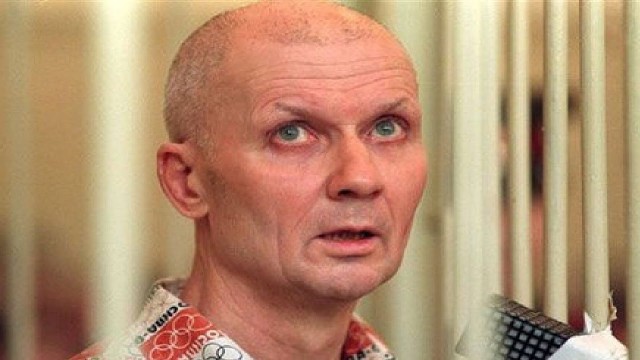
The trial opened in Rostov in April 1992. Chikatilo was kept in an iron cage in the courtroom to protect him from the victims’ relatives. He was declared sane and, in October 1992, sentenced to death for 52 murders, although in 1993 Russia’s Supreme Court ruled that the evidence was insufficient for nine of them.
President Boris Yeltsin rejected his plea for clemency and on 14 February 1994 Chikatilo was executed with a gunshot to the back of the head in Novocherkassk prison.
🦋 Emadion lives through its readers. If this story kept you up at night, buy me a coffee: it helps me bring you the next nightmare.
☕ Support Emadion on Ko-fi