 Posted by
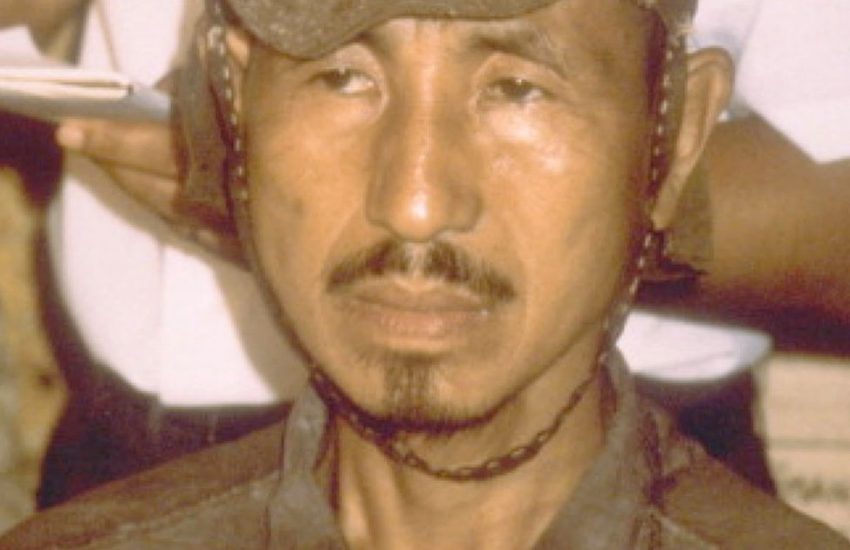
Hiroo Onoda (1922-2014) was a Japanese intelligence officer sent in 1944 to the Philippine island of Lubang with orders never to surrender. Convinced that news of the end of the war was an enemy trick, he stayed in the jungle for almost 29 years and only surrendered on 10 March 1974, when his former commander went to relieve him of duty in person.
The Japanese are famous for their sense of honour, which they do not hesitate to protect even with death. The Japanese soldier Hiroo Onoda was no exception: sent to the Philippines in 1944 with orders to fight, never to surrender to the enemy and never to take his own life, he stayed hidden in the jungle for 30 years, refusing to believe the war was over.
Hiroo Onoda
Hiroo was born on 19 March 1922 in Kamekawa, Wakayama Prefecture, Japan, into a family of old samurai stock. In 1939, at 17, he went to work in Wuhan, China, for a trading company, but in 1942 he was called up. He was trained as an intelligence officer at the Nakano School, which specialised in guerrilla warfare, and in 1944 he was sent to the Philippine island of Lubang with orders to prevent any enemy attack.
Before he left, his mother gave her son a blade so that he could kill himself if he were taken prisoner. But Hiroo had received clear orders: he was not to surrender or take his own life.
Hidden in the jungle
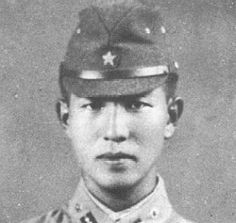
Hiroo left in December 1944 and once on the island he set up in a hideout in a mountain cave with three other soldiers. The war would officially end less than a year later, with Japan’s surrender in September 1945, but the four did not know.
The Japanese government knew there were still many Japanese soldiers in the Philippines who did not know the war was over, and sent planes to drop leaflets announcing its end. Hiroo and his companions saw one of these leaflets too, but thought it was just an enemy trick and stayed in their hideout.
Sometimes villagers or police came near their hideout, and the four soldiers opened fire on anything that made them feel threatened.
In 1949 one of the four, Yuichi Akatsu, left the group and was alone for 6 months before surrendering to the Philippine authorities in 1950.
In 1952 more leaflets were dropped on the island, along with family photos of the soldiers, to persuade them to come out and surrender, but the three survivors again thought it was an enemy trick.
Clashes with the islanders
The soldiers had to leave their hideout to find food, and often came face to face with people from nearby villages, understandably frightened by their uniforms and weapons.
In 1954 Shoichi Shimada was killed by a search party, and in 1972 Kinshichi Kozuka was killed by police after setting fire to a village’s rice harvest. Now Hiroo was completely alone.
In February 1974 he met a young Japanese man, Norio Suzuki, who was travelling the world in search of “Lieutenant Onoda, a panda and the abominable snowman”, in that order. The two became friends, but Hiroo refused to surrender: he had received orders, and the only way to make him surrender was for a superior to order him to do so.
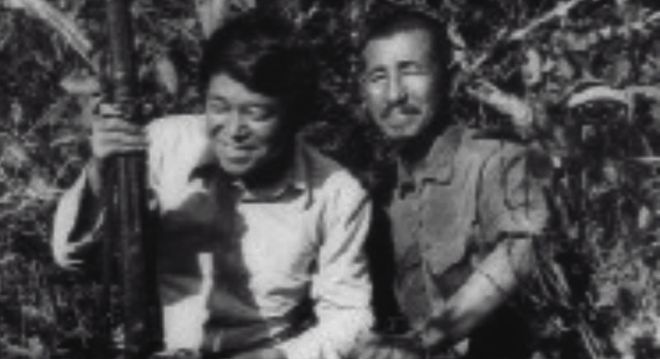
Norio went back to Japan and told of his meeting with Hiroo, bringing a photo of the two of them in the jungle. The Japanese government then tracked down his former commanding officer, Major Yoshimi Taniguchi, and sent him to the Philippines to relieve the soldier of duty.
On 10 March 1974, after almost 30 years, Hiroo finally surrendered and returned to Japan, where he was welcomed as a hero.
Media attention and the move to Brazil
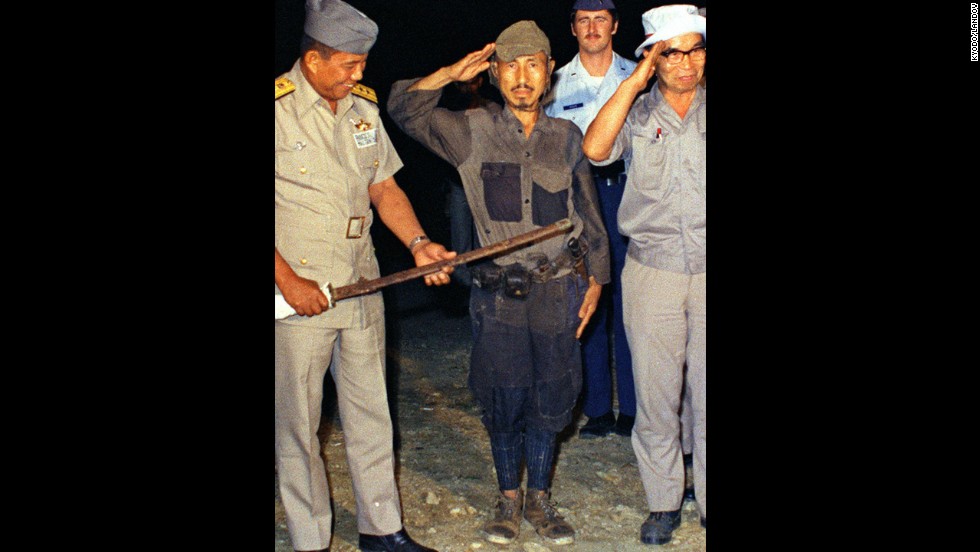
Back in Japan, Hiroo received a great deal of media attention. He gave many interviews and was offered money by the government, which he refused. When admirers brought him money, he donated it to a shrine.
He grew tired of all the attention and was unhappy with how Japanese values had changed. So he decided to move to Brazil, where he raised cattle.
After hearing that a teenager in Japan had killed his parents, he decided to return to his homeland in 1984 to open the Onoda Shizen Juku (Onoda Nature School), a camp to educate young Japanese people.
Hiroo died in Tokyo on 16 January 2014 from complications of pneumonia, at the age of 91.
His story still fascinates: in 2021 the French film Onoda: 10,000 Nights in the Jungle by Arthur Harari was released, and the same year director Werner Herzog dedicated his novel The Twilight World to him.
🦋 Emadion lives through its readers. If this story kept you up at night, buy me a coffee: it helps me bring you the next nightmare.
☕ Support Emadion on Ko-fi