 Posted by
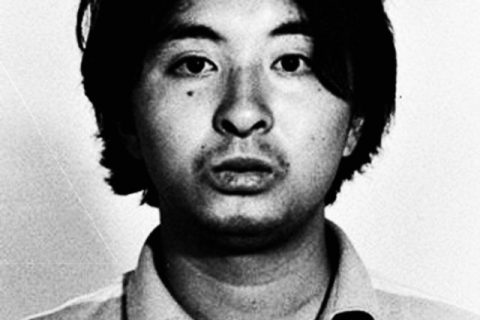
Between August and October 2017, in Zama, about sixty kilometres from Tokyo, Takahiro Shiraishi lured nine young people to his flat, almost all contacted on Twitter while they were talking about wanting to die, and killed them. He was uncovered by the brother of one of the victims. Sentenced to death in 2020, he was executed on 27 June 2025.
It wasn’t the police who uncovered everything. It was a brother.
At the end of October 2017, in Tokyo, a young man was desperate: his sister, 23, had been missing for days. In the previous months she had been going through an extremely hard time after her mother’s death, and on social media she had written that she no longer wanted to live. Her brother managed to get into her Twitter account and began reading her messages. One of them caught his attention: a user offering to “help” her.
That name led investigators to a small apartment in Zama, a town about sixty kilometres from the capital. On the morning of 31 October 2017, Halloween, the police went in. And they uncovered one of the most shocking cases in Japan’s recent history.
The man behind the account
The apartment belonged to Takahiro Shiraishi, 27. Before moving to Zama in August that year, he had worked in Kabukichō, Tokyo’s red-light district, as a scout recruiting young women for the sex industry. People who knew him described him as creepy.

On Twitter, Shiraishi had found his hunting ground. He looked for posts by people who wrote that they wanted to die, contacted them and presented himself as someone who understood them. He promised to help them, or even to die with them. Then he invited them to his home.
In just over two months, between late August and late October 2017, nine people were killed in that apartment: eight girls and young women aged 15 to 26, three of them high-school students, and a young man, the boyfriend of one of the victims, killed because he was getting too close to the truth.
How he operated
Shiraishi’s method was reconstructed in detail during the investigation and the trial. Recounting it is not meant to shock, but to understand how premeditated it was, and why the claim that the victims had “consented” did not stand up.
The bait. On Twitter he ran several accounts. One had a macabre name, chosen precisely to attract people who were thinking of taking their own lives. In his posts he presented himself as someone who understood other people’s pain and invited them to message him privately “at any time”. To those who replied he proposed dying together, or offered his “help”. He had no intention of killing himself. In many cases he asked the young women not to tell family or friends, met them at a nearby station and then took them home.
The apartment. It was a studio in a two-storey wooden building in the Midorigaoka neighbourhood of Zama, rented at the end of August. According to the prosecution, even the rent had been paid with money from the first victim: about 510,000 yen, a few thousand euros, which the young woman had handed over because she trusted him. The room had a loft, a detail that would prove central.

The attack. Once inside, the victims were given drinks: alcohol and sleeping pills that left them weak and confused. Then Shiraishi attacked them and strangled them. On some bodies investigators found defensive injuries: the victims had tried to save themselves. He took the young women’s money and payment cards, sometimes tiny sums of a few hundred or a few thousand yen. For the eight women, the charges also included sexual assault.
Afterwards. Shiraishi dismembered the bodies in the bathtub so he could hide them. He threw most of the remains out with household rubbish, sealed in bags, at collection points far from home. The heads and about 240 bones he kept in the room, in three cool boxes and several large containers, covered with cat litter to mask the smell. He later said he had thought about burying them in the mountains. In the building, some neighbours had noticed a terrible smell, but nobody imagined what lay behind that door.
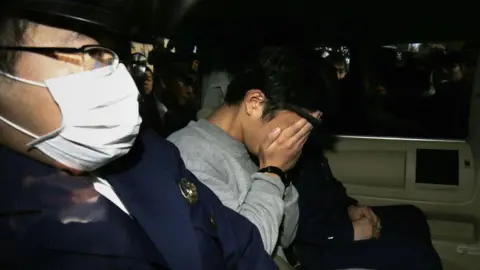
The discovery. On 24 October the brother of the 23-year-old reported her missing and started searching through her messages. A woman who had been in contact with Shiraishi agreed to help investigators and set up a meeting with him on 30 October in Machida. Police followed him home. The next day, when officers asked him where the missing woman was, Shiraishi pointed to the cool boxes. He was arrested for abandoning a body. The murder charges came later, one victim at a time.

The victims
Behind the numbers were nine lives. During the trial their families told who they really were. A 17-year-old worked in a dumpling restaurant and had promised her father they would make dumplings together. A 25-year-old woman, after a long period of isolation, had found a job in a convenience store and was saving to start a family. The 23-year-old, whose brother raised the alarm, was slowly coming out of her darkest period.
They were people at a fragile moment. And it was precisely that fragility that Shiraishi chose to exploit.
The trial and the question of consent
The trial opened in 2020 at the Tachikawa branch of the Tokyo District Court. Shiraishi pleaded guilty to everything. Yet the trial was anything but simple.

The central issue was a terrible question. His lawyers argued that the victims, having written that they wanted to die, had given a kind of tacit consent, and that their client should therefore be tried for a much less serious crime, murder with consent, which in Japan carries only a few years in prison. They also asked for his mental capacity to be assessed.
It was Shiraishi himself who contradicted his lawyers. He told the court that there had been no consent, and that he had killed for money and for his own urges. He accused his defence team of “betrayal” and refused to answer their questions. The prosecution also pointed out that the victims had tried to defend themselves, and that before meeting him many had talked to their families about their plans for the future.
On 15 December 2020 judge Naokuni Yano read the verdict: none of the victims had agreed to be killed, and the defendant was fully responsible for his actions. The sentence was death. Shiraishi withdrew his appeal, and at the start of 2021 the sentence became final.
The execution
On 27 June 2025 Takahiro Shiraishi was executed at the Tokyo Detention House. He was 34. It was Japan’s first execution in almost three years: the previous one had taken place in July 2022.
His death reopened the debate on capital punishment in Japan, which the country continues to apply despite international criticism. A few months earlier, in October 2024, Iwao Hakamata, a former boxer who had spent more than forty years on death row for a murder he did not commit, had been definitively acquitted.
A lesson for all of us
The Shiraishi case shocked Japan above all because of how he managed to reach his victims. Not in dark alleys, but on a social network used every day by millions of people. People who were asking for help, and found the wrong person.
The judge himself, in the verdict, stressed how deeply these crimes had shaken a society in which social media is part of everyone’s life. Perhaps that is the most disturbing thing about this story: people who ask for help online deserve to find someone who will really give it.
If you are going through a difficult time, you don’t have to face it alone. Contact a crisis line in your country: in the United States you can call or text 988, in the United Kingdom and Ireland you can call Samaritans on 116 123. In an emergency, call your local emergency number.
🦋 Emadion lives through its readers. If this story kept you up at night, buy me a coffee: it helps me bring you the next nightmare.
☕ Support Emadion on Ko-fiSources
- 座間9人殺害事件 – Wikipedia (JA)
- Takahiro Shiraishi, Twitter Killer Who Lured Victims to His Apartment, Sentenced to Death – The Daily Beast
- 座間9人殺害事件で被告に死刑判決 – Diamond Online
- Takahiro Shiraishi – Wikipedia
- South China Morning Post, Japan’s ‘Twitter killer’ Takahiro Shiraishi sentenced to death for nine murders, 2020.
- The Business Standard / AFP, trial reports, 2020.
- Al Jazeera, Japan executes by hanging ‘Twitter killer’ who murdered 9, 2025.
- Nippon.com, Hanging of Zama Killer is Japan’s First Execution Since 2022, 2025.