 Posted by
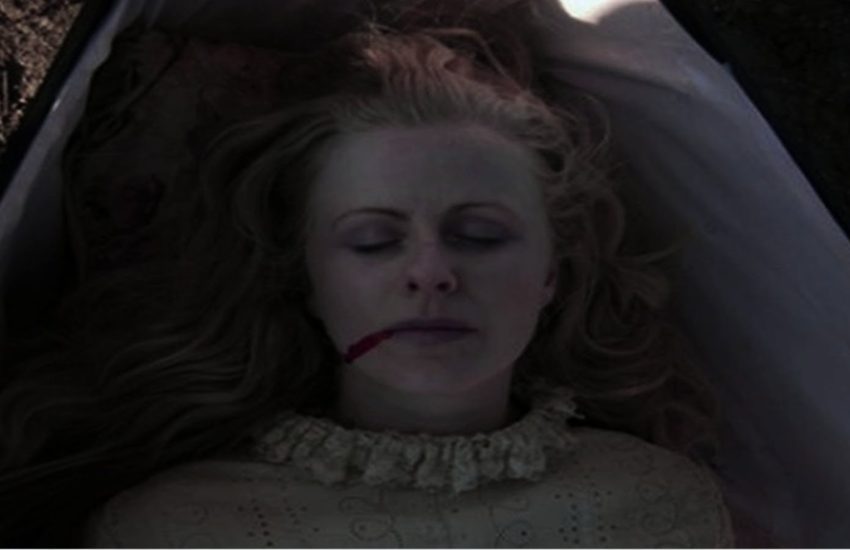
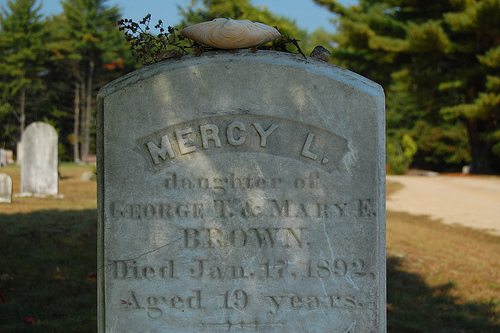
In 1892 in Exeter, Rhode Island, the Brown family was being decimated by tuberculosis. Convinced that one of the dead women was a vampire, the villagers exhumed the bodies and, on 17 March, burned the heart and liver of Mercy Brown, who had died in January, giving the ashes to her sick brother Edwin to drink. He died two months later. It is one of the best documented cases of the New England vampire panic.
TB was a terrible disease that claimed many lives in the past. Before anyone knew the causes of tuberculosis, people tended to interpret deaths caused by the disease with explanations that had little to do with medicine. One of these causes were the undead, or vampires, and that’s the story of Mercy Brown.
The Consumption
Tuberculosis was known by the name of consumption because it “consumed” whoever was affected by it.
When many deaths occurred within the same family, the cause was generally attributed to an undead sucking the energies from the sick, therefore consuming them.
This belief was popular in the US but also in Europe, and one of the best documented cases of an exhumed body believed to be a vampire is the one of Mercy Brown.
The deaths of the Brown family
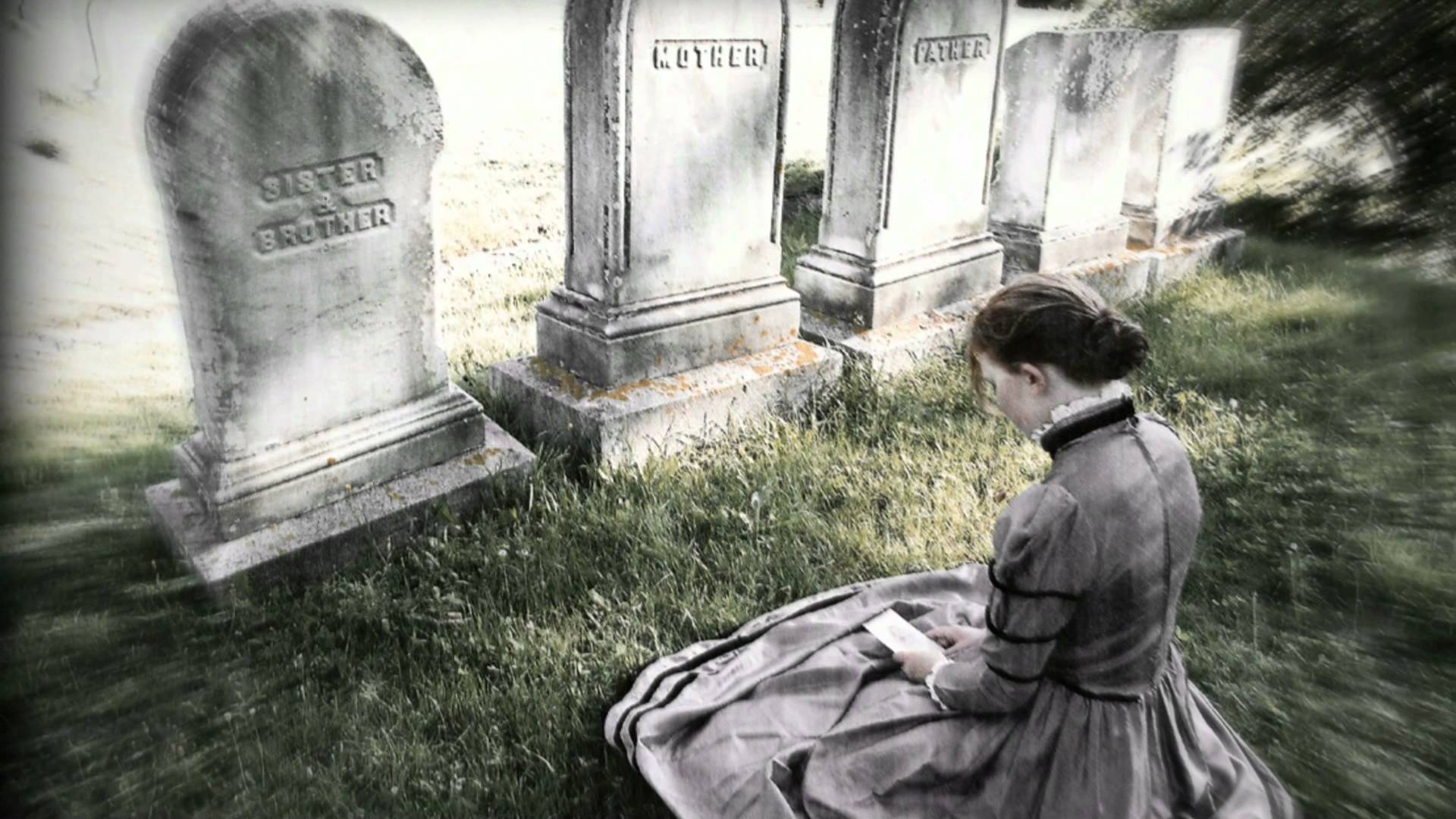
In the last twenty years of the 19th century, the family of George and Mary Brown, who live in Exeter, Rhode Island, is struck by TB. The first to die is the mother, Mary Eliza, on 8 December 1883, and a few months later, on 6 June 1884, the eldest daughter, Mary Olive, at 20.
In 1891 the second daughter, Mercy Lena, and the only son, Edwin, fall ill too. Mercy dies in January 1892.
As Edwin gets worse, the villagers began to think that the cause of these deaths might be an undead.
Not only that: they also claimed this evil had to be a family member.
The exhumation of Mercy Brown
In March 1892, two months after the death of Mercy, the villagers asked the head of the family, George Brown, to allow the exhumation of the corpses of his wife and the two daughters, in order to identify the vampire.
To determine whether a deceased person is a vampire, his body must not show signs of decomposition and the heart and the liver must have liquid blood in them.
On 17 March 1892 some villagers, the local doctor, Dr Harold Metcalf, and a newspaper reporter carry out the exhumation, but the bodies of Mary and Mary Olive are already in a state of decomposition.
However Mercy’s body, according to the villagers, is unusually well preserved. Examining her internal organs, they find blood in the heart and liver.
Dr Metcalf explains that the body is at a normal stage of decomposition and that this amount of blood is perfectly normal for a corpse buried so recently. But for the villagers there is no doubt: the girl is an undead who is sucking energy from her brother Edwin.
They then burned her heart and liver, mixed her ashes with water and gave it to Edwin to drink.
In those days it was believed that to drink the ashes of the heart of a vampire would have saved its victim.
Unfortunately, the young man died two months later. What remained of Mercy’s body was buried in the cemetery of the Baptist church in Exeter. George Brown, on the other hand, was one of the few in the family never to fall ill: he lived until 1922, long enough to see Albert Calmette and Camille Guérin discover the BCG vaccine against tuberculosis.
Was Mercy really a vampire?
Why did the villagers think that Mercy was a vampire?
Because of the preservation of her body and the presence of blood in her organs. But can these elements be explained only with the paranormal?
The answer is no. Mercy’s body was well preserved simply because the girl died in the middle of winter.
Since the ground was too hard to be dug, the body was placed in a crypt waiting for milder temperatures, which was a common practice at the time.
The body remained in the crypt, cold as a freezer, and this allowed mummification, which preserved the aspect that Mercy had when alive.
Without the medical knowledge, however, and with the fury of tuberculosis and a naturally mummified body, people tried to explain facts in the few ways they could, blaming the undead in this case.
The case caused such a stir that, according to some scholars, Bram Stoker read about it in the newspapers and based the character of Lucy Westenra in his Dracula on Mercy. H. P. Lovecraft also mentions the story in his tale The Shunned House.
🦋 Emadion lives through its readers. If this story kept you up at night, buy me a coffee: it helps me bring you the next nightmare.
☕ Support Emadion on Ko-fi