
 Posted by
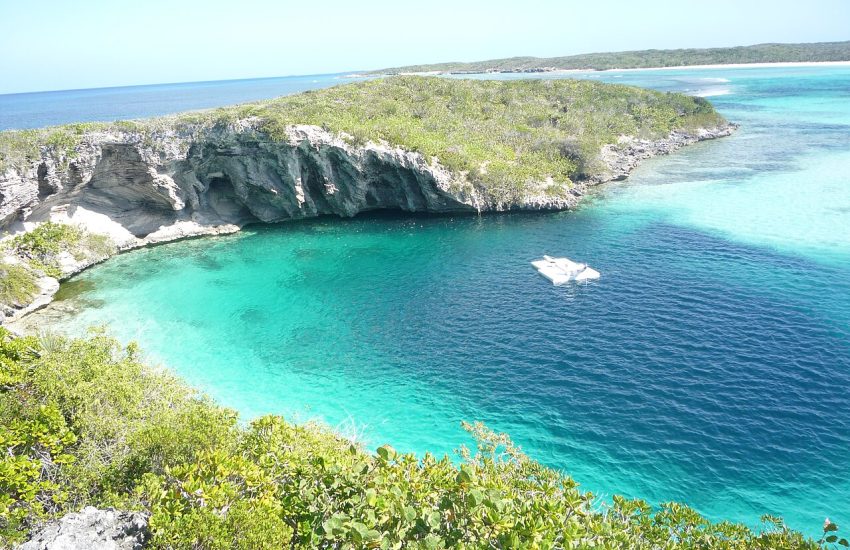
From above they look like dark eyes opening in the turquoise sea. They are the blue holes, the underwater caves dotting the coasts and interior of Andros, the largest island of the Bahamas. Some are said to be bottomless; you can sail over them safely, they say, but diving is dangerous. Because down there, according to locals, lives the Lusca.
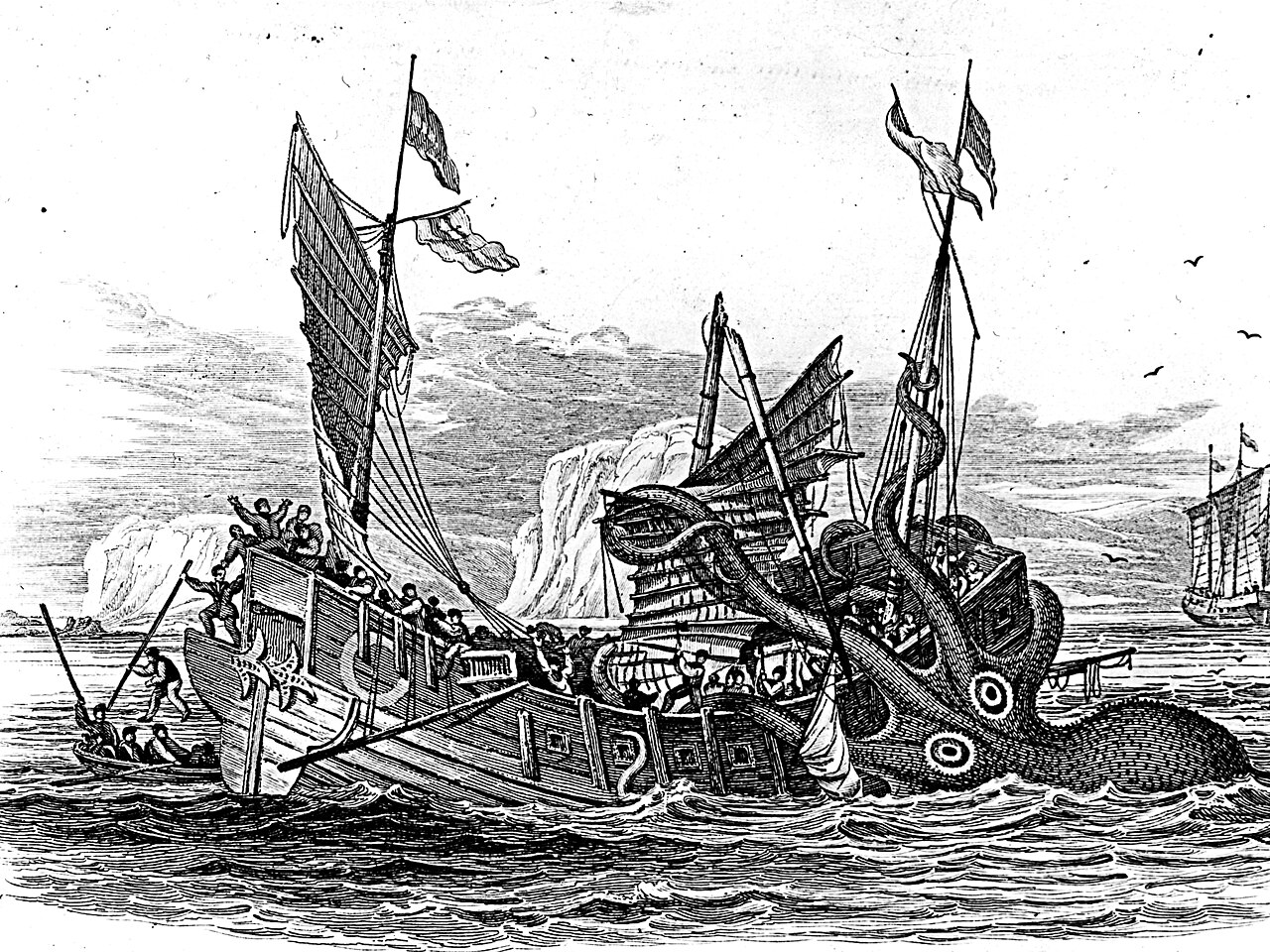
The Lusca is a sea monster of Caribbean folklore, linked above all to the blue holes of Andros Island in the Bahamas. It is described as a giant octopus or cuttlefish, and in modern versions as a shark-octopus hybrid over 20 metres long. There is no scientific evidence that it exists.
The island of blue holes
Andros has the highest concentration of blue holes in the world: some 175 inland and about fifty in the shallow waters offshore. They formed in limestone during the ice ages, when sea levels were much lower, and many are connected to the ocean by tunnels and underground passages, as an experiment by Jacques Cousteau also showed. With the tides, water flows in and out of these cavities, creating sudden currents and whirlpools.
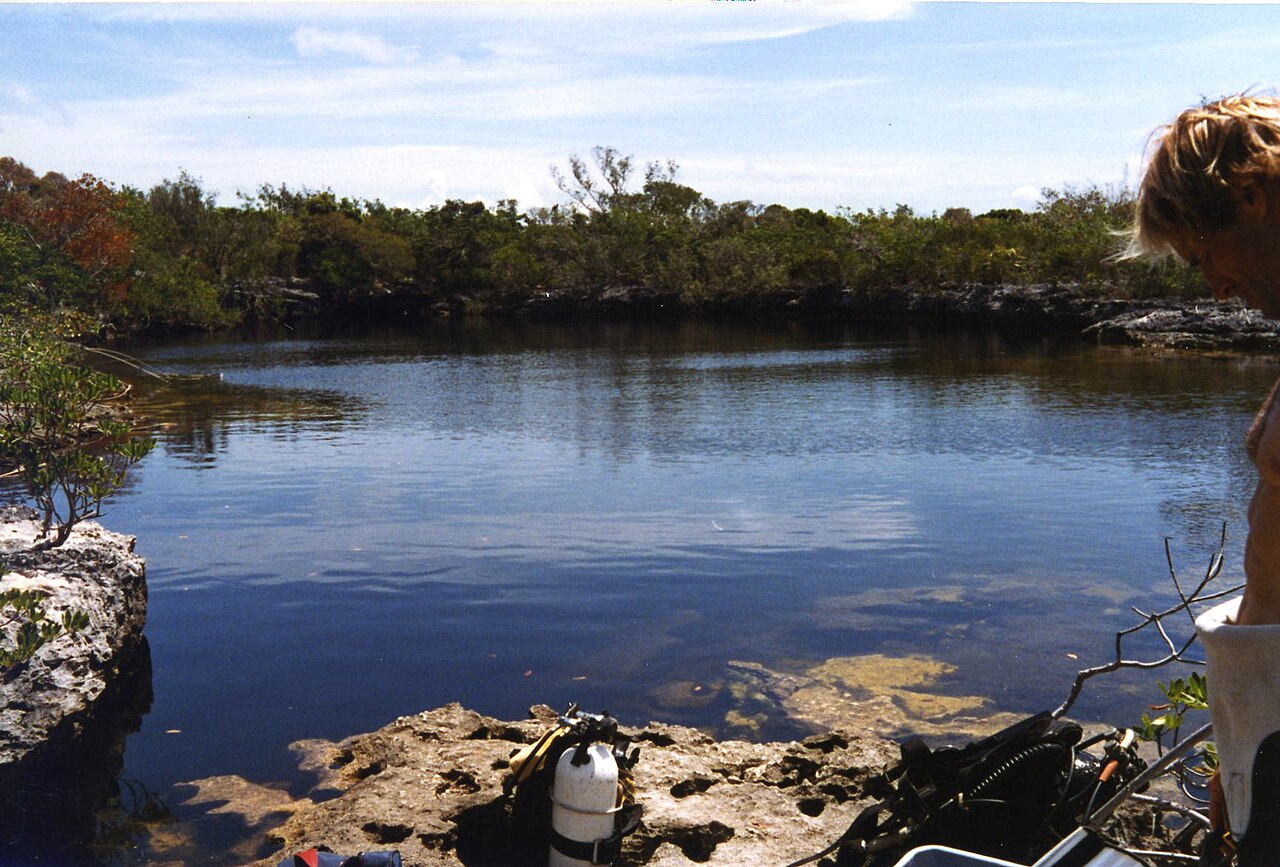

This is where the legend was born. According to local tradition, the Lusca hides at the bottom of the blue holes and seizes swimmers and boats with its tentacles, dragging them under. On the bottom, some say, lie the skeletons of its victims and the wreckage of boats and outboard motors.
“Him of the Hairy Hands”
The oldest descriptions speak of a gigantic octopus or huge cuttlefish, sometimes a half-octopus, half-dragon hybrid with powerful sucker-tipped tentacles, living in both blue holes and the “banana holes” of the interior. Locals also had a disturbing nickname for it: “Him of the Hairy Hands”. The half-shark, half-octopus version seems instead to be a more recent addition, reinforced by pop culture, from the 2010 B-movie Sharktopus onwards.

Explorers and giant octopuses
Several explorers heard of the Lusca. The Canadian diver George J. Benjamin, who spent years exploring the blue holes of Andros, mentioned it in a National Geographic article published in September 1970; Jacques Cousteau was warned too. Neither found any trace of the monster.
More recently biologist and TV presenter Jeremy Wade, in the series River Monsters, investigated encounters in the Andros blue holes. After considering reef sharks, tiger sharks and giant octopuses, he concluded that the most likely culprit was a large octopus. In January 2011 the body of what witnesses took for a giant octopus washed ashore on Grand Bahama, briefly rekindling the fantasies.
Featured image: undefined, Ton Engwirda, CC BY-SA 3.0 nl, via Wikimedia Commons.

The Lusca has never been found, and no known octopus comes close to the size attributed to it. But anyone who peers over the edge of a blue hole, where the light blue of the shallows plunges suddenly into the dark blue of the abyss, will easily understand why the fishermen of Andros felt the need to give that darkness a face.
🦋 Emadion lives through its readers. If this story kept you up at night, buy me a coffee: it helps me bring you the next nightmare.
☕ Support Emadion on Ko-fi