
 Posted by
The Amazon rainforest tells of the Mapinguari, a hairy giant with one eye, a mouth on its belly, backward-facing feet and an unbearable stench, that no bullet can wound. In the 1990s an American biologist became convinced that a real animal lay behind the legend: a giant ground sloth that had survived extinction.
The Mapinguari belongs to the folklore of the whole Brazilian Amazon, and different peoples tell different versions. For some it is a guardian of the forest, for others a human turned into a monster as punishment. Hunters and seringueiros, the rubber tappers, described it as a giant walking on two legs, covered in reddish hair, with a terrifying cry and a stench strong enough to stun. The traditional advice for surviving was to climb a tree and wait.

The forest cyclops
In the oldest versions the Mapinguari has clearly supernatural features: a single eye in the middle of its forehead, a second huge mouth at stomach height, feet turned backwards to confuse anyone tracking it. It is invulnerable everywhere except one spot, which varies by story: the navel, the mouth, the head. In this form it is a close relative of other Amazonian folklore figures, like the curupira, which leaves backward footprints to lead hunters astray.
The giant sloth hypothesis
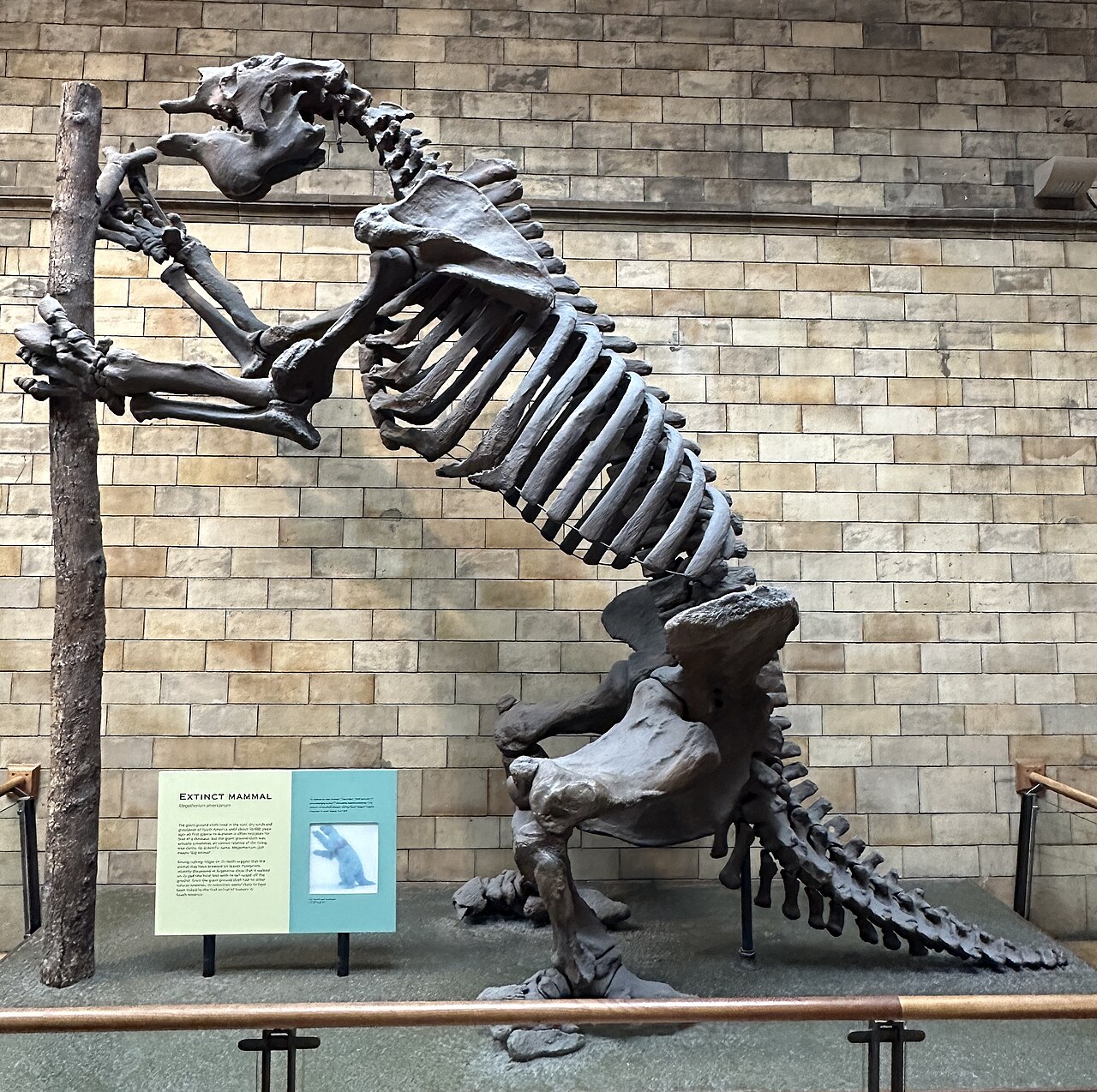
Everything changed thanks to David Oren, a Harvard-trained American ornithologist who for years was director of research at the Goeldi Museum in Belém. Arriving in the Amazon in 1977, he heard many stories from gold prospectors and mine workers. In the late 1980s, hearing a witness’s description from Tocantins, he had an insight: what they described looked a lot like a giant ground sloth, such as Megatherium or Mylodon, animals extinct for thousands of years.
In 1993 he published a scientific paper comparing the Mapinguari’s features point by point with those of giant sloths: the reddish hair found on some mummified remains, the ability to stand upright on the hind legs, the huge claws and even, he speculated, glands that might produce a strong odour. Fossil sloth skin also contained small bony nodules, which could explain the reputation for invulnerability. The Los Angeles Times picked up the story and the theory went round the world.
The expeditions
Between 1994 and the early 2000s Oren led several expeditions into the western Brazilian Amazon and gathered more than a hundred accounts. The results were disappointing: some footprint casts, a tuft of hair that turned out to belong to an agouti and droppings attributed to a giant anteater. Over time Oren himself made clear that in his view the legend probably arose from early Amazonians’ contact with the last giant sloths, rather than from their survival to the present day.

One man’s theory
The sceptical podcast Skeptoid has pointed out that almost everything written about the Mapinguari after 1993 derives from a single source, Oren’s own paper, and that the giant sloth has replaced the cyclops of tradition in the popular imagination. According to palaeontologists, giant ground sloths died out at the end of the Pleistocene, around 10,000 years ago, and there are no recent remains. An elephant-sized animal would also need a large population to survive, hard to overlook even in the Amazon.
What remains is the appeal of the idea that myths can preserve the memory of vanished animals. In a Brazilian museum, an anthropologist recalls, an Indigenous man stopped in front of a reconstruction of a giant sloth and said he recognised it: it was the monster his grandparents used to talk about.
🦋 Emadion lives through its readers. If this story kept you up at night, buy me a coffee: it helps me bring you the next nightmare.
☕ Support Emadion on Ko-fiSources
- Skeptoid – Mapinguari (ep. 888)
- Discover Magazine – Beasts in the Mist
- UPI – U.S. zoologist seeks Brazilian beast (1995)
- All That’s Interesting – Mapinguari
- Rainforest Cruises – The Mapinguari
- Listverse – 10 bizarre prehistoric cryptid sightings
Featured image: Mapinguari illustration by, Lauro Iyambae, CC0, via Wikimedia Commons.