
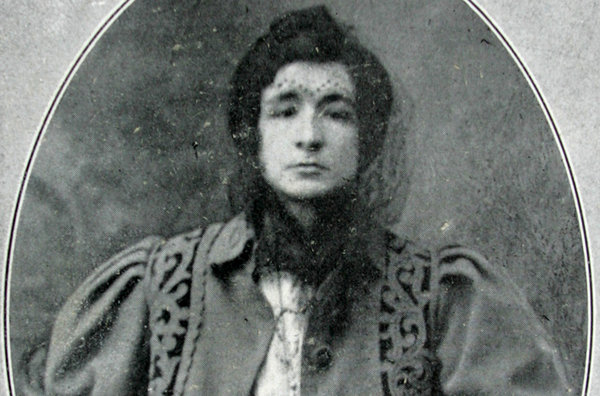
 Posted by
- Who: Enriqueta Martí i Ripoll (Sant Feliu de Llobregat, 2 February 1871 – Barcelona, 12 May 1913).
- Nickname: “the vampire of Barcelona” or “the vampire of the Raval”.
- The accusation: kidnapping and murdering children, whose remains she supposedly used to make ointments and potions.
- What is proven: according to recent studies, only the kidnapping of little Teresita Guitart, in 1912.
- Death: in prison, before trial; officially of illness, according to legend lynched by other inmates.
Enriqueta Martí went down in history as a Spanish kidnapper and murderer of children in the early 20th century. According to the traditional version, she used the remains of the children she killed to make magic potions and miracle ointments that she sold to wealthy people in Barcelona. But, as we will see, some scholars today question much of her legend.
Biography
Enriqueta was born on 2 February 1871 in Sant Feliu de Llobregat, near Barcelona, into a poor family. As a young woman she moved to the city, where she worked as a nanny and then began working as a prostitute to make some money. In 1895 she married an unsuccessful painter, Joan Pujaló, but the marriage was stormy, and Joan left Enriqueta because of her strange, unpredictable character and her habit of frequenting brothels and seedy places.
Even so, Joan came back to her, but they got back together and split up six times, and by the time the vampire was caught the couple had been separated for five years. They never had children.
Enriqueta Martí’s double life
According to accounts of the time, Enriqueta led a double life: by day she begged in the streets of Barcelona, in parishes and convents, dressed in rags, and by night she went to the Liceu Theatre and the most fashionable venues, wearing luxurious clothes, hats and wigs.
In 1909 she was arrested in her flat on calle Minerva on very serious charges, but thanks to her powerful connections she never went to prison.
Martí was also a witch: she made magic potions and ointments that she sold at exorbitant prices. According to the prosecution, these ointments, many passed off as cures for tuberculosis, were made from the bones, blood and fat of the children she kidnapped and killed.
The last kidnapping
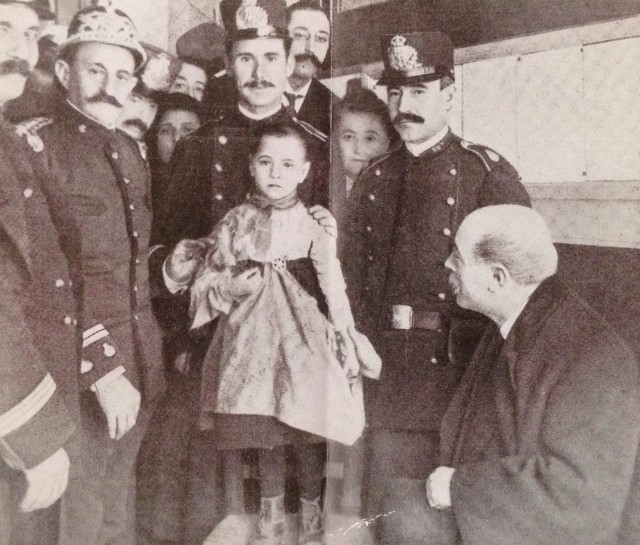
On 10 February 1912 she kidnapped her last victim, Teresita Guitart Congost. Taking advantage of a moment when the mother was distracted, she took the girl by the hand, promising her sweets, but as soon as Teresita realised she was going too far from her neighbourhood she wanted to go back.
So Enriqueta covered her with a black cloth and took her to her flat, at number 29 calle de Poniente, where she cut her hair and changed her name to Felicidad, telling her she no longer had parents and that she was her stepmother.
In the flat the little girl met another girl, Angelita. Both were barely fed, on potatoes and stale bread, and one day, snooping in a room they had been forbidden to enter, they found a sack of bloodstained children’s clothes and a knife.
For two weeks all of Barcelona searched for Teresita. On 17 February a neighbour of the vampire, Claudia Elías, saw a little girl with a shaved head at the window over the inner courtyard, and asked Enriqueta who this child she had never seen before was.
The vampire hastily closed the window without answering, which made the neighbour suspicious, and she told a friend, the mattress-maker on the same street.
The arrest
Teresita’s disappearance was in all the papers, and people were extremely frightened by the disappearance of so many children and angry with the authorities, who seemed to be doing nothing.
This led Claudia’s friend to alert an officer, who in turn informed his superior, Sergeant Ribot. On 27 February, using a complaint about chickens kept in the flat as a pretext, the police went to Enriqueta’s flat, where they found the two girls safe and sound.
They recognised Teresita and took all three to the police station. Teresita explained how the vampire had lured her and was returned to her parents. Angelita was also questioned and said that shortly before there had been another child in the flat, Pepito, five years old, and that she had seen Enriqueta kill him on the kitchen table. Terrified, the girl had run to bed and pretended to be asleep.
It was very hard to establish Angelita’s identity, since Enriqueta claimed she was her daughter and the girl did not know her own surname. Joan was called in; he denied being Angelita’s father and said he had not lived with his wife for five years. A medical examination confirmed Enriqueta had never given birth. In the end she confessed she had taken the baby at birth from her sister-in-law, making her believe the child had been stillborn.
The discovery of remains
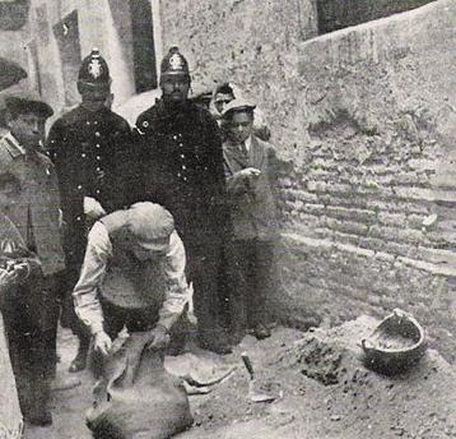
The police searched Enriqueta’s flat and found, besides the sack of clothes and the boning knife the girls had mentioned, another sack containing about thirty small human bones, with signs of exposure to fire.
In another locked room they found about fifty jars and containers holding preserved human remains: fat, clotted blood, hair and powdered bone, together with potions and ointments ready for sale.
Questioned, Enriqueta first claimed she was studying anatomy, then confessed to being a healer. The police then checked the flats where she had lived previously, and according to the press of the time found human remains hidden in the walls and ceilings or buried in the garden there too.
They also found notebooks with coded notes, recipes for magic potions and a list of rich and important Barcelona families, believed to be the vampire’s clients.
People were outraged, knowing that if powerful, high-ranking people were involved, none of them would ever go to prison. The authorities, with the riots of the 1909 Tragic Week still fresh in their minds, feared unrest, and had the newspaper ABC publish an article saying the names on the list were just families Enriqueta begged from, and had nothing to do with the dead children.
Enriqueta, for her part, never named her clients, and there was no evidence to charge anyone else.
Death in prison
Enriqueta was held in the Reina Amalia prison in Barcelona awaiting trial. But she never got to trial: she died on 12 May 1913, a year and three months after her arrest, while the investigation was still under way.
Officially she died of a long illness, probably uterine cancer, but according to the most popular version she was lynched by other inmates in one of the prison yards. She was buried in a common grave in the South-West cemetery, on Montjuïc hill in Barcelona.
A black legend?
In 2014 Barcelona writer Jordi Corominas, in his book “Barcelona 1912”, reconstructed the case by rereading all the newspapers of the time, and noticed that reporters had focused on the most macabre details of the first days without checking anything afterwards.
According to Corominas, Enriqueta was a desperately poor, disturbed woman, scarred by the death of a ten-month-old son from malnutrition, who kidnapped Teresita perhaps to give Angelita a companion. The only crime actually proven would be that kidnapping. The figure of the “murderous vampire” would instead be a black legend, born in a poor and desperate Barcelona and convenient for covering up other scandals.
Who was Enriqueta Martí really? A monster who killed children, or a poor woman onto whom a frightened city projected all its fears? We will probably never know.
🦋 Emadion lives through its readers. If this story kept you up at night, buy me a coffee: it helps me bring you the next nightmare.
☕ Support Emadion on Ko-fi