 Posted by
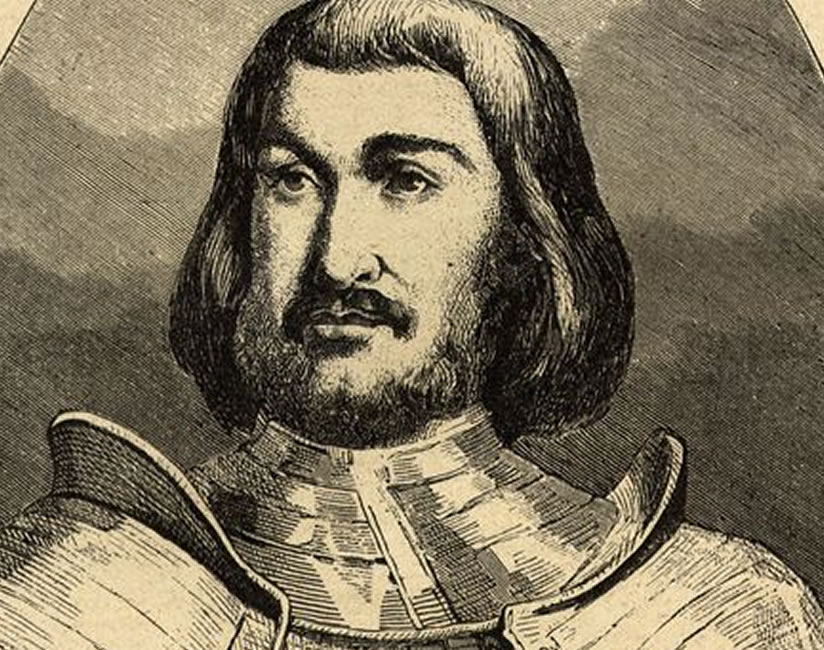
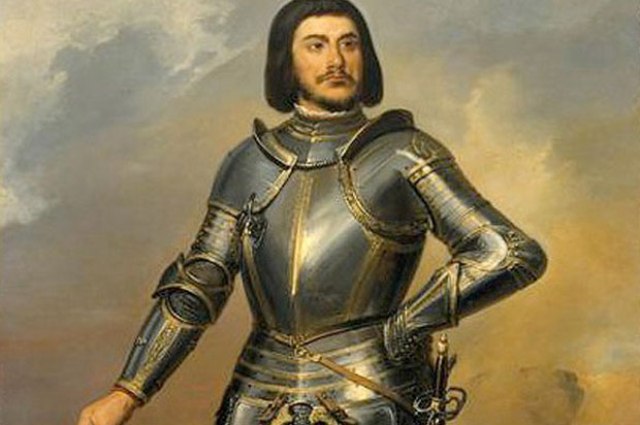
- Who: Gilles de Laval, Baron de Rais (Champtocé, c. 1405 – Nantes, 26 October 1440).
- Who he was: one of the richest nobles in France, Marshal of France and a comrade in arms of Joan of Arc.
- Charges: heresy, sodomy and the murder of numerous children, between 140 and 200 by estimates.
- End: hanged and burned in Nantes in 1440.
- Legend: often linked to Bluebeard, although the connection with Perrault’s tale has never been proven.
Gilles de Rais was a 15th-century nobleman and soldier, convicted of abducting, torturing and killing dozens of children. He was later nicknamed Bluebeard, like the main character of Perrault’s 1697 fairy tale, and many believe he was its inspiration, although this has never been proven.
His victims were children and teenagers, and out of respect for them I will not describe the abuse they suffered in this article.
The story of Gilles de Rais
Gilles de Laval, Baron de Rais, was born around 1405 in the “Black Tower” of the castle of Champtocé, into one of the richest and oldest families in Brittany. He received an excellent education, both academic and military.
At 11 he lost his father, which made him heir to an immense fortune, which grew even larger when he married Catherine de Thouars, a wealthy cousin. During the Hundred Years’ War he fought in the French army and in 1429 he took part in the same campaigns as Joan of Arc, ending with the failed siege of Paris. That same year he was made Marshal of France.
It has long been said that he was very close to Joan of Arc and that her death at the stake in 1431 devastated him. In fact very little is known about their relationship, and their great friendship is mostly an invention of novels and films.
During the 1430s he gradually withdrew from military life and shut himself away in his castles, especially at Tiffauges.
Gilles changes
He began throwing wild parties and spending lavishly, so much so that his family accused him of squandering his inheritance and in 1435 King Charles VII froze his lands. His excessive spending soon forced him to sell many properties.
Worried about his heavy losses, and with no other way of making money, he tried alchemy.
He had a laboratory built in the castle and began searching for the philosopher’s stone to turn metals into gold. In 1438 a priest in his entourage, Eustache Blanchet, brought back from Florence a Tuscan cleric, François Prelati, who according to testimony at the trial tried to summon a demon called “Barron” on the baron’s behalf.
Since he obtained no results, he became convinced that to recover his wealth he would have to ask the Devil for help.
The murders
According to the confessions, the first murders were committed precisely to seal a pact with the demon, by sacrificing children to him. Nothing happened.
But these crimes made him discover a passion he had never known: torture and murder.
His victims were children and teenagers, and he is estimated to have killed between 140 and 200, though the number may be higher.
From the 1430s, and especially from the summer of 1438, children began to disappear from Nantes and the surrounding villages, and most of the disappearances happened near the baron’s castles. Sometimes they were children who came begging at the castle. To explain the disappearances, servants of one of the baron’s relatives spread the rumour that the English had kidnapped them.
At the trial his servants and he himself described the torture and murders in detail, including the macabre ritual of keeping the heads of some of the victims. Out of respect for the victims I will not report those accounts.
The arrest
Soon the people of Nantes began to suspect Gilles of the frequent abductions, but since he was an important man and the victims were of humble origin, nobody dared make direct accusations.
In the end it was he himself who sealed his fate. In May 1440 he assaulted a senior cleric in the church of Saint-Étienne-de-Mer-Morte and seized the neighbouring castle, violating the Church’s immunity and defying his overlord, Duke John V of Brittany, who launched an investigation.
On 13 September 1440 Gilles de Rais was arrested. In October he was tried by both the ducal court and the Church court, on charges of heresy, sodomy and the murder of numerous children. Dozens of families of missing children testified.
Under questioning he refused to confess at first, but when he was told he would be excommunicated he confessed everything in exchange for the chance of redemption. He pleaded guilty to all charges.
In the book “El Mariscal de las Tinieblas” by Juan Antonio Cebrián we find some of the statements Gilles made at his trial.
The confession
“I, Gilles de Rais, confess that everything I am accused of is true. It is true that I committed the most repugnant of offences against many innocent beings, boys and girls, and that over many years I abducted or had abducted a great many of them. One thing I am deeply ashamed of is that I do not remember the exact number, and with them I committed many crimes and sins. […]
I began to kill because I was bored, and I went on doing it because it released my energy. Death became my god, my sacred beauty.
I have lived with death ever since I realised I could breathe. My favourite game is imagining myself dead and eaten by worms.
I am one of those people drawn to everything that has to do with death and suffering; it is a terrible force that drags you down. If I could describe or express it, I would probably never have sinned. I have made other men able to dream. I am your nightmare.”
Execution
On 26 October 1440 he was led to the scaffold in Nantes with two accomplices, to be hanged and burned. On the scaffold he repented publicly, urging everyone not to follow his example and asking the parents of his victims for forgiveness. He died clinging desperately to his Christian faith.
Guilty or innocent?
Over the centuries some have questioned his guilt: according to some, the trial served his enemies as a way of getting rid of him and his lands. In 1992 writer Gilbert Prouteau even staged a mock “retrial” that acquitted him, but it was mostly a publicity stunt. Most historians today reject the idea of his innocence: the testimony of the families of the missing children is too abundant and too detailed.
🦋 Emadion lives through its readers. If this story kept you up at night, buy me a coffee: it helps me bring you the next nightmare.
☕ Support Emadion on Ko-fi