 Posted by
In March 1989 Mark Kilroy, a 21-year-old pre-med student at the University of Texas, was abducted in Matamoros, Mexico, during spring break. He was taken by the drug-trafficking cult of Adolfo de Jesús Constanzo, who practised human sacrifice believing it made his men immune to the police. Fifteen bodies were found on his ranch. Constanzo had a follower kill him on 6 May 1989.
In popular imagination human sacrifice is linked to ancient pagan religions, to the Celts or the Aztecs, but certainly not to religious practices of the 20th century.
In 1989, however, Mark Kilroy became the victim of a human sacrifice carried out by a cult of Mexican drug traffickers.
📍 This story is on the Mystery Map: see where it happened →
The disappearance of Mark Kilroy
Mark James Kilroy was born in Chicago on 5 March 1968 and grew up in Santa Fe, a small town near Houston, Texas. He was a bright student and an athlete, and in 1989 he was at the University of Texas at Austin, studying to get into medical school.
For Texan students it is a tradition to spend spring break on South Padre Island, and Mark and his friends decided to go there too. Spring break falls on the same days for all Texas universities, and the island was full of young people looking for fun.
On the evening of 13 March 1989 Mark and three friends crossed the border into Matamoros, Mexico, where age limits for drinking and getting into clubs are much lower. They went bar-hopping and late at night, as they headed back towards the border, the group split up for a few minutes. When the friends found each other again, Mark was gone.
They searched for him for hours, until the streets emptied, then crossed the border thinking he had gone back to the car on his own. The next morning Mark still had not turned up and they called the police.
His parents handed out more than 20,000 flyers and offered a reward, and the case even featured on the TV show America’s Most Wanted, but for weeks nothing turned up.
About sixty people had gone missing in Matamoros in the first three months of 1989, and students reported missing usually turned up a day or two later with a hangover. Mark’s case got more attention from the start, partly because his uncle worked for the US Customs Service. Investigators even had one of his friends hypnotised: under hypnosis he recalled a young Mexican man with a scar on his face who walked up to Mark asking whether they hadn’t met somewhere before.
Finding the body
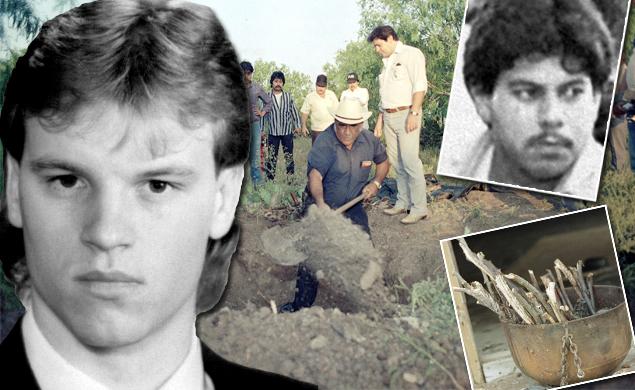
The breakthrough came almost by chance. On 1 April 1989 a car ran a drug checkpoint without stopping. Mexican police followed it to a ranch outside Matamoros, Rancho Santa Elena, where they found ritual objects and traces of marijuana.
Accounts differ on who was driving: for the Mexican police it was Serafín Hernández García, nephew of the local drug boss, while according to the Associated Press it was his uncle Elio Hernández Rivera who sped through the checkpoint, convinced that Constanzo’s rituals really made him invisible to the officers.
On 9 April officers returned and arrested several men. One of the ranch caretakers recognised Mark in a photo and pointed to a shack: that was where he had seen him. Under questioning, Serafín Hernández García confessed that several people had been killed at the ranch, including the American boy.
The ranch was the hideout of a cult led by Adolfo de Jesús Constanzo, known as “El Padrino”. Born in Miami in 1962 to a Cuban mother, Constanzo practised a version of Palo Mayombe, an Afro-Caribbean religion rooted in the cults of African slaves, knew Santería, and had made a fortune in Mexico City reading tarot cards and selling magic rituals. His clients were mainly drug traffickers, but also corrupt police officers and members of high society.
Constanzo promised the traffickers he would make them invisible to the police and immune to bullets. For his rituals he first used bones stolen from cemeteries, then decided the spirits would be stronger with human sacrifices. At his side was Sara Aldrete, “La Madrina”, a student from Matamoros who recruited followers.
Sara led a double life: across the border in Brownsville she was an honours student and cheerleader at Texas Southmost College, and classmates and teachers never noticed anything odd. To win over new recruits, investigators said, she showed them the film The Believers (1987) again and again, the story of a New York cult that performs human sacrifices for money and power.
On 11 April police took the suspects to the ranch and forced them to dig. Fifteen mutilated bodies came to light, all men killed over nine months. One was Mark’s, identified from his dental records. Most of the victims were rival traffickers, while Mark had been chosen at random.
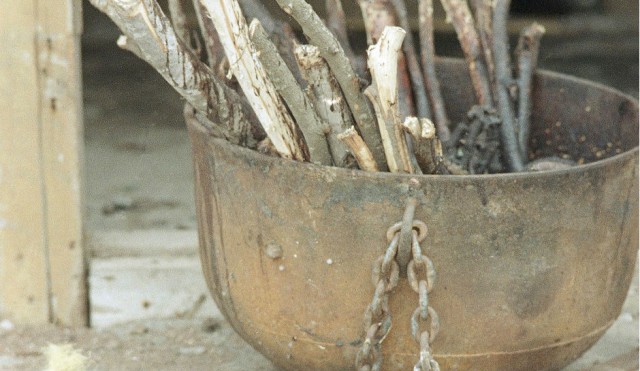
Police also seized 110 kilos of marijuana, cocaine, weapons and vehicles at the ranch. In an iron cauldron, the nganga, investigators found remains of a human brain, a goat’s head, chicken feet, a turtle, herbs and coins mixed with animal blood.
The sacrifice of Mark Kilroy
According to Serafín’s confession, Constanzo had ordered his men to find a young white male for a ritual: he wanted the “superior brain” of an American student.
On the night of the abduction some gang members had mingled with the students on the streets of Matamoros. One of them lured Mark close to a truck and the others dragged him inside. Mark managed to break free and run, but was stopped by another gang car and taken to the ranch at gunpoint.
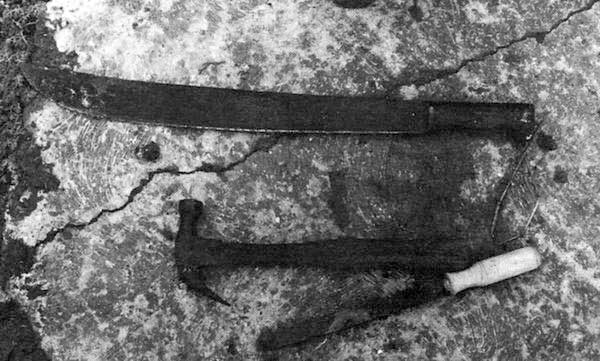
They left him handcuffed in the car all night. About twelve hours later Constanzo arrived: they taped his mouth shut and took him to a shack, where he was tortured and raped all night. Then Constanzo killed him with a machete blow to the back of the neck. His brain was boiled in the nganga, the ritual cauldron.
To bury him more easily they cut off his legs and ran a wire along his spine, so the bones could be pulled out once the body had decomposed: the followers wanted to wear them around their necks as amulets. Contrary to what was said for years, investigators found no signs of cannibalism.
Mark’s parents showed incredible faith: his father told reporters he felt no anger towards the killers, and his mother asked people to pray for them.
The end of Constanzo
After the ranch was discovered Constanzo fled to Mexico City with some followers. On 6 May 1989 police surrounded their flat. Rather than be caught, Constanzo ordered one of his men to shoot him and his lover, Martín Quintana, with a submachine gun. Sara Aldrete was arrested at the scene.
The siege lasted about 45 minutes: Constanzo fired from the window, threw gold coins and banknotes into the street and burned more money on the stove, saying no one would get his cash. The shooter was Álvaro de León Valdés, known as “El Duby”, who hesitated at first. Police checked the fingerprints to make sure Constanzo had not faked his own death. Sara Aldrete, however, has always told a different story: according to her, Constanzo was killed by officers during the raid, and she was being held prisoner by the group.
In 1993 several cult members were convicted of murder and drug trafficking, although some claimed they had played no part in Mark’s death and had been tortured into confessing. Two suspects were never caught.
The sentences were handed down on 3 May 1994: 62 years in prison for Sara Aldrete and 67 years each for Elio Hernández Rivera, Serafín Hernández García, David Serna Valdez and Sergio Martínez Salinas. “El Duby” had already been sentenced to 30 years for killing Constanzo and Quintana. In 1998 a federal court cut three of the sentences to 50 years. The two wanted men, Ovidio Hernández and Malio Fabio Ponce Torres, were still at large in 2009. Aldrete has kept proclaiming her innocence, wrote an autobiography and accused the police of torturing her and of covering up the names of famous people linked to Constanzo.
After the case
Two months after the bodies were found, Mark’s parents set up the Mark Kilroy Foundation, which has since run drug-prevention programmes in Texas schools: it was their way of carrying on the dream of their son, who wanted to become a doctor. His father told the story in the book Sacrifice (1990).
American newspapers at the time spoke of a satanic cult, and in Mexico the group became known as the narcosatánicos, but scholars of Afro-Cuban religions have always stressed that Palo Mayombe has nothing to do with Satanism: Constanzo had made his own twisted version of it to serve his drug trade. The case also inspired the horror film Borderland (2007) by Zev Berman, loosely based on the Matamoros cult.
Two weeks after the bodies were found, Mexican police went back to the ranch, had a folk healer purify the shack and set it on fire, planting a wooden cross on the ashes. The healer said a few prayers, sprinkled salt on the floor and made the sign of the cross. The government gave no explanation, but a source close to the investigation said the motives were supernatural: the shack meant a great deal to Constanzo, and burning it was a way to hit him where it hurt. Reportedly he flew into a rage when he saw the fire on the TV news.
🦋 Emadion lives through its readers. If this story kept you up at night, buy me a coffee: it helps me bring you the next nightmare.
☕ Support Emadion on Ko-fiSources
- Murder of Mark Kilroy, Wikipedia
- Adolfo Constanzo, Wikipedia
- Deseret News (AP) – 5 cultists get long terms for slaying 13
- Borderland (2007 film), Wikipedia