
 Posted by
On July 2, 1951, in St. Petersburg, Florida, 67-year-old Mary Hardy Reeser was found almost entirely reduced to ash in her armchair, while the room around her was barely touched. Newspapers called her the “cinder lady,” and her death became the most famous alleged case of spontaneous human combustion. The FBI ruled it an accident caused by the “wick effect,” yet a few questions have never been fully settled.
The doorknob was hot. That is where the whole story begins: a summer morning, and a piece of metal far too warm under the fingers of a landlady who only wanted to deliver a telegram.
It was around eight o’clock on July 2, 1951. Pansy Carpenter stood outside her tenant’s door at 1200 Cherry Street, in the northeast part of St. Petersburg, Florida. The telegram was for Mary Hardy Reeser, 67. When Carpenter felt the heat coming off the knob, she knew something was wrong and called for help.
What they found inside looked like no house fire anyone had ever seen.
A widow far from home
Mary Hardy was born in 1884 in Columbia, Pennsylvania, and married a physician, Richard Reeser. After she was widowed, she moved to St. Petersburg to be near her son, also a doctor, and his family. She lived alone in a small apartment in a cluster of bungalows. People who knew her described a somewhat lonely woman who hated the sticky Florida heat and dreamed of spending the summer up north.
On the evening of July 1, her son stopped by. She was already in her nightgown. She told him she had taken two sleeping pills and would probably take two more before going to bed. He said good night and left a few minutes later. He was the last person to see her alive.
Mary Reeser was a smoker. That night, according to the account investigators came to accept, she settled into her overstuffed armchair for one last cigarette.

A black circle on the floor
All that remained of the armchair were its steel springs. Of a small table next to it, a couple of charred legs. On the rug was a burned circle roughly three feet across, soaked with a greasy residue.
Very little was left of Mary Reeser herself: part of her left foot, still in a slipper, fragments of her spine, and her skull. Everything else was ash. That is why the papers of the day nicknamed her the “cinder lady.”
The most baffling part, though, was the room. The walls and ceiling were blackened with soot, but only from about four feet above the floor; below that line, almost everything was intact. The switch plates higher up on the wall had melted, while the outlets near the floor had not. Some plastic objects well away from the fire had softened and lost their shape. And yet the fire had never spread to the rest of the apartment.
A human body burned almost completely to ash, in a room that had not burned. It was as if the fire had followed a precise border, drawn around a single person.
The skull “the size of a teacup”
One of the most quoted details of the case is also one of the most disputed. Early accounts claimed the woman’s skull had “shrunk to the size of a teacup.” The image traveled the world and ended up in dozens of books on the paranormal.
Where it came from, however, is unclear. The phrase appears in a summary of the FBI files, but according to a local reconstruction based on the original reports it is not in the police report, and a fire researcher who saw the scene disputed the description. The reason is simple: fire tends to shatter the bones of the skull, not shrink them evenly.
According to Tampa Bay’s Bay News 9, the experts consulted may have included Wilton M. Krogman, the University of Pennsylvania forensic anthropologist known as “the bone doctor.” Krogman reportedly doubted the simplest explanations before partly walking those doubts back. His notes on the case have never been found.
A letter to J. Edgar Hoover
St. Petersburg police chief J. R. Reichert had no idea where to start. On July 7 he shipped a box of evidence to the FBI: glass fragments from the ashes, a few small objects that looked like teeth, a section of carpet, and the slipper. In his letter to Director J. Edgar Hoover, he essentially asked how a human body could be destroyed this way, with a fire so contained and so little damage to the building and the furniture.
Meanwhile, investigators ruled out the obvious. Electricians checked the wiring, lightning was dismissed, and a gas leak from the kitchen was excluded. The FBI laboratory found no trace of gasoline, other petroleum products, or chemicals that might have fed a fire.
The FBI’s answer: the “wick effect”
The answer came at the end of July. According to the FBI, there had been nothing spontaneous about it. Mary Reeser had fallen asleep, drowsy from the sleeping pills, with a lit cigarette. The ember set her nightgown alight, and from there the fire found an unexpected fuel: the fat of her own body.
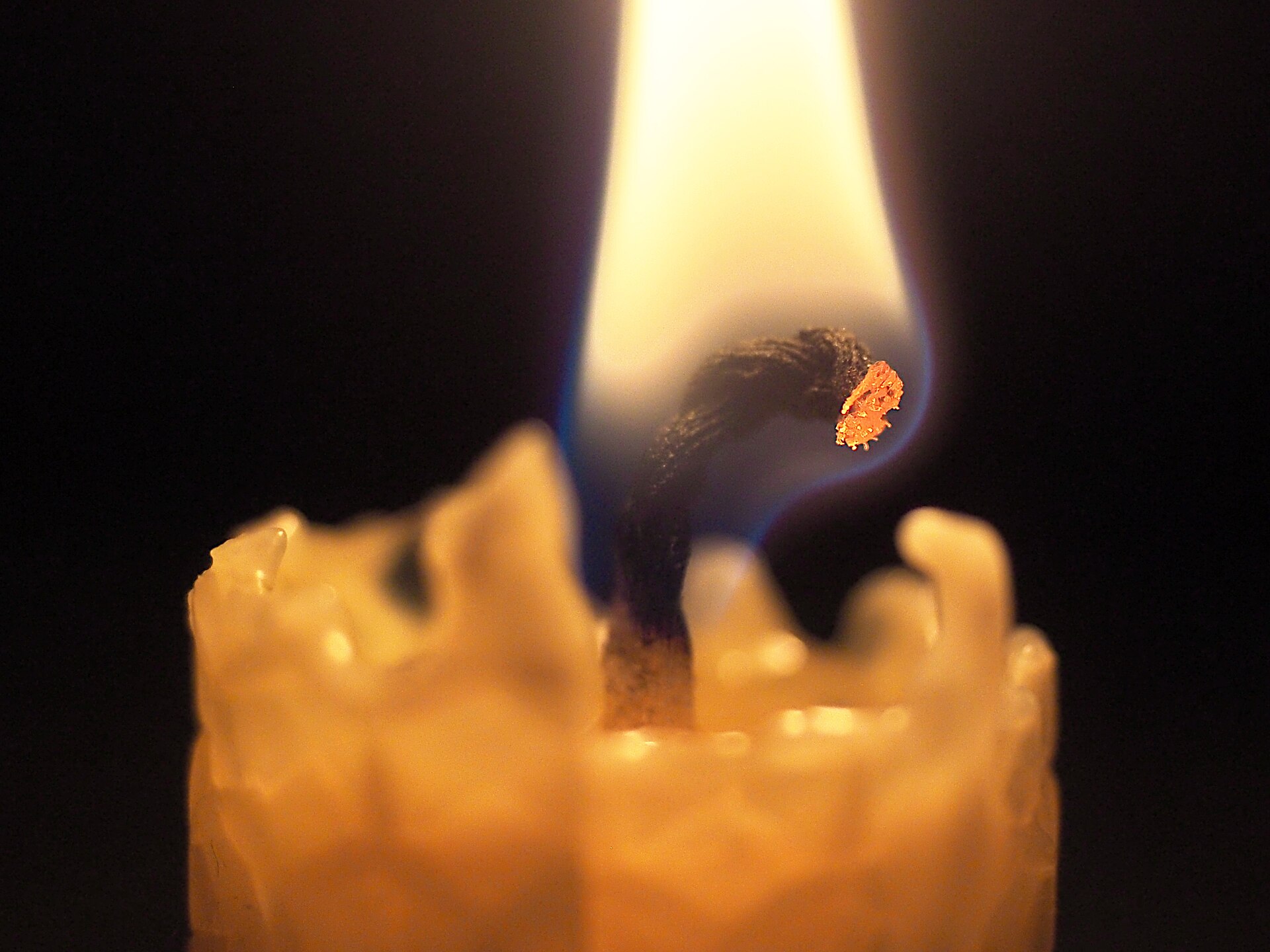
Experts call this the “wick effect,” or “candle effect.” It works like a candle turned inside out. Clothing and the chair’s stuffing act as the wick; body fat melts, soaks into them, and keeps feeding a low, slow flame. That flame is small but steady. It can burn for hours and reach very high temperatures right where it sits, without having the power to set a whole room on fire. Heat rises, which is why the walls were blackened only above a certain height.
Reeser’s daughter-in-law, speaking to a local paper, summed it up plainly: the cigarette had dropped into her mother-in-law’s lap and her body did the rest; the floor was concrete, and there was nothing around the chair that could burn. Decades later, her son said he accepted the FBI’s conclusion.
The pig in the blanket
The “human candle” idea has been tested, too. In 1998, for a BBC science documentary, forensic scientist John DeHaan wrapped a pig carcass in a blanket and set it alight. It kept burning for hours. In the end the fatty midsection was gone, bones included, while the leaner legs were left largely intact.
The result looked strikingly like the remains in many alleged spontaneous combustion cases: the torso consumed, the extremities spared. Skeptical investigator Joe Nickell and chemist John F. Fischer reached similar conclusions about the Reeser case: a cigarette, flammable nightclothes, sleeping pills, the chair’s stuffing and, perhaps, partly open windows feeding the flame. Above all, time. Roughly twelve hours passed between the last time Mary was seen alive and the discovery of her body.
Australian forensic pathologist Roger Byard has described such victims with a blunt but fitting image: they are, essentially, human candles. He has also pointed out something that outweighs every theory. Nobody has ever actually witnessed a body catch fire on its own.
From Cesena to Dickens, an old fear
The idea that a human body can ignite from within is far older than the Reeser case. One of the best-known accounts concerns Countess Cornelia Bandi of Cesena, Italy, found in her room in 1731 almost entirely reduced to ash. In the eighteenth and nineteenth centuries similar stories circulated all over Europe. The victims were often elderly women, sometimes heavy drinkers, and many believed alcohol made the body flammable. Today that theory has no scientific standing.
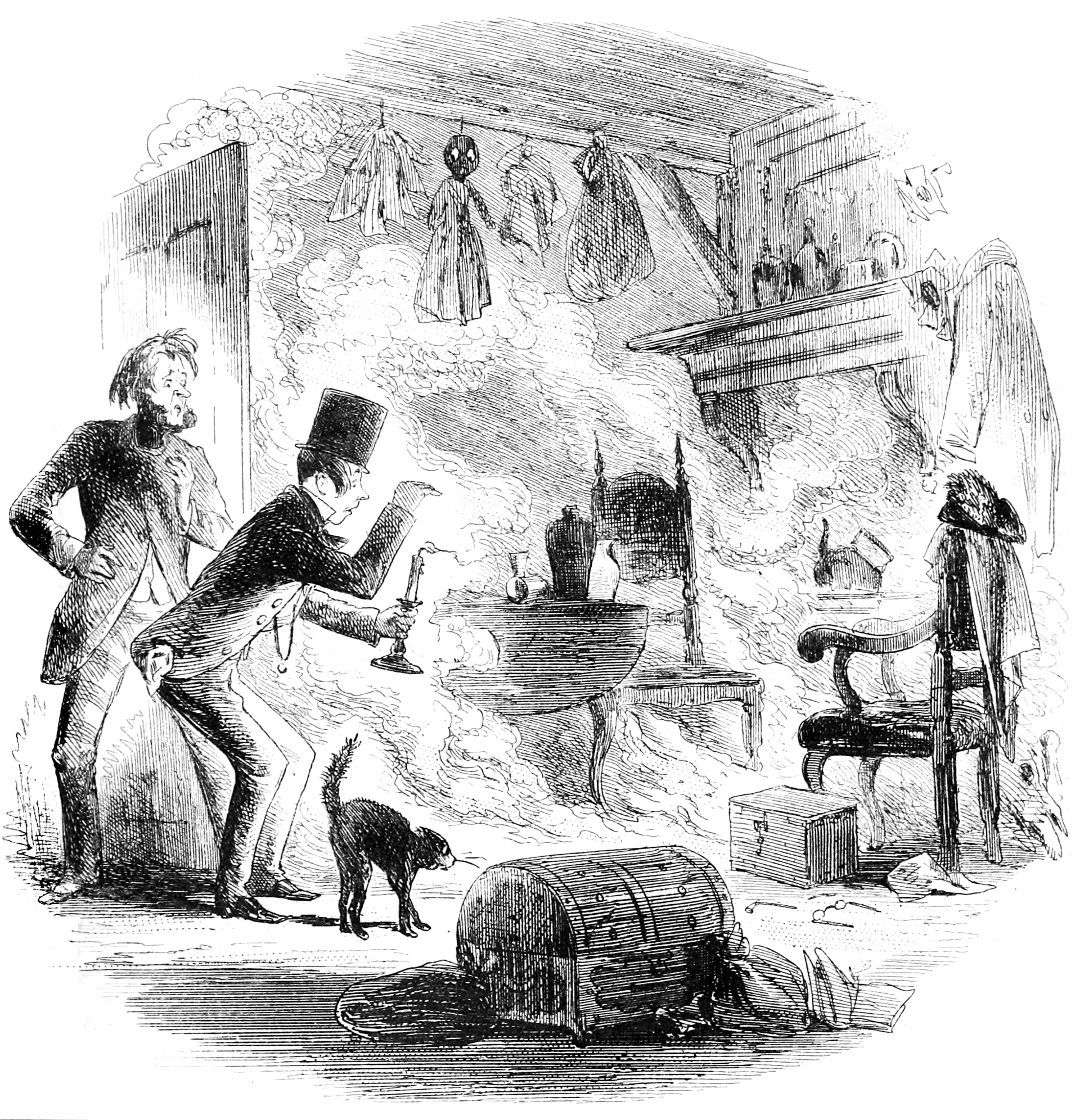
The phenomenon made its way into literature as well. In Bleak House (1852–1853), Charles Dickens kills off the rag-and-bone dealer Krook this way, leaving nothing but a greasy heap of ash. Dickens defended the choice in his preface, insisting that real cases were on record.
Nor did the story end in the twentieth century. In 2010, an Irish coroner attributed to spontaneous combustion the death of 76-year-old Michael Faherty, found badly burned in his Galway home next to a lit fireplace, with no sign of accelerants. It was a rare conclusion for an official ruling, and it briefly revived the old debate.
What is left of the mystery
If the wick effect explains so much, why does Mary Reeser’s case still fascinate? Partly because of the power of its images: the slipper, the chair springs, the black circle on the rug. Partly because some details, like the shrunken skull, broke away from the original records and took on a life of their own. And partly because nobody was there to see what really happened during those night hours.
Mary Reeser was buried in Pennsylvania, in the place she had come from. The bitterest twist lies in the telegram her landlady never managed to deliver that morning. According to the local reconstruction, it was a message from a friend confirming she had found her a cool place to spend the summer, far from Florida.
Science no longer needs mysterious fires to explain her death. But the scene in that room, a single burned armchair surrounded by untouched furniture, remains one of the most unsettling ever to land in an FBI file.
If you are drawn to deaths that seem to defy explanation, read also the story of Peter Bergmann, the mysterious man.
🦋 Emadion lives through its readers. If this story kept you up at night, buy me a coffee: it helps me bring you the next nightmare.
☕ Support Emadion on Ko-fiSources
- Death of Mary Reeser – Wikipedia
- Vintage St. Pete: The strange case of Mary Reeser – St Pete Catalyst
- The curious case of Mary Hardy Reeser – Bay News 9
- Burning death remains mystery – Tampa Bay Times (1991)
- FBI FOIA – Spontaneous Human Combustion (archived copy)
- Do people really die from spontaneous human combustion? – The Straight Dope
- Can humans spontaneously combust? – Popular Science
- Combustione umana spontanea – Wikipedia (Italian)
- Wilton M. Krogman – Wikipedia
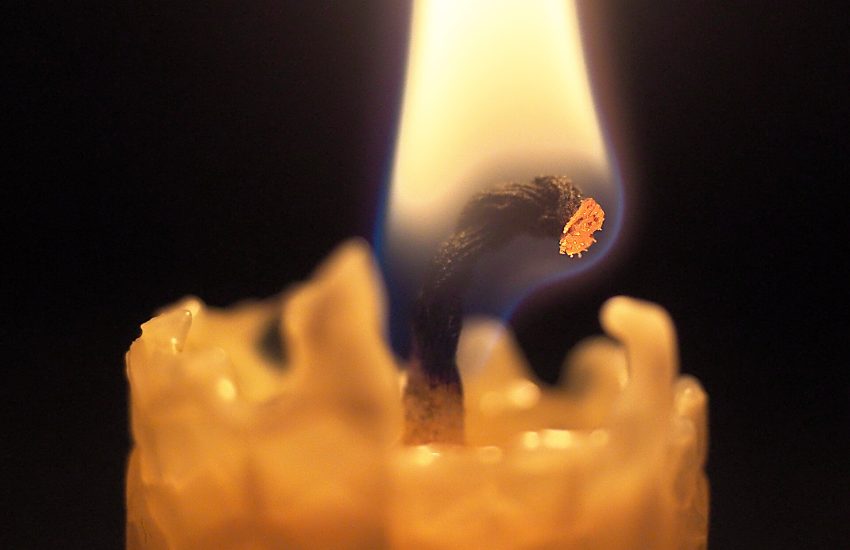
Featured image: Kreuzschnabel, Candle wick and flame closeup, CC BY-SA 3.0, Wikimedia Commons.