
 Posted by
It is a September night in 1863, in Bologna. A twenty-eight-year-old professor, already known for his prickly temper and his poisonous pen, picks up a sheet of paper and writes a toast. It is not dedicated to a friend, a woman or his homeland. It is dedicated to the Devil.
That professor is Giosuè Carducci. Forty-three years later he will become the first Italian to win the Nobel Prize in Literature, the poet whom generations of Italian students meet at school as a kind of national monument. But before becoming a monument, Carducci was the man who wrote the Hymn to Satan (Inno a Satana), the poem that made an entire country cry scandal.
A toast to the Devil
Carducci was born in 1835 in Valdicastello, Tuscany, the son of a patriotic doctor. From 1860 he taught Italian Eloquence at the University of Bologna, a city that had only just escaped the rule of the Pope. Italy was being born, Rome was still in the hands of Pius IX, and the clash between patriots and the Church was fierce.
This is the climate in which the Hymn was born. According to Carducci himself, the verses burst out of him in one go, straight from the heart, after years of doubts and searching: it was the cry of a man who had finally found his faith. A faith, however, that had very little to do with heaven. The poem was written to be read at the dinner table among friends, glass in hand, and indeed it opens while the wine sparkles in the cups:
A te, de l’essere
principio immenso,
materia e spirito,
ragione e senso…(To you, immense principle of being, matter and spirit, reason and sense…)
The scandal of 1869
The Hymn first appeared in 1865, almost unnoticed. The real scandal came four years later. On 8 December 1869 the First Vatican Council opened in Rome, the council that would proclaim papal infallibility. And in those very days the radical Bologna newspaper Il Popolo republished the Hymn to Satan, signed with a pen name that fooled no one in Bologna: Enotrio Romano. It was no coincidence: it was a provocation, and everyone understood it as such.
The reactions were furious. Catholic newspapers cried blasphemy, but many patriots also distanced themselves. The most famous was Quirico Filopanti, a mathematician and hero of the 1849 Roman Republic, who wrote Carducci an open letter as courteous as it was sharp: he wished to remain his friend, he said, but not if it meant becoming a friend of Satan as well. He, for his part, remained faithful to Mazzini’s motto, “God and the People”.
Carducci replied with a long letter, polite but without taking a single step back, and the controversy spread across Italy. Meanwhile, according to the writings of those months, part of Bologna answered the Council in its own way: by sending the author of the Hymn to Satan to the city council.
Who is Carducci’s Satan?
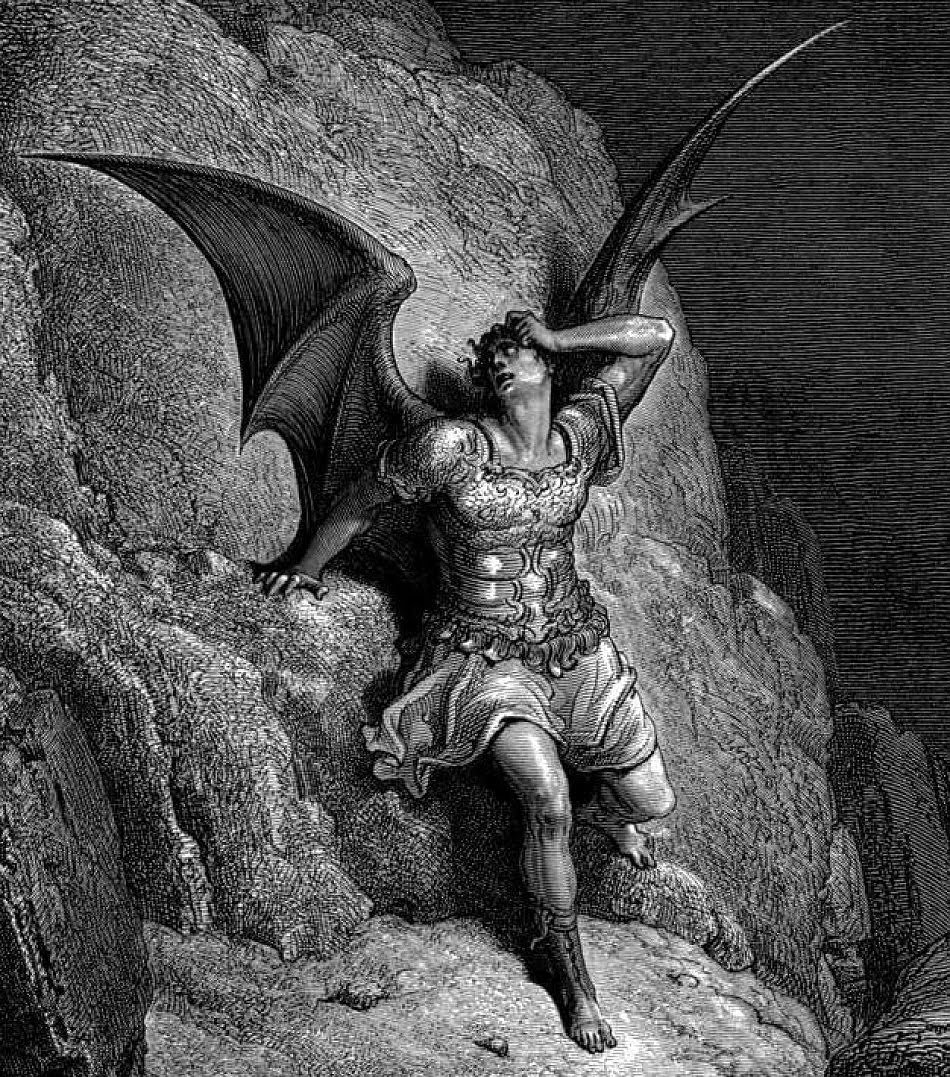
Anyone expecting a black mass will be disappointed. Carducci’s Satan has no horns, does not want souls and offers no blood pacts. He is a symbol. He stands for everything the nineteenth-century Church condemned: reason, science, free thought, the beauty of the senses, love, nature and progress. He is the rebel who defies the power of “wicked popes” and “bloody kings”, and who crosses the centuries setting human minds on fire.
Throughout the poem’s fifty short stanzas, the Devil wears a thousand faces. He stands beside the pale witch, beside the alchemist bent over his flasks, beside the rebellious magus. He even comforts Heloise, the nun in love. Above all he lives in the heretics and reformers who challenged Rome: Wycliffe and Jan Hus, Girolamo Savonarola, Martin Luther throwing off his habit. Satan is in all of them. And he is in the poem itself:
Tu spiri, o Satana,
nel verso mio,
se dal sen rompemi
sfidando il dio
de’ rei pontefici,
de’ re crüenti:
e come fulmine
scuoti le menti.(You breathe, O Satan, in my verse, when it bursts from my breast defying the god of wicked popes and bloody kings: and like lightning you shake men’s minds.)
The rhythm is hammering: two hundred very short lines of five syllables, grouped in quatrains. It reads almost like a tavern song, and that was exactly the intended effect.
The grand finale: the Devil is a locomotive
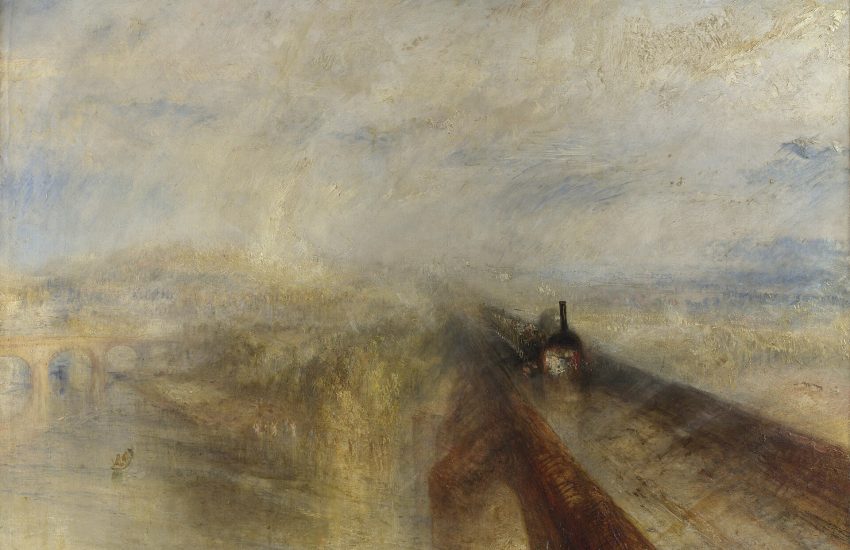
But the most surprising moment comes at the end. After travelling through the centuries, Satan takes the shape of the most modern invention of the age: the train. An iron and fire creature racing across land and sea, puffing and flashing like a monster straight out of hell.
Un bello e orribile
mostro si sferra,
corre gli oceani,
corre la terra…(A beautiful and terrible monster breaks loose, it runs across the oceans, it runs across the land…)
It is an extraordinarily powerful image: for Carducci the real devil is progress, which no anathema can stop. And the Hymn ends with a salute that sounds like a battle cry, followed by an even more blasphemous final challenge: Satan, the poet says, “you have defeated the Jehovah of the priests”.
Salute, o Satana,
o ribellione,
o forza vindice
de la ragione!(Hail, O Satan, O rebellion, O avenging force of reason!)
A devil in good company
Carducci was not alone. In the nineteenth century the Devil had become a fashionable literary figure: no longer the monster of the Middle Ages, but the great rebel, the fallen angel who defies heaven in the name of freedom. A few years earlier, in 1857, Charles Baudelaire had included his Litanies of Satan in The Flowers of Evil. Baudelaire’s Satan, however, is the comforter of the desperate and the outcast, melancholy and nocturnal. Carducci’s is sunny, combative and full of faith in the future.
Did the poet repent?
Over the years Carducci distanced himself from his Hymn. He judged it harshly as poetry, going so far as to call it a “chitarronata”, a loud and clumsy strumming. His poetry became broader and calmer, so much so that in 1897, in The Church of Polenta, he even sang the sweetness of the Ave Maria.
But he never truly renounced the ideas of that night-time toast. He remained a convinced secularist and an opponent of the Church’s temporal power all his life, became a Senator of the Kingdom and died in Bologna in 1907, celebrated as the poet of united Italy. Today the house where he spent his last years, along Bologna’s city walls between Porta Maggiore and Porta Santo Stefano, is a museum.
And the Hymn to Satan? It is still there, in Italian school anthologies, with its railway devil and its tavern rhythm. It may not be Carducci’s most beautiful poem. But it is certainly his bravest, and the one that best reminds us that even monuments were once young and rebellious.
Had you ever heard of it? Does it still sound scandalous to you, or does its Devil seem almost endearing today?
If you are interested in the Devil in art and history, read also The Devil’s score of Lucedio and The Devils of Loudun.
🦋 Emadion lives through its readers. If this story kept you up at night, buy me a coffee: it helps me bring you the next nightmare.
☕ Support Emadion on Ko-fiSources
- Giosuè Carducci, A Satana (1863), text on Italian Wikisource.
- G. Carducci, Satana e polemiche sataniche, with Quirico Filopanti’s letter and the author’s reply.
- “Giosuè Carducci”, Wikipedia.
- Casa Carducci – Museo civico del Risorgimento, Bologna.