 Posted by
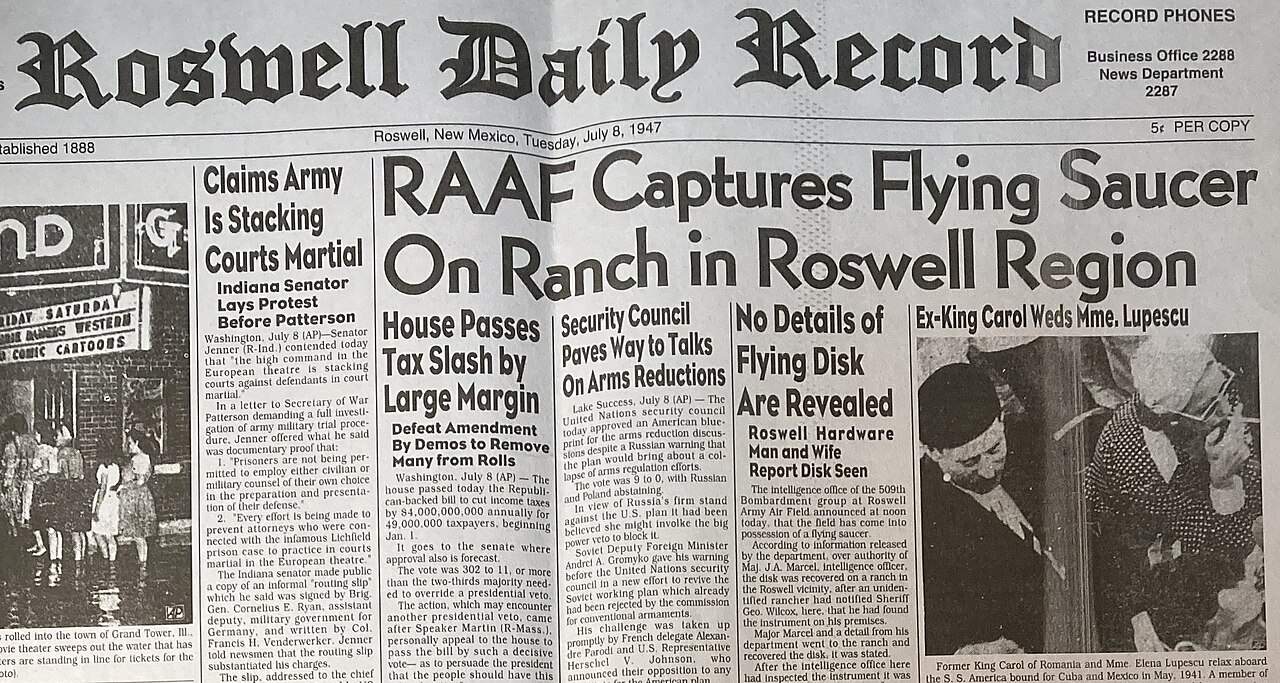
On 8 July 1947 the US Army Air Forces announced it had recovered a “flying disc” from a ranch near Roswell, New Mexico. The next day it corrected itself: it was only a weather balloon. Thirty years later the story exploded again, with witnesses, alien bodies and cover-ups. Roswell became the most famous UFO case in the world. And in 1994 the Air Force admitted it had lied about the balloon.
By the summer of 1947 America already had flying saucers on the brain. On 24 June a pilot, Kenneth Arnold, reported seeing nine bright objects streaking past Mount Rainier “like a saucer skipped across water”. The papers coined the phrase “flying saucer”, and within weeks sightings were multiplying across the country.
It was in that atmosphere that a rancher on a remote spread in New Mexico found something strange.
Debris on the ranch
The rancher was William “Mac” Brazel, who worked a ranch near Corona, about a hundred kilometres from Roswell. In early July, riding out on his land, he found debris scattered across the ground: sticks of light wood, tape, rubber sheeting, foil and a shiny material like silver paper.
He had no idea what it was. A few days later, hearing talk of flying discs, he took some pieces to the Roswell sheriff, who alerted the nearby base, Roswell Army Air Field. The base sent an intelligence officer, Major Jesse Marcel, to collect the material.
“We have a flying disc”
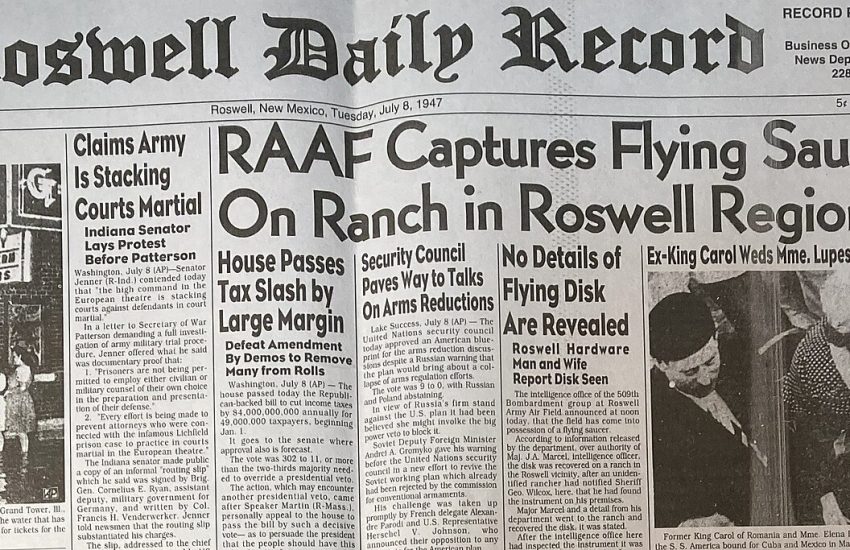
On 8 July 1947 the base’s press office, run by Lieutenant Walter Haut, issued a statement that went round the world: the army had come into possession of a “flying disc” recovered on a local ranch.
The Roswell Daily Record ran it as a banner headline. The base’s phones started ringing non-stop.
Within hours came the denial. General Roger Ramey, in Fort Worth, Texas, called in reporters and showed them the debris: a weather balloon with its radar reflector. Photos of Ramey and Marcel beside those scraps of foil and wood ran in papers everywhere. The case seemed closed.
And for thirty years, it was.
Roswell returns
In 1978 UFO researcher Stanton Friedman tracked down a retired Jesse Marcel. Marcel said the debris he had collected wasn’t what was shown in Texas, and that the material was strange: an ultra-thin metal foil that smoothed itself out again after being folded. In his view, the balloon story had been a cover.
In 1980 the book The Roswell Incident came out, and then came the avalanche. New witnesses spoke of a second crash site, a wrecked disc and small bodies with large heads taken secretly to the base. There was talk of autopsies, gag orders and threats. Some witnesses contradicted each other; others repeated things they’d heard second-hand. But the legend had taken off.
In 1995 a black-and-white film even appeared showing an “alien autopsy”. It was broadcast in dozens of countries. Eleven years later its producer admitted it was a reconstruction shot with a dummy.
Project Mogul
In 1994, under pressure from a New Mexico congressman, the US Air Force released a report. And it admitted one thing: in 1947 the army had lied. Not about a flying disc, but about the balloon.
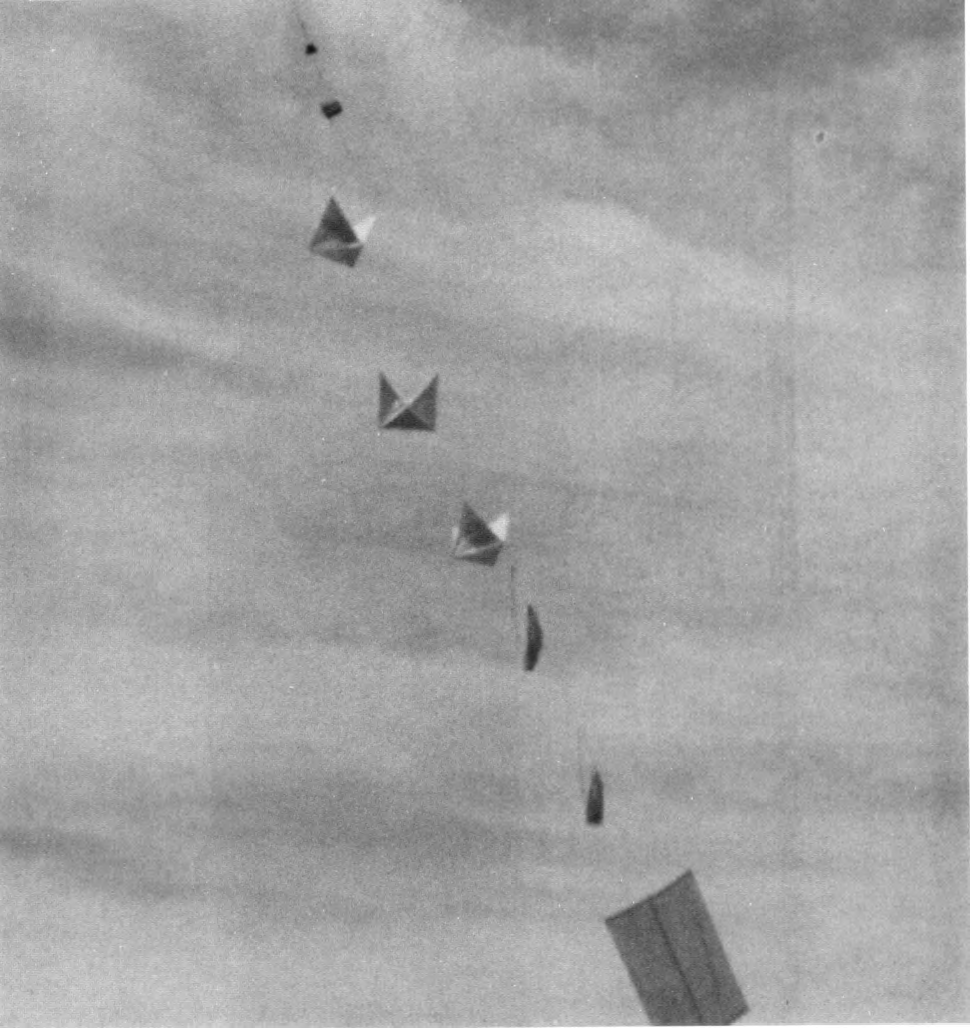
What came down on the ranch wasn’t an ordinary weather balloon. It was part of Project Mogul, a top-secret programme: long trains of balloons carrying microphones and radar reflectors, sent up to high altitude to “listen” for Soviet nuclear tests. That’s why the army preferred to call it an everyday weather balloon.
In 1997 a second report, titled Case Closed, tried to explain the “alien bodies” too. According to the Air Force, witnesses had probably blended memories of the dummies used in the 1950s for high-altitude parachute tests with real aircraft accidents that had claimed lives.
For sceptics, the case is solved. For many enthusiasts, that “Case Closed” is proof there’s still something to hide.
Roswell today
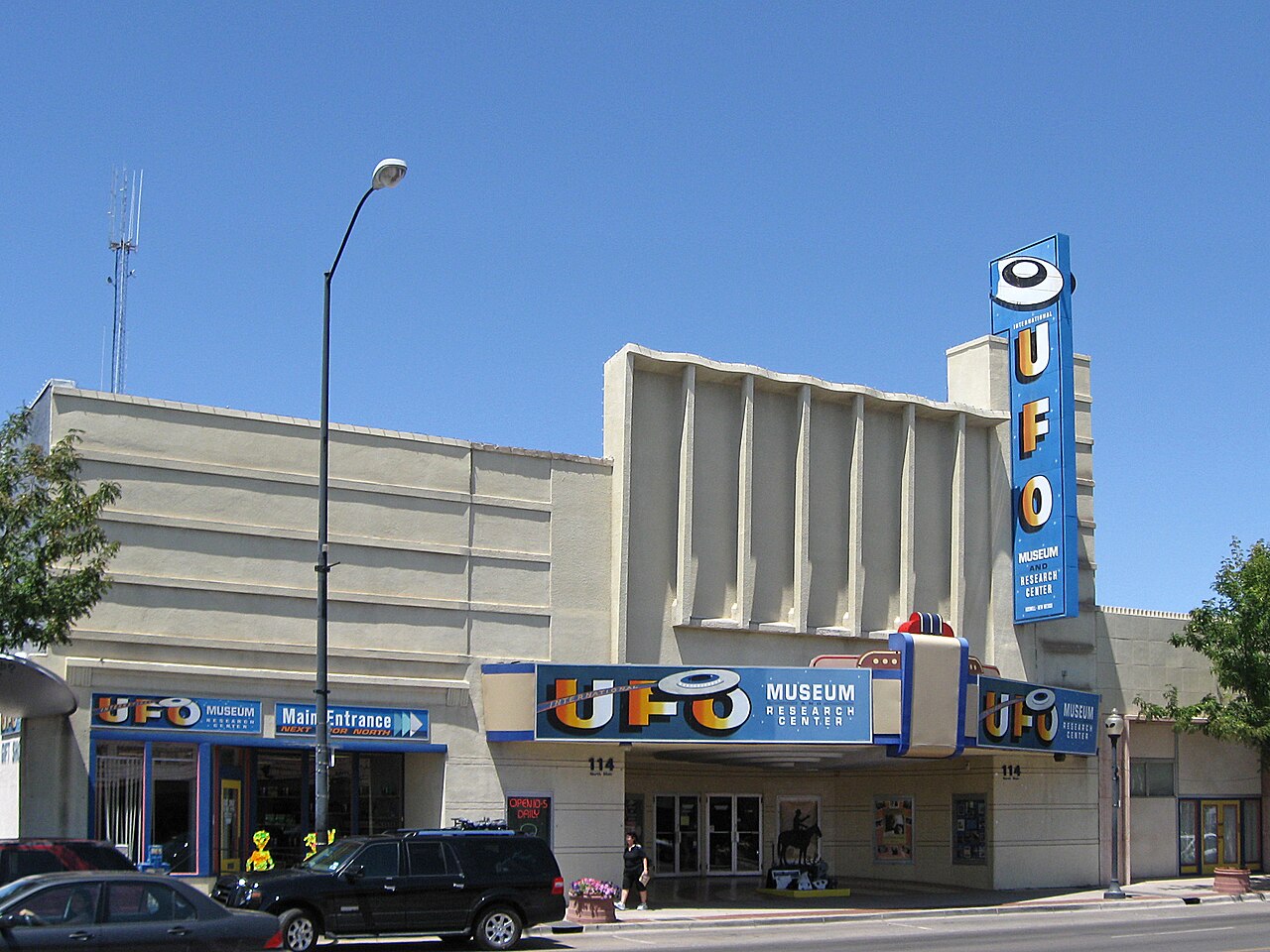
Roswell has made peace with its fame; in fact it has built a whole economy on it. The town has the International UFO Museum and Research Center, opened in 1991 with help from Walter Haut, the man behind the press release. The street lamps are shaped like alien heads. And every July, on the anniversary, a UFO festival draws thousands of people.
That’s exactly why I like Roswell: not because there’s proof of aliens, but because it shows how a modern myth is born. A real military secret, a lie to cover it, thirty years of silence and then memories that fill up with detail. You don’t need a flying saucer to create a legend. A balloon and a press release will do.
🦋 Emadion lives through its readers. If this story kept you up at night, buy me a coffee: it helps me bring you the next nightmare.
☕ Support Emadion on Ko-fiSources
- Roswell incident, Wikipedia
- The Roswell Report: Fact versus Fiction in the New Mexico Desert (1995), DTIC
- The Roswell Report: Case Closed (1997), Project Gutenberg
- Project Mogul, Wikipedia
- Roswell and Project Mogul, The Space Review
Featured image: Photo Roswell Daily Record., public domain, via Wikimedia Commons