
 Posted by
In 1926 a man with no name and no memory was arrested in Turin and locked away in the Collegno asylum. A year later his photo appeared in a magazine and two families claimed him. To one he was Professor Giulio Canella, missing since the First World War; to the other he was Mario Bruneri, a print worker with a criminal record. The courts sided with the Bruneris, but Canella’s wife never gave up. In 2014, DNA finally weighed in.
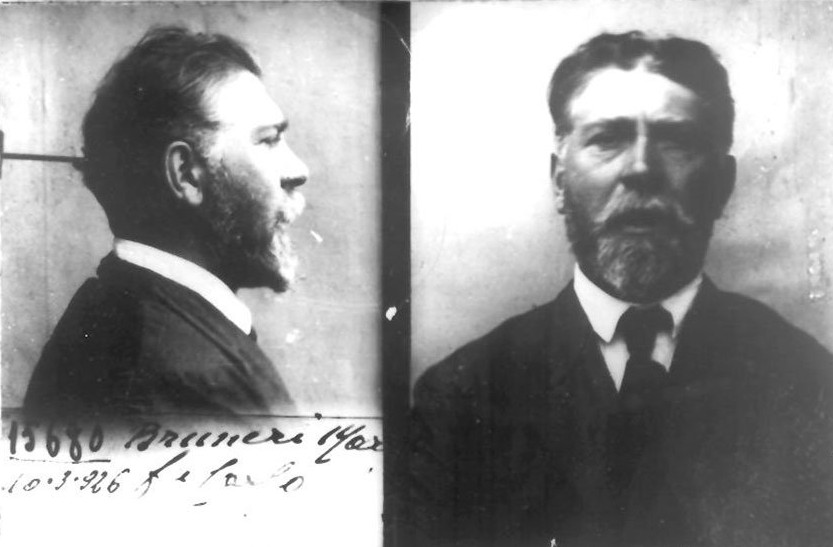
In the police mugshot he has a ragged beard, a high forehead and eyes that seem to be looking at something just past the photographer. It is 10 March 1926, and the Turin police have just picked up a man caught walking off with a funerary vase from the city cemetery. He carries no papers. He does not know, or claims not to know, his own name. In his pockets are a few odds and ends, including a postcard with a loving note to a father, signed “Giuseppino”.
That man would become, for all of Italy, lo smemorato di Collegno, the Amnesiac of Collegno. The phrase is still part of everyday Italian, used for someone who forgets everything, or pretends to. Behind the idiom, though, lies one of the strangest stories of twentieth-century Italy: a five-year legal war fought over what sounds like the simplest question imaginable. Who was this man?
A number instead of a name
After a medical examination the stranger was committed to the asylum at Collegno, just outside Turin, housed in the buildings of the old royal charterhouse. The registers gave him no name, only a number: patient 44170. Doctors diagnosed amnesia. He was polite, well spoken and seemed educated, but about his past he said nothing at all.
Almost a year went by without anyone coming forward. So the asylum tried publicity. On 6 February 1927 La Domenica del Corriere, Italy’s most popular weekly, printed his photograph in its column on people of unknown identity, under a simple question: does anyone know him? The same day the Turin daily La Stampa ran an interview with the stranger.
The professor lost in Macedonia
In Verona, the photo caught the eye of Giulia Canella. Her husband Giulio, born in Padua, was a respected Catholic intellectual. He held degrees in philosophy and literature, had taught and then run a school in Verona, and in 1909 had co-founded the Rivista di filosofia neo-scolastica with the priest and scholar Agostino Gemelli. In 1916, as an infantry captain, he had been sent to the Macedonian front. On 25 November that year, during fighting near Monastir, he was seen falling badly wounded. His body was never recovered and the army listed him as missing.
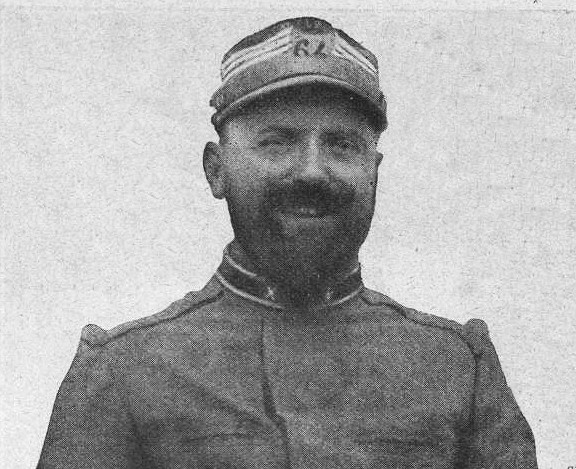
Giulia had never believed her husband was dead. She travelled to Collegno and on 27 February 1927 met the stranger in the asylum cloister. She recognized him at once: it was Giulio. According to the newspapers he too seemed, little by little, to recover fragments of that life. On 2 March he left the asylum and went with her to the Veneto. To the press it was a fairy-tale ending: the soldier returning from the fog of war into the arms of his faithful wife.
The anonymous letter
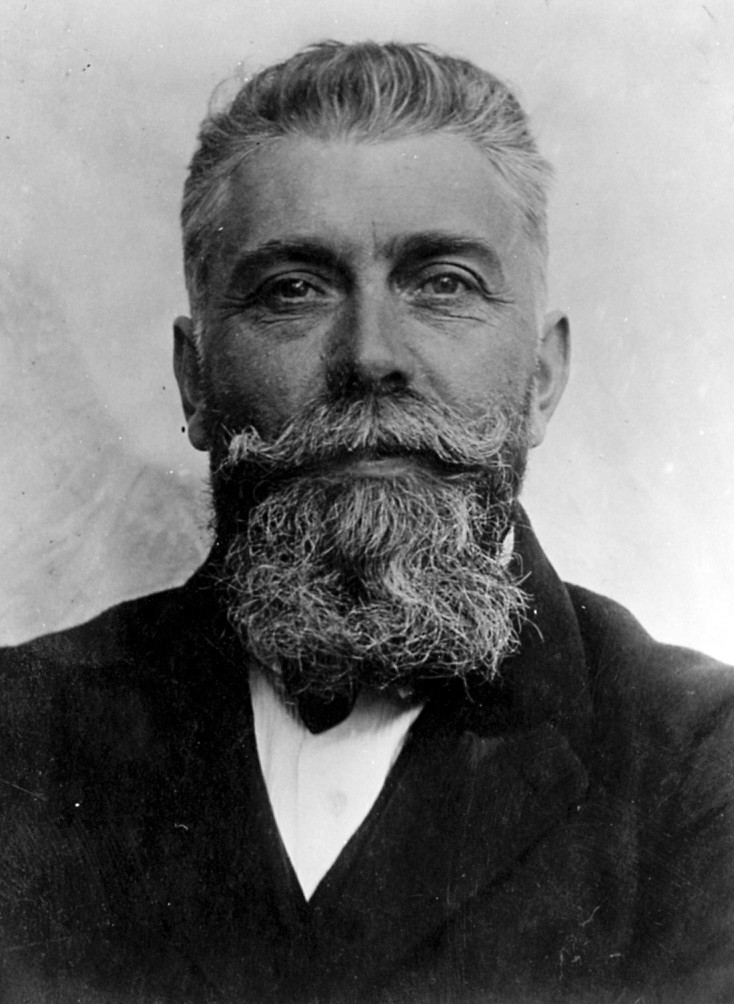
The fairy tale lasted only days. In early March an anonymous letter reached the Turin police. The man from Collegno, it claimed, was no professor at all. He was Mario Bruneri, a Turin print worker born in 1886, wanted for fraud, arrested several times before, who had spent the previous years drifting between Genoa and Milan under false names.
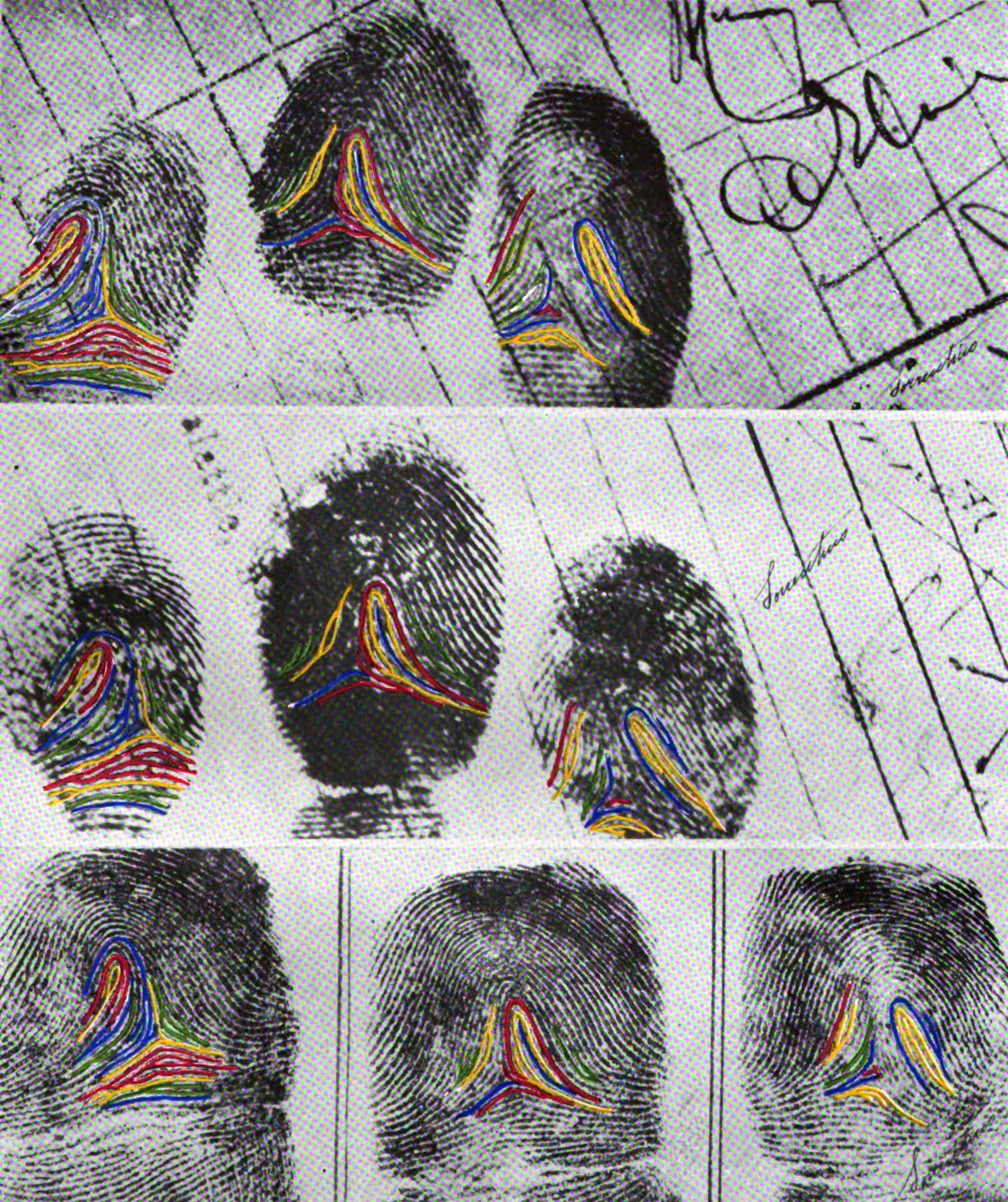
The police brought him back to Turin and staged a series of confrontations. Bruneri’s wife, Rosa Negro, recognized him immediately, and so did their son Giuseppe, his brothers and sisters, several acquaintances and a former lover. Then came the evidence that, as far as the police were concerned, settled the matter: the fingerprints taken from the stranger at his arrest matched those of Bruneri held in Turin’s prison records. On 11 March 1927 an official statement announced that the amnesiac was an impostor.
Canellians versus Brunerians
Giulia Canella refused to accept it, and so did a large part of the public. Italy split into two camps: the canelliani, convinced that such a gentle, cultivated man could never be a con artist, and the bruneriani, who trusted the fingerprints and the family. Newspapers sold out, and people argued about the case in cafés the way they argued about football.
The expert reports piled up. Psychiatrist Alfredo Coppola, appointed by the court, concluded in September 1927 that the amnesia was faked and that the man was Bruneri. The Canella family’s lawyers, among them the eminent jurist Francesco Carnelutti, challenged everything: the resemblances, the witnesses, even the fingerprints. At the end of December 1927 the Turin criminal court ruled that the identification was not yet strong enough to proceed, and the man went back to Giulia.
The case also became political. It unfolded during the negotiations between the Italian state and the Vatican that would lead to the Lateran Pacts, and parts of the Catholic world, including L’Osservatore Romano, sided with the Brunerians, while other papers, such as Roberto Farinacci’s Il regime fascista, backed Canella. It was even said that Mussolini himself asked the press to tone it down, although historians disagree on how far the regime actually intervened.
Five years in the courts
In 1928 the Bruneri family took the matter to the civil courts, asking for the man to be legally declared Mario Bruneri. Among the witnesses were Agostino Gemelli and Giuseppe Dalla Torre, editor of L’Osservatore Romano, who had both known Canella well: neither recognized him. In November 1928 the Turin court ruled that he was Bruneri.
A long legal back-and-forth followed. The Turin Court of Appeal upheld the ruling on 7 August 1929; on 24 March 1930 the Court of Cassation overturned it because the defence had been denied the right to present counter-evidence. The case was retried in Florence, and in May 1931 the Florence Court of Appeal also concluded that the man was Mario Bruneri. In December 1931 the Court of Cassation rejected the final appeal, and the judicial truth became final.
Meanwhile the man and Giulia had had three children, born between 1928 and 1931 and registered under the name Canella. In June 1931 he was arrested to serve Bruneri’s old sentences and spent almost two years in prison, in Turin and Pallanza, before being released, helped by an amnesty, on 1 May 1933.
Exile in Brazil
There was no place left for him in Italy. In October 1933 he sailed on the liner Conte Biancamano with Giulia and the children, bound for Brazil, where her family had its roots and its property. In Rio de Janeiro he lived as Giulio Canella: he lectured, wrote and published philosophy articles under that name. He died in Rio in December 1941 and was buried as Giulio Canella. Giulia outlived him until 1977 and never changed her mind.
The family asked several times for the case to be reopened, without success. In 1970 a letter from the Vatican Secretariat of State went as far as recognizing the man as Canella and the children as legitimate, a controversial gesture that did nothing to change the rulings of the Italian courts.
The DNA verdict
Nearly ninety years after the arrest, genetics had its say. In 2009 the Rai 3 programme Chi l’ha visto? had the Carabinieri forensic unit examine letters written from the front and from prison, but no usable traces were found. In July 2014 the same programme presented the result of a new test: the DNA of one of the amnesiac’s sons, born in Brazil, had been compared with that of a descendant of the children Giulio Canella had before the war. The test did not support a family link. In all likelihood, the amnesiac was not Canella.
Some questions, however, no test can answer. What did Giulia really know? Did she believe she had found her husband, or did she choose to believe it? And did the man who signed his articles with another man’s name until the day he died truly forget who he was, or did he simply decide to become someone else?
A mirror for Italy
The story has inspired writers and filmmakers. Luigi Pirandello, whose whole body of work revolves around identity and its masks, drew on it for his play Come tu mi vuoi (As You Desire Me, 1930). Totò starred in a loose comic version, Sergio Corbucci’s Lo smemorato di Collegno (1962), Leonardo Sciascia wrote about it in Il teatro della memoria (1981), and in 2009 Italian state broadcaster Rai devoted a miniseries to it, directed by Maurizio Zaccaro.
Perhaps the case has lingered for so long because it touches something that concerns everyone: how much we really are the people others recognize in us. In the cloisters of the old charterhouse at Collegno, patient 44170 had lost his name. Outside, he found two. And for the rest of his life he kept the one that had been offered to him with the most love.
If you are drawn to lost identities and men without names, read also the mystery of Kaspar Hauser and Peter Bergmann, the mysterious man.
🦋 Emadion lives through its readers. If this story kept you up at night, buy me a coffee: it helps me bring you the next nightmare.
☕ Support Emadion on Ko-fiSources
- Smemorato di Collegno, Wikipedia (Italian)
- Bruneri-Canella case, Wikipedia (English)
- La storia dello “smemorato di Collegno”, cent’anni fa, Il Post
- Lo smemorato di Collegno non era Canella: a Chi l’ha visto la prova del DNA, Blitz Quotidiano (2014)
- George Prochnik, Cabinet Magazine no. 42
Featured image: police mugshot of the Collegno amnesiac, Turin police, 1926. Unknown author, public domain, via Wikimedia Commons.