 Posted by
EVP (Electronic Voice Phenomenon) is the alleged recording of the voices of the dead on tapes and electronic devices. It was made famous by Swedish painter and film producer Friedrich Jürgenson in 1959 and by Latvian psychologist Konstantin Raudive in the 1960s and 70s. For science, however, it is auditory pareidolia: our brain hears words where there is only noise.
EVP, short for Electronic Voice Phenomenon, is supposed to be a paranormal phenomenon in which non-human voices, attributed to spirits, appear in recordings made with electronic equipment.
The origins
The idea of using technology to talk to the dead is as old as sound recording. In the days of spiritualism even Thomas Edison was asked whether his inventions could be used to communicate with spirits. American photographer Attila von Szalay began trying in 1941 and in 1956, with a reel-to-reel recorder, said he had succeeded.
The father of EVP
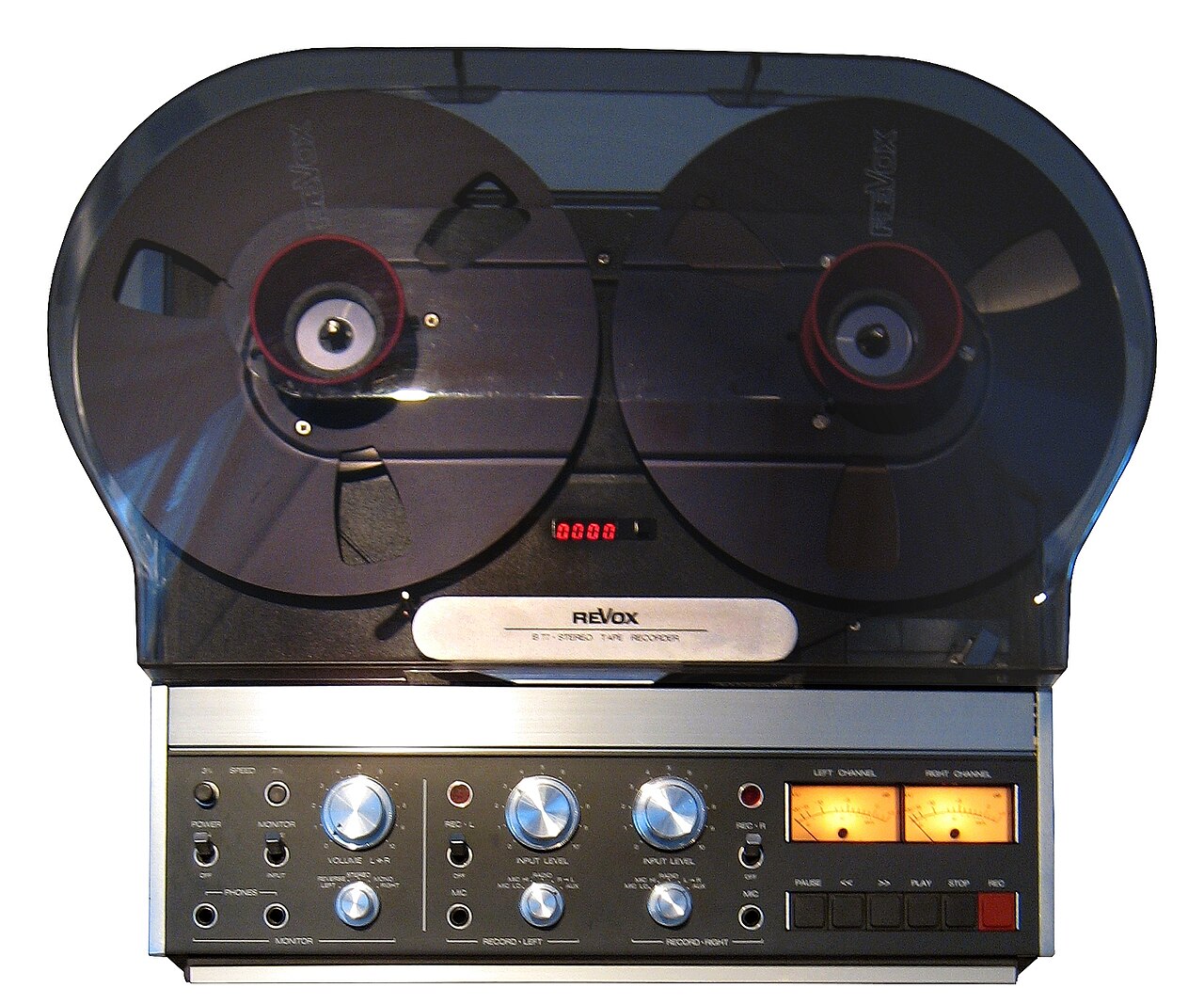
In 1959 Swedish painter and film producer Friedrich Jürgenson was recording birdsong with a tape recorder.
Playing the tape back he heard distant voices and murmurs that he hadn’t heard while recording. He thought he recognized his dead father’s voice and then that of his late wife calling his name.
From then on he carried out many experiments, convinced the recorded voices were those of the dead, and in 1964 published the book “Voices from Space”. Although Jürgenson is considered the father of EVP, the phenomenon is often associated with another researcher: Konstantin Raudive.
Why is Konstantin Raudive famous?
Konstantin Raudive was a Latvian psychologist and writer, a student of Carl Jung, who after the war taught at Uppsala University in Sweden. In 1964 he read Jürgenson’s book, was struck by it and the following year began working with him.
From the mid-1960s he recorded tens of thousands of voices, over 72,000 according to his writings, in different languages, which he believed came from another dimension.
But why do we associate Raudive with EVP today?
Because he is credited with the first experiments using a particular electronic circuit, the so-called “Raudive diode”, and because he made the phenomenon known worldwide with his book “Breakthrough”, published in German in 1968 and in English in 1971.
He believed that what survives physical death could be detected using this circuit.
Raudive didn’t invent the diode, which is the basis of all radio technology, but he was the first to use it for this purpose. He then recorded the sounds picked up on magnetic tape. Some recordings were even made in a laboratory shielded from radio waves. He died in 1974.
From Spiricom to ghost hunters
In the 1980s American William O’Neil built the “Spiricom”, a device with which he claimed to talk to a dead scientist, who had supposedly dictated the instructions for building it. Nobody ever managed to reproduce his results. In 2002 came “Frank’s Box”, or “Ghost Box”, a modified radio that keeps jumping from one frequency to another.
Today recordings are also made with smartphones, tablets and computers, and EVP has become one of the favorite tools of TV ghost-hunting shows.
The voices
The recorded voices can be male or female, sometimes sing-song, other times so fast that you have to slow the tape down to understand them. They are usually very short, a word or a short phrase.
Many people attribute these sounds to the voices of the dead. For scientists, however, the most likely explanation is apophenia, attributing meaning to random data, or auditory pareidolia, interpreting random sounds as a voice speaking our language.
This happens because our brain always tends to give meaning to incomprehensible sounds or images. Sometimes, too, it’s radio interference, equipment faults or outright hoaxes.
Not convinced? Watch this little experiment in auditory pareidolia:
🦋 Emadion lives through its readers. If this story kept you up at night, buy me a coffee: it helps me bring you the next nightmare.
☕ Support Emadion on Ko-fi