
 Posted by
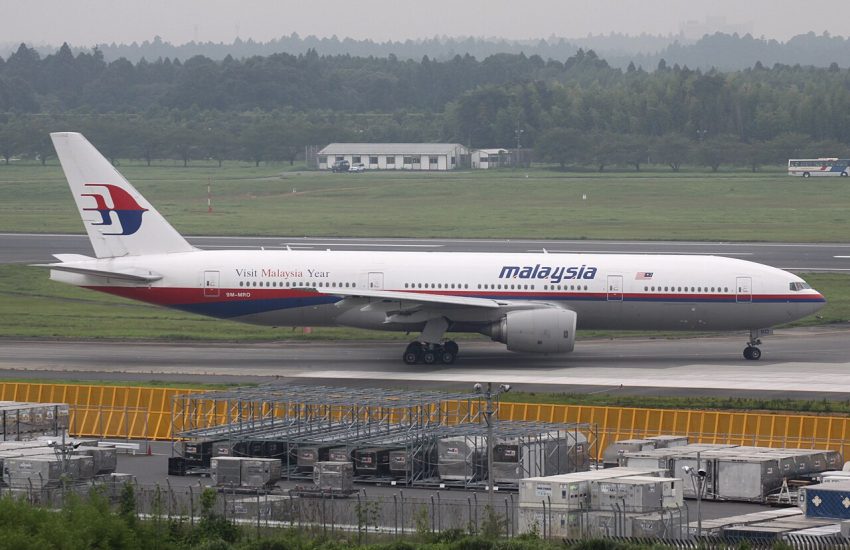
On 8 March 2014 Malaysia Airlines Flight 370, a Boeing 777 flying from Kuala Lumpur to Beijing with 239 people on board, vanished from radar less than an hour after take-off. Satellite data show it flew on for another seven hours towards the southern Indian Ocean. Despite the most expensive search in aviation history, the wreck has never been found.
We live in an age when our phones always know where we are. And yet in 2014 an airliner more than sixty metres long, with 239 people aboard, disappeared as if it had never existed. Twelve years later, despite satellites, underwater robots and millions of dollars, MH370 remains the greatest mystery of modern aviation.
📍 This story is on the Mystery Map: see where it happened →
“Good night, Malaysian three seven zero”
Flight MH370 took off from Kuala Lumpur shortly after midnight on 8 March 2014, bound for Beijing. On board were 227 passengers, most of them Chinese, and 12 crew. At 1:19 am, over the South China Sea, the captain signed off to Kuala Lumpur controllers as they handed the flight over to Vietnam: “Good night, Malaysian three seven zero”. They were the last words ever heard from the aircraft.
Two minutes later the plane vanished from air traffic control screens. There was no distress call, no report of a fault or bad weather.
The turn
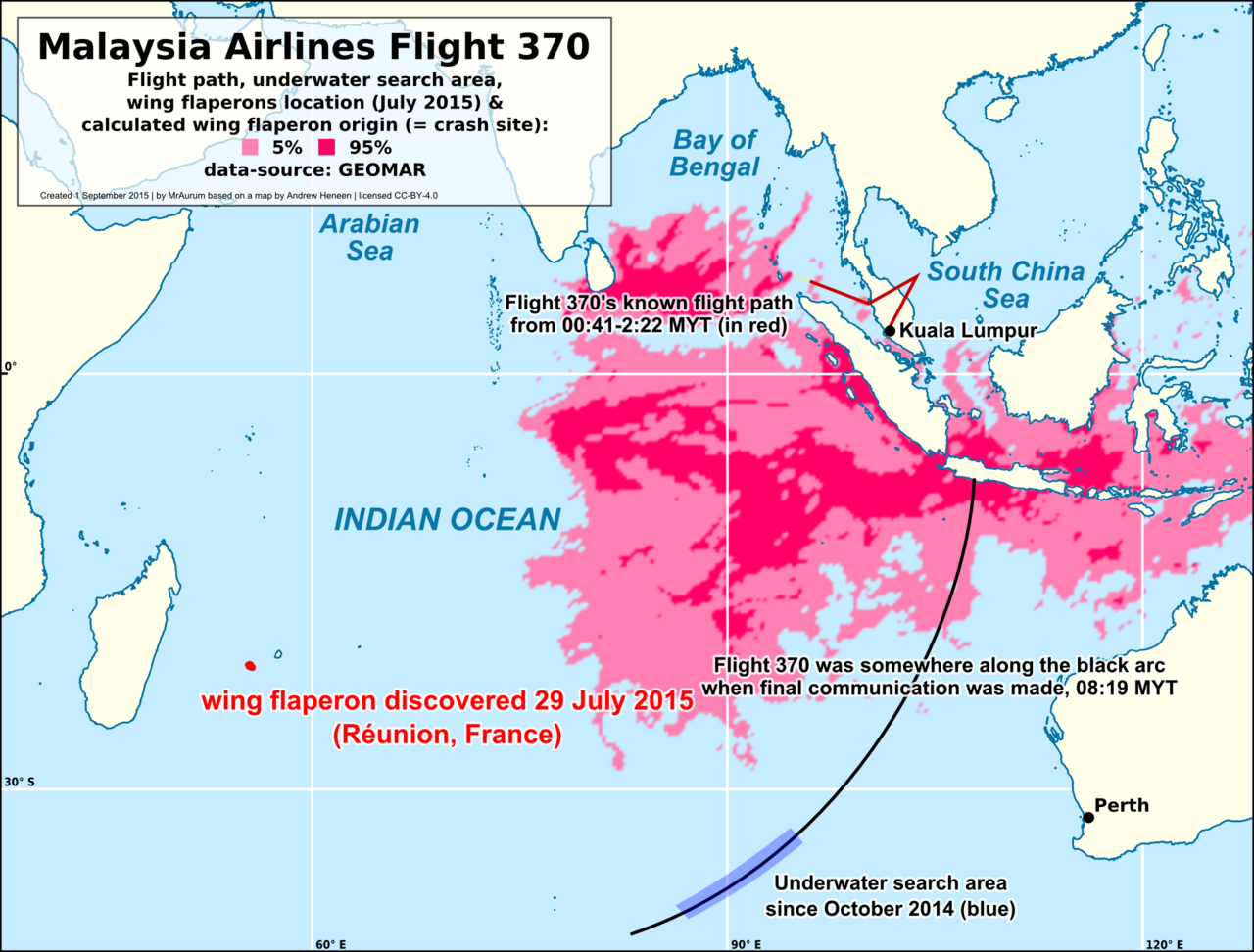
But the plane had not crashed. Malaysian military radar tracked it as it turned sharply west, left its route, crossed back over the Malay Peninsula and headed out over the Strait of Malacca. No alarm was raised and no fighter jets were scrambled. At 2:22 am it flew out of radar range over the Andaman Sea, north-west of Penang.
From then on the only trace was the automatic “handshakes” the Boeing exchanged every hour with an Inmarsat satellite. Analysing those signals, experts concluded that the plane stayed in the air until 8:19 am, heading south over the southern Indian Ocean, far from any runway. On 24 March the Malaysian government announced that the flight had “ended in the southern Indian Ocean”.
Pieces on the beach
From October 2014 to January 2017 an Australian-led international search combed more than 120,000 square kilometres of seabed some 1,800 kilometres south-west of Perth. It found nothing. Then, on 29 July 2015, a flaperon, part of a wing, washed up on a beach on Réunion Island: it came from the missing Boeing. In the following months more debris turned up along the coasts of East Africa, in Mozambique and Madagascar.
They proved the plane had ended up in the sea. But not where, or why.
What happened on board?
The Malaysian government’s final report in 2018 gave no answer. It ruled out any involvement by two Iranian passengers travelling on stolen passports and considered it likely that the turn had been flown manually, without being able to say by whom or why. Many hypotheses remained: a malfunction with the crew incapacitated by lack of oxygen, a hijacking, undeclared cargo in the hold.
The most debated theory concerns the captain, Zaharie Ahmad Shah. In 2016 it emerged that a route very similar to the one reconstructed over the Indian Ocean had been found on his home flight simulator, although the authorities called it “nothing sinister”. In 2020 former Australian prime minister Tony Abbott said that, according to the top levels of the Malaysian government, a deliberate act by the pilot had been suspected from very early on. It remains, however, an unproven hypothesis.
Twelve years later
In 2018 the marine exploration company Ocean Infinity tried a new search on a “no find, no fee” basis. It found nothing. In March 2025 Malaysia signed a new agreement with the same company for a 15,000-square-kilometre area never searched before: seventy million dollars, payable only on success. Hampered by bad weather, the operation ended on 23 January 2026 after covering about 7,500 square kilometres. Still nothing.
On 8 March 2026, the twelfth anniversary, the Malaysian authorities officially announced the negative result. The families, represented by the group Voice 370, are urging the search to continue. Ocean Infinity has said its commitment to finding the plane remains.
MH370 changed the rules of aviation: today aircraft must report their position more often over the oceans, and black boxes have longer-lasting batteries. But for 239 families that has changed nothing. I often think how cruel it must be not even to have a place to bring a flower, knowing only that somewhere, under kilometres of water, the answer is waiting.
🦋 Emadion lives through its readers. If this story kept you up at night, buy me a coffee: it helps me bring you the next nightmare.
☕ Support Emadion on Ko-fiSources
- Wikipedia: Malaysia Airlines Flight 370
- PBS: Renewed search for missing Flight MH370 comes up empty
- The Star: No trace of flight MH370 in new search
- Ocean Infinity: Conclusion of the search for MH370
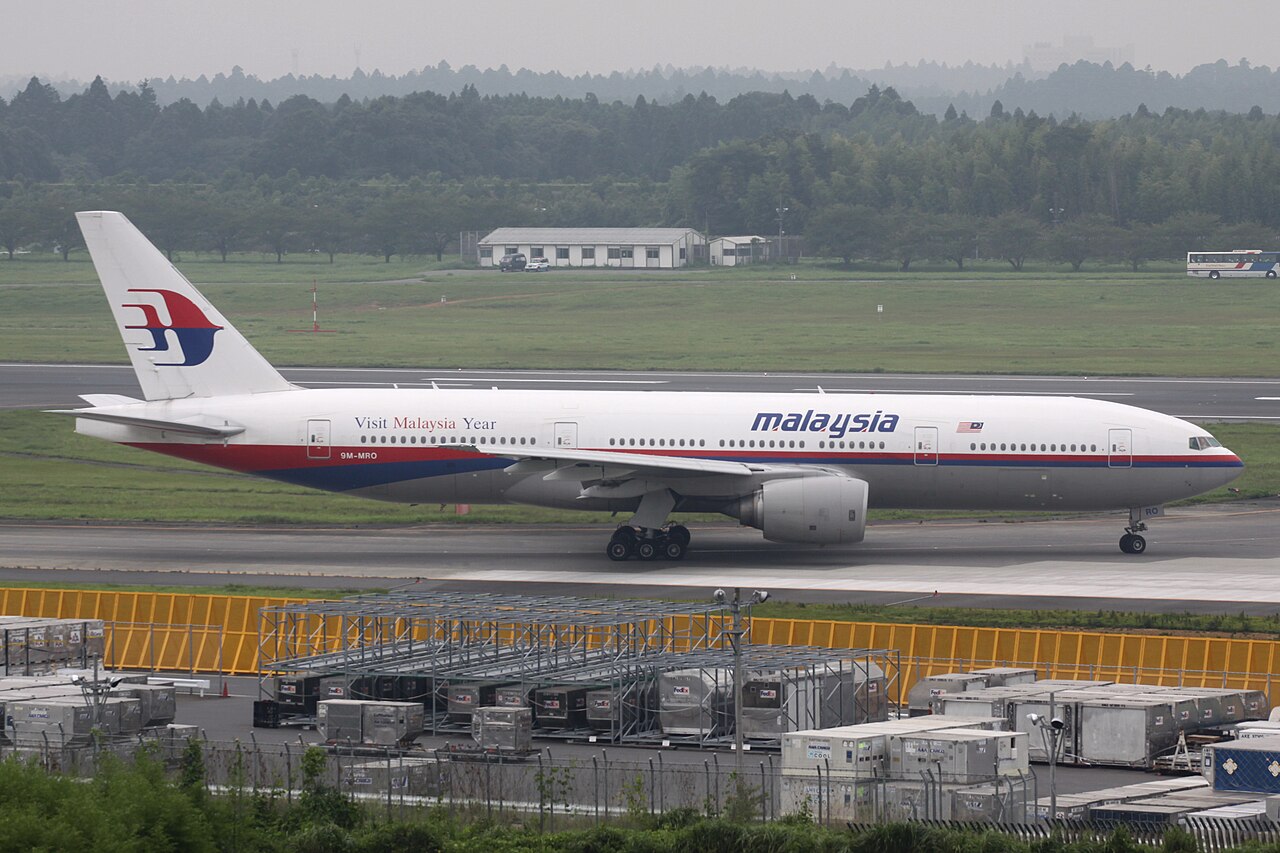
Featured image: Photo Kentaro Iemoto from Tokyo, Japan, CC BY-SA 2.0, via Wikimedia Commons
Photo MrAurum based on File:Reunion_debris_compared_to_MH370_flight_path_and_underwate, CC BY 4.0, via Wikimedia Commons