 Posted by
The man from Taured is a mysterious figure who supposedly turned up at a Japanese airport. He said he came from “Taured”, a country that does not exist, and some believe he arrived from the future or from a parallel universe. But behind the legend lies a true story, less supernatural but just as strange.
The legend of the man from Taured
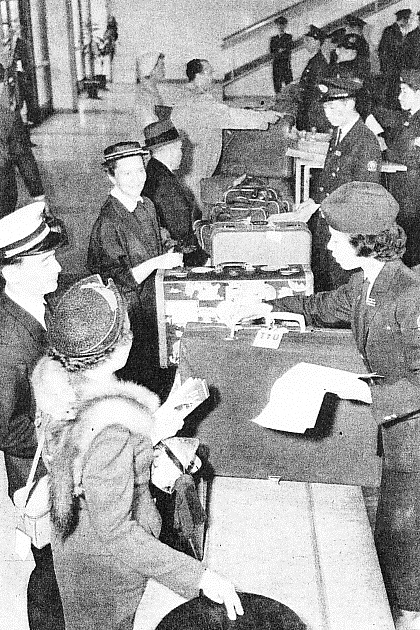
In July 1954, at Tokyo’s Haneda Airport, a businessman queues like everyone else at passport control. He looks Western, is well dressed and his passport seems genuine, except for one detail: his country of origin is Taured, a state no one has ever heard of. The officers ask for an explanation, but the man seems irritated, convinced he is the victim of a prank.
When asked to point to his country on a map, he points straight at Andorra. Not finding the name Taured, he is first astonished, then angry: his country, he says, has existed for more than a thousand years. And the oddities don’t end there. He carries banknotes from various European and Asian countries, and his passport is full of stamps, like that of a man who often travels on business, including some from Japan.
He says he works for a company which, when contacted by the police, denies knowing him, even though he carries documents that seem to prove otherwise. He is taken to a hotel room, locked in and guarded by two officers while the police try to get to the bottom of it. The next day, the surprise: the room is empty. The man has vanished without a trace.
Was he a time traveller? Will Andorra really be called Taured a thousand years from now? Or did he come from a parallel universe, where history took another path?
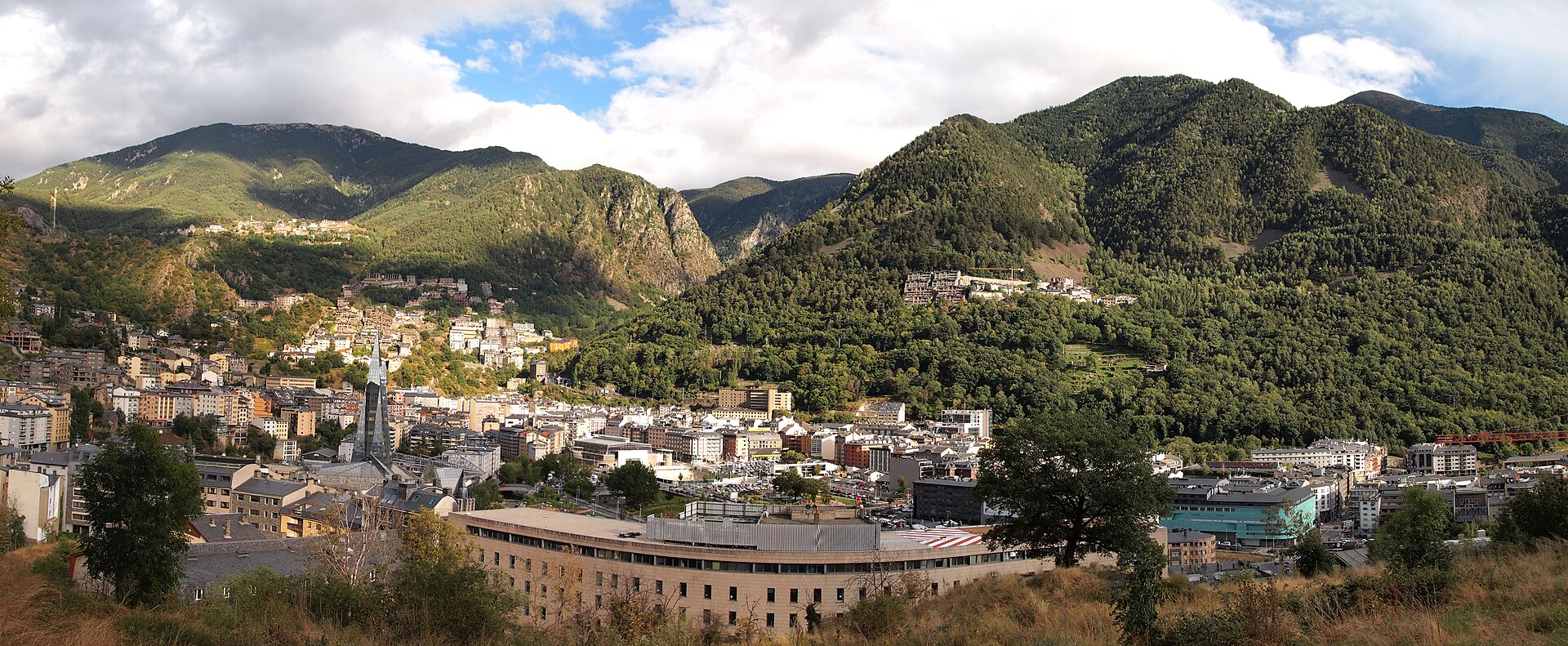
The story of the “man from Taured” in 1954 is an urban legend spread mainly by Japanese websites. It stems from a real 1960 case: John Allen Kuchar Zegrus, arrested in Tokyo with a fake passport and convicted of fraud. A Canadian newspaper wrote that the passport came from “Taured”, probably a misspelling of Tuareg.
The true story: John Zegrus
As so often, the truth is less fantastic. In October 1959 a man recorded as John Allen Kuchar Zegrus, 36, entered Japan with his Korean wife. Three months later he was arrested by the Tokyo police on suspicion of identity fraud: he had tried to cash a 200,000-yen cheque and a 140-dollar traveller’s cheque at the Japanese branch of Chase Manhattan Bank, and another 100,000 yen at the Bank of Korea’s office.
The case was handled by Atsuyuki Sassa of the Tokyo Metropolitan Police’s Public Security Bureau, who later wrote about it in his memoirs. Zegrus’s passport bore stamps from Japanese embassies in several East Asian countries, and the visa had been issued by the Japanese embassy in Taipei. But it was a fake.
Zegrus told an incredible life story: born in the United States, raised between Czechoslovakia, Germany and the United Kingdom, an RAF pilot in the Second World War and a German prisoner, then in Latin America, a spy for the Americans in South Korea, a pilot in Thailand and Vietnam and finally in the service of the United Arab Republic. In Japan, he said, he was on a secret mission to recruit volunteers. The authorities contacted every country he mentioned and concluded that none of it was true.
On 10 August 1960 the Tokyo District Court sentenced him to a year in prison. Right after the verdict he attempted to take his own life in court, but survived. After serving his sentence he was deported to Hong Kong, where he had come from, while his wife was sent back to South Korea.
How the legend was born
On 15 August 1960 the Canadian newspaper The Province reported the story with some “additions”, in an article titled “Man with his own country”. According to the paper, Zegrus was a naturalised Ethiopian working for Egypt’s President Nasser, and his passport had been “issued at Tamanrasset, the capital of Taured south of the Sahara”. Tamanrasset really exists, in Algeria, and “Taured” is almost certainly a misprint for Tuareg, the nomadic people of the Sahara. The case even reached the British House of Commons, where on 29 July 1960 MP Robert Mathew cited it as proof that passports are not very good security checks.
From there the story started to change. The French writer Jacques Bergier retold it in his books, moving it to 1954: Taured became an African country stretching from Mauritania to Sudan, and the man was locked up in a psychiatric hospital. In 1981 Colin Wilson and John Grant included it in their The Directory of Possibilities, still misspelled. Finally, on Japanese websites devoted to urban legends and the occult, the version we know was born: Haneda Airport, the finger pointing at Andorra, the empty hotel room.
That is exactly why I love this story: it is a perfect example of how a typo and a con man with a wild imagination can turn, retelling after retelling, into a traveller between dimensions.
🦋 Emadion lives through its readers. If this story kept you up at night, buy me a coffee: it helps me bring you the next nightmare.
☕ Support Emadion on Ko-fi