 Posted by
The song “Gloomy Sunday” is also known as the Hungarian suicide song because of a legend related to it.
The story of Gloomy Sunday
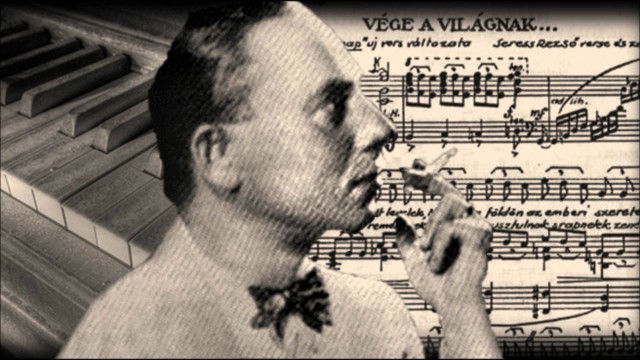
Gloomy Sunday was written in Paris at the end of 1932 by the Hungarian pianist and composer Rezső Seress, during the Great Depression and the rise of fascist influence in Hungary, with the title “Vége a világnak” (The World Is Ending), and was about the despair caused by war.
The last stanza was indeed a prayer for the sins of the people. Rezso struggled to find publishers because of the melancholy of his music. One of the potential publishers declared:
It’s not that the song is sad, it is that it contains a kind of desperation. I do not think that would do anyone any good to hear it
The poet László Jávor wrote an alternative text entitled “Szomorú vasárnap” (Gloomy Sunday), inspired by the end of his engagement, which was recorded in 1935 by singer Pál Kalmár. This text was a lament for a lost love, with a promise to meet again in the afterlife.
This latest version became very popular, while the first and original one was soon forgotten.
In 1936 it was first recorded in English by Hal Kemp with the text of Sam M. Lewis, and it was also recorded the same year by Paul Robeson with a text written by Desmond Carter.
It remained fairly well known in English-speaking countries until the version sung by Billie Holiday, in 1941, in which the singer added a verse that clarified that it was a dream and her beloved was at her side.
The version of Lewis was a clear reference to suicide and even the label on the record bore the inscription “Hungarian suicide song”.
The legend
Over the years there have been a number of urban legends about this song, according to which many people would have committed suicide after listening to the melody.
Press reports in the 1930s went as far as linking at least 100 deaths to the song, in Hungary and the United States, but proving these claims is virtually impossible. No study has ever shown a link between the song and suicide.
Urban legends would be a speculation on the stories of suicides that instead, most likely, would have been due to severe poverty and famine in Hungary at that time.
It is true, though, that on 11 January 1968, about 35 years after writing the song, Rezső took his own life.
The BBC also banned Billie Holiday’s version because it was considered bad for wartime morale, although instrumental versions were allowed. The ban had been lifted by 2002. In the US some radio stations and nightclubs banned Paul Robeson’s version, but there is little evidence for the other bans the legend talks about.
Below I leave you the video of the original song
And the version by Billie Holiday
The song has been covered by countless artists, from Ray Charles to Elvis Costello, from Sinéad O’Connor to Björk, and an instrumental version can even be heard in the film Schindler’s List.
If you are going through a difficult time or are having thoughts of harming yourself, you don’t have to face it alone. In the UK and Ireland you can call the Samaritans on 116 123, and in the US call or text 988.
🦋 Emadion lives through its readers. If this story kept you up at night, buy me a coffee: it helps me bring you the next nightmare.
☕ Support Emadion on Ko-fi