
 Posted by
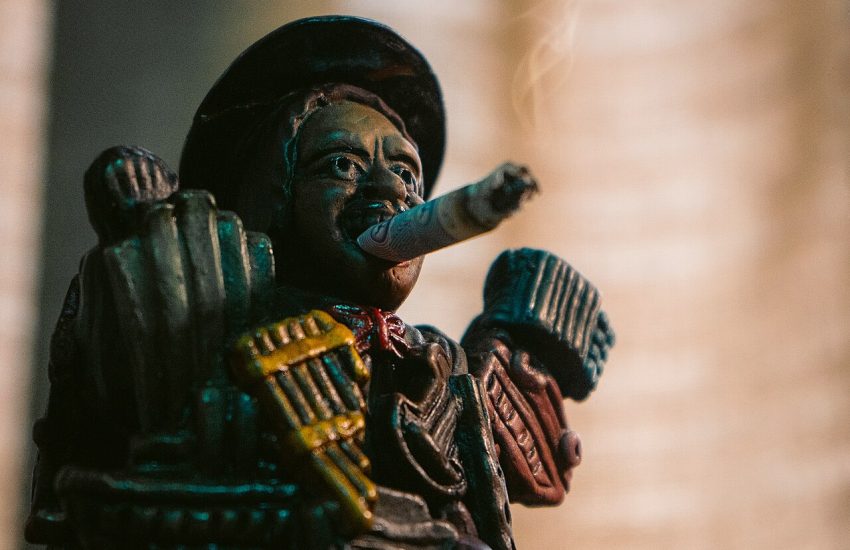
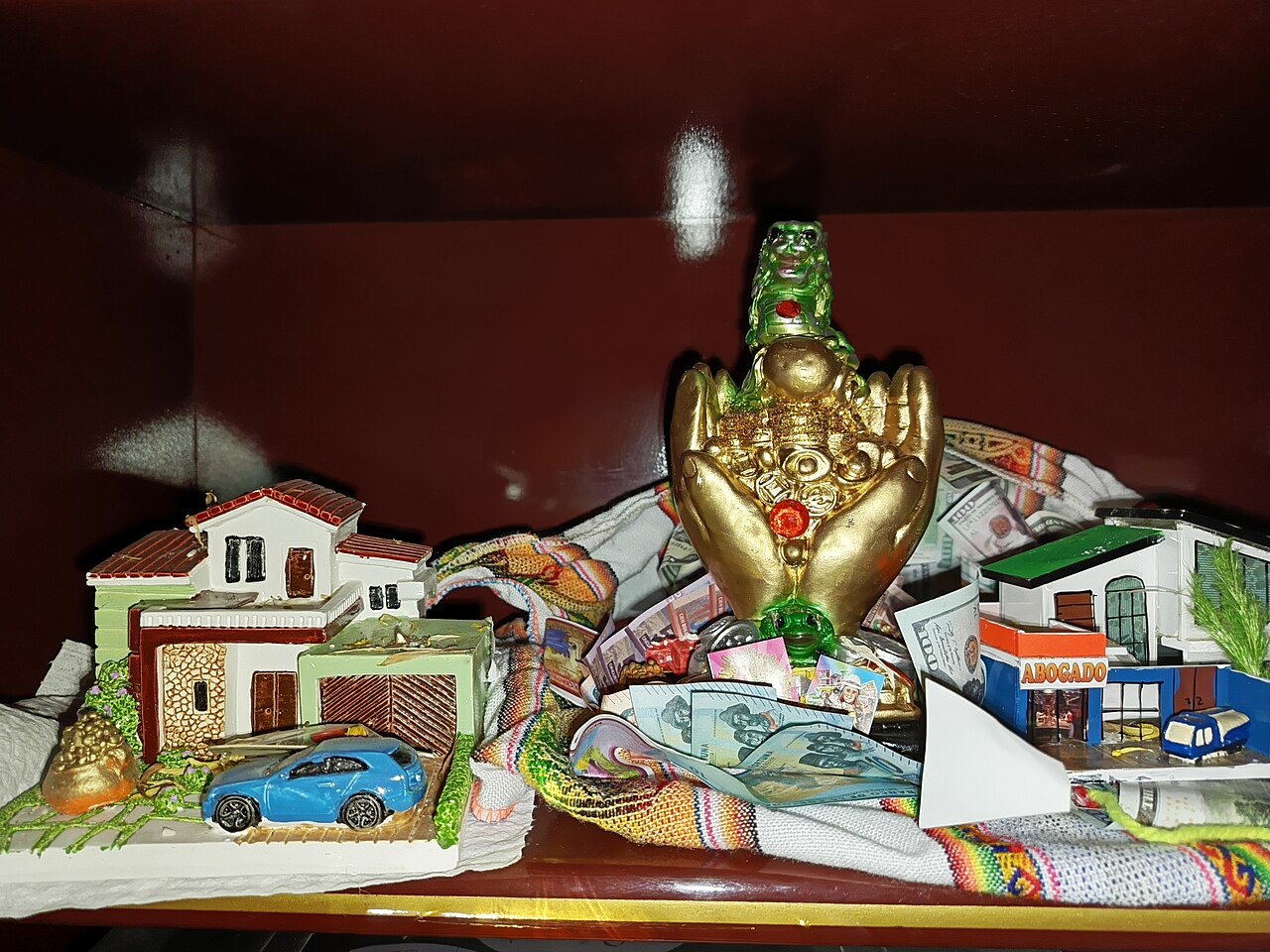
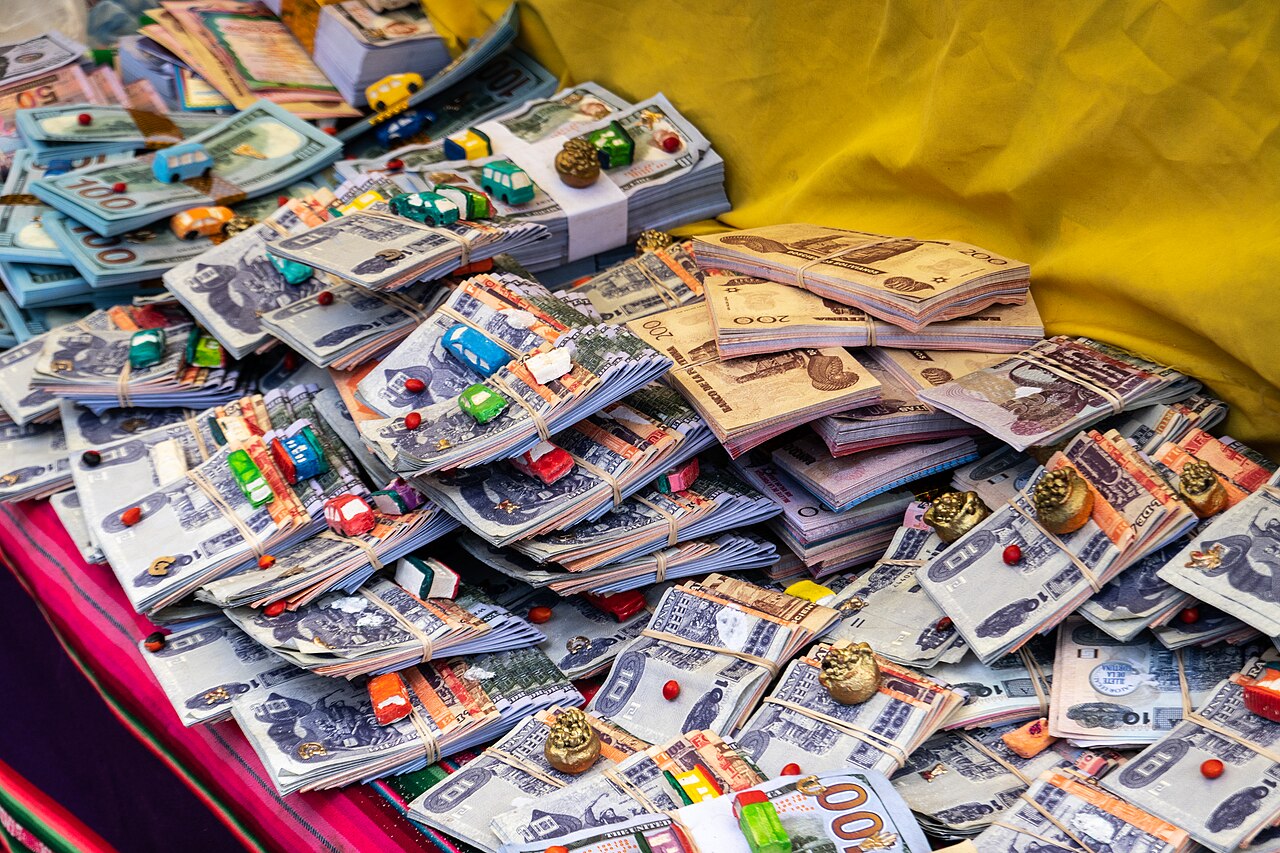
It is noon exactly on 24 January in La Paz. In the streets of the Bolivian capital, thousands of people crowd among the stalls to buy tiny objects: houses the size of a hand, toy cars, miniature furniture and food, wads of fake banknotes. No one buys them for fun. Everyone hopes that, within a year, they will become real. Guaranteeing it is a little moustachioed man, smiling, arms open and laden with gifts: the Ekeko.
The Ekeko is the god of abundance and prosperity in the folklore of the Andean high plateau, venerated above all by the Aymara in Bolivia and in neighbouring regions of Peru, Chile and Argentina. He is the central figure of the Alasitas fair, which opens every 24 January in La Paz, where people buy miniatures of what they hope to obtain during the year.
A very old god
According to many scholars, the Ekeko’s roots go back to the Tiwanaku civilisation, which flourished around Lake Titicaca many centuries before the Incas. His name is said to derive from an ancient deity called Ekhako or Eqaqo, a god of fortune invoked when misfortune struck homes. The scholar Arthur Posnansky observed that, in the days around 22 December, the people of Tiwanaku prayed to their deities by offering miniatures of what they wished to obtain: a custom that looks like the direct ancestor of today’s fair.
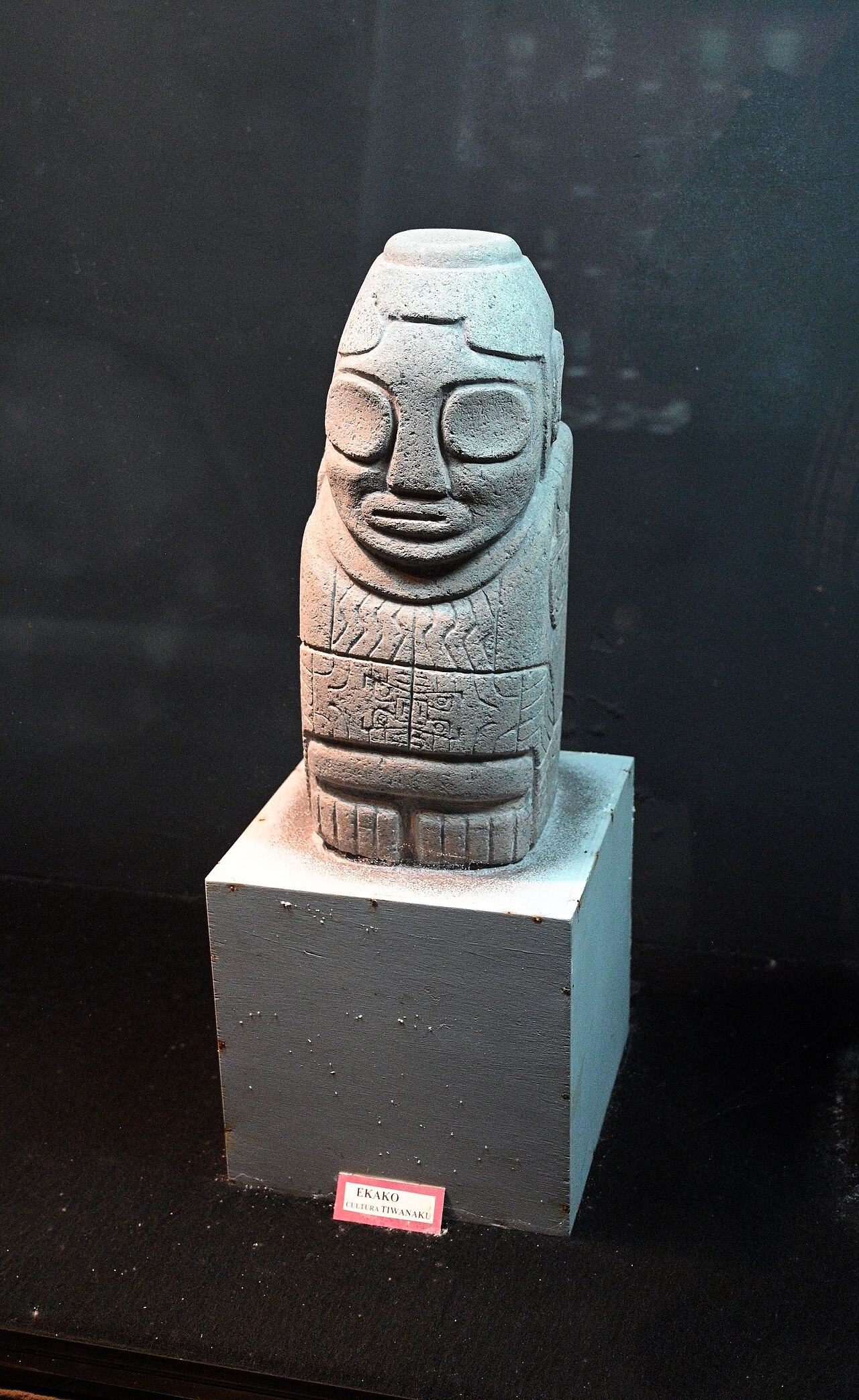

Originally, some sources say, the Ekeko was also a symbol of fertility. Then the Spanish arrived, and with them suspicion of such a popular cult. According to one legend they captured him and cut him to pieces, scattering the remains so that he could not come back to life. But the Ekeko did not die.
The siege of La Paz
The most famous version of his story, told by the Bolivian writer Antonio Díaz Villamil, is set in 1781, when Túpac Katari’s indigenous army laid siege to La Paz for months. People in the city were starving. A young indigenous servant, Paulita Tintaya, had been given a small lucky statuette by her sweetheart, Isidoro Choquehuanca. Isidoro was fighting among the besiegers, but every day he secretly brought her food, which she found in front of the statuette.

When Paulita’s mistress discovered that the girl, unlike everyone else, was not going hungry, she attributed the miracle to that little idol. The story spread and, once the siege was over, the statuette became the symbol of an abundance that never runs out, even in the darkest times.
Featured image: undefined, Reneloayzaperez, CC BY-SA 4.0, via Wikimedia Commons.

The Alasitas fair
The fair’s name, Alasitas, comes from Aymara and means “buy me”. Every year from 24 January, La Paz fills with stalls of miniatures: those who want a house buy a little house. Many believe the best time to buy is exactly noon. The objects are then blessed, with holy water and sometimes traditional Andean rites, and hung on the Ekeko statuette so that he may turn them into reality. Similar fairs are held in Peru, northern Chile and northern Argentina.

The Ekeko has his rules. He must be treated well, fed and kept in a place of honour: modern statuettes even have a hole in the mouth where a lit cigarette is placed for his pleasure. And above all, tradition says, you should never buy him for yourself: the Ekeko only brings luck to those who receive him as a gift. That is partly why, in Bolivian homes, he is often given to newlyweds and to people moving into a new house, because wishes, when someone shares them, are more likely to come true.
🦋 Emadion lives through its readers. If this story kept you up at night, buy me a coffee: it helps me bring you the next nightmare.
☕ Support Emadion on Ko-fi