
 Posted by
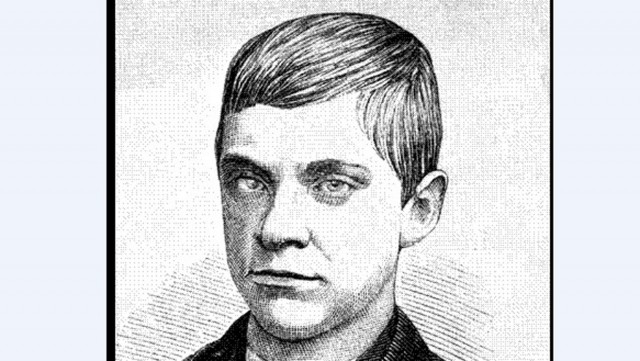
- Who: Jesse Harding Pomeroy (Charlestown, 29 November 1859 – Bridgewater, 29 September 1932).
- Nickname: “the boy torturer”.
- Crimes: between 1871 and 1872 he attacked and tortured at least nine children; in 1874 he killed at least two children, Katie Curran and Horace Millen.
- A grim record: he is the youngest person ever convicted of first-degree murder in Massachusetts.
- Sentence: death, commuted to life in solitary confinement.
Jesse Pomeroy was an American criminal who tortured and killed several children starting at the age of 12. His story has many similarities with that of another child serial killer: Cayetano Santos Godino.
Biography
Jesse Pomeroy was born on 29 November 1859 in Charlestown, Massachusetts, and lived with his mother Ruth, a seamstress, his father Thomas, a butcher and Civil War veteran, and his older brother, Charles Jr.
His father was an alcoholic who often abused the family. When he was angry he would strip his son and beat him severely.
In his first six months Jesse suffered from an unknown illness that left his right eye deformed, with no visible iris or pupil. He was very big for his age, withdrawn and solitary, suffered from severe headaches, dizziness and mood swings, and as a small child was a victim of the neighbourhood bullies.
Like many murderers and serial killers he tortured and killed animals: one day his mother found the two lovebirds she had bought with their heads twisted off.
The first attacks
Between 1871 and 1872, cases began to be reported to the police of children aged 4 to 10 lured into isolated places or abandoned buildings and attacked by a boy a little older than them. The victims were stripped, tied up and gagged, then beaten and tortured with sticks or rope.
The first was William Paine, aged four, who was found one day in a small shed, hanging by his hands from the roof, his back covered in wounds.
Nobody was charged. On 21 February 1872 it was the turn of Tracy Hayden, aged seven, whom Jesse tied up, tortured and left on a hill in Chelsea. Tracy had black eyes, broken teeth, a broken nose and a torso covered in wounds. All anyone knew was that the attacker was a boy with brown hair.
On 20 May 1872 it was the turn of Robert Maier, aged eight, who was stripped, beaten with a stick and forced to swear, then left in an outhouse. In July Johnny Balch was found tied up and beaten. The Boston Globe wrote that the public was very upset about the “Fiendish Boy”.
So the police began questioning brown-haired teenagers but, through word of mouth, the description became distorted and the police started looking for a teenager with a beard and red hair.
Jesse Pomeroy was therefore free from suspicion and continued his attacks.
The first arrest
At this point the police put a $500 reward on the mysterious attacker and in August Jesse’s mother, who had been abandoned by her husband, oddly decided to move to South Boston.
It is thought that his mother had suspicions about her son, but she never reported him to the police.
But Jesse kept claiming victims, now also using a knife. On 17 August he beat George Pratt, seven; on 11 September Joseph Kennedy, also seven, was cut with a pocketknife; and on 17 September Robert Gould, five, was found tied to a telegraph pole near the railway. Robert finally gave a full description of his attacker, including the detail of the completely white eye.
Soon afterwards Jesse walked past the police station and looked in through the window. Inside was little Joseph Kennedy, who recognised him at once. Jesse was arrested and questioned.
Threatened with being sent to prison for 100 years, he finally confessed everything. He admitted to being “the boy torturer” and all the other children identified him too.
On 21 September 1872 he was sentenced to six years at the State Reform School in Westborough, but his mother began fighting to get him out.
Jesse spent only 16 months in the reform school before being released.
The murders
So in February 1874, at the age of 14, he was paroled and his mother and brother promised to keep him under control. His mother ran a dressmaking shop and his brother sold newspapers.
In March a little girl, Katie Curran, came into Charles Jr’s newspaper shop, where Jesse happened to be, and asked for a notebook. The boy said they had run out and he had to go and look for one in the cellar.
The ten-year-old girl calmly followed him, but in the cellar she was killed.
After killing her Jesse cleaned off the blood and went back to the shop as if nothing had happened. Katie’s mother, when she did not come home, alerted the police, but a witness said he had seen someone push her onto a train carriage and the case was filed as a kidnapping.
Before claiming his second victim Jesse Pomeroy attempted another murder, again of a child, but because of inconvenient witnesses he could not act on his urges, and so little Harry Field was saved. The same fate did not await little Horace Millen, only four years old.
He was lured with a pastry and, once taken to an isolated spot, Jesse attacked him with his knife. The body was found on 22 April 1874 in the marshes of Dorchester Bay by some boys, who immediately told adults.
According to the autopsy the little body had many defensive wounds on the arms and hands, as well as 18 stab wounds to the chest, a stabbed eye and other mutilations.
The second arrest
Suspicion immediately fell on Pomeroy, even without evidence: police took him to see Horace’s body and asked him whether he had done it. He was arrested and denied the right to a lawyer during the inquest.
After Jesse’s arrest his mother lost her business and had to leave her shop.
When renovation work began, little Katie’s body was found, badly decomposed, hidden under a heap of ashes.
The trial of Jesse Pomeroy
The trial took place on 9 and 10 December 1874. The prosecution wanted him convicted of first-degree murder, punishable by hanging, but the defence insisted that he had psychological problems.
It was proven that Jesse knew exactly what he had done and that it was wrong. On 10 December he was found guilty of first-degree murder, although the jury recommended mercy because of his age, and in February 1875 he was sentenced to death by hanging.
Because of his young age, however, Governor William Gaston refused to sign the death warrant, twice. In August 1876 the Governor’s Council commuted the sentence to life in solitary confinement. Jesse was 16 years and 9 months old.
In prison he claimed to have taught himself several foreign languages, including Hebrew and German, wrote poetry and studied law books to seek a pardon. He also tried to escape ten or twelve times with tools he made himself, and lost an eye trying to break through his cell wall with a gas pipe. During his time in prison the only person who visited him was his mother.
In 1917 he was taken out of solitary confinement and in 1929, by then old and frail, he was transferred to Bridgewater Hospital for the Criminally Insane, where he spent his last years.
He died on 29 September 1932 without ever showing remorse for what he had done.
🦋 Emadion lives through its readers. If this story kept you up at night, buy me a coffee: it helps me bring you the next nightmare.
☕ Support Emadion on Ko-fi