
 Posted by
Giorgio William Vizzardelli (1922-1973), the “monster of Sarzana”, killed five people between 1937 and 1938, starting at 14 with the rector and the doorkeeper of the boarding school he attended. Caught thanks to a sticky substance on his father’s keys, he was sentenced to life in 1940 and escaped the death penalty only because he was a minor. Pardoned in 1968, he died in 1973.
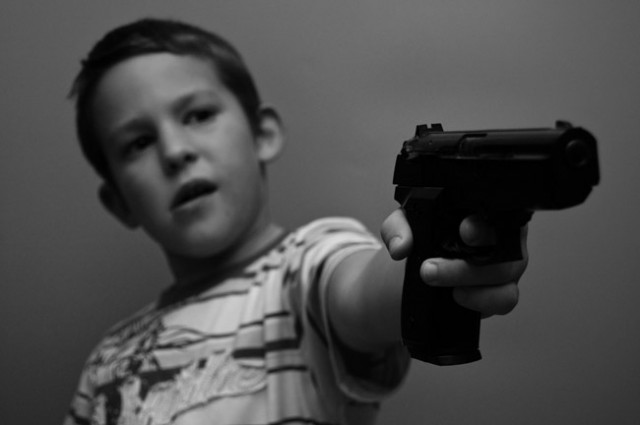
Giorgio William Vizzardelli, also known as the monster of Sarzana, was a serial killer who became one of the youngest lifers in Italian history. He killed 5 people in Sarzana, in the province of La Spezia, starting when he was only 14 years old.
Giorgio William Vizzardelli
Giorgio was born on 23 August 1922 in Francavilla al Mare, in Abruzzo, and moved with his family to Sarzana, where his father, Guido, was director of the Register Office (roughly the equivalent of today’s tax office).
His father raised him with strict discipline, and so did his school. Giorgio was a lazy student who often got into trouble, but he was still considered a good boy. It is said that as a child he survived a strong earthquake, an experience that supposedly shook him deeply and left him with frequent headaches.
As he grew up he took up two hobbies: shooting pistols and distilling liquor at home. He also started reading biographies of Al Capone, who became an idol for him to imitate.
The first murders
On the evening of 4 January 1937, aged only 14, Giorgio walked into the office of the rector of the Collegio delle Missioni in Sarzana, the boarding school he attended, with his face covered and a pistol in his hand. The rector, Don Umberto Bernardelli, thought it was a robbery and took some money out of a drawer to hand over. Giorgio, however, fired three shots and killed him.
The shots brought two students running, and they crossed paths with the fleeing killer: he opened fire on them too, wounding one. Then he ran into the doorkeeper, Don Andrea Bruno, who ordered him to stop. Giorgio shot him as well. Before dying the doorkeeper could only say that he knew the killer but could not remember his name.
Giorgio later confessed that he had killed the rector over a scolding he had received a few weeks earlier. He had never been able to stand discipline imposed through violence, and by killing the rector he had symbolically taken revenge on all the teachers who had punished him.
After the murders he went home and behaved calmly, as if nothing had happened.
The police did not suspect him at all. In town people gossiped about the rector’s morals, saying he had a weakness for women, and the investigation followed that lead. It ended up with an innocent man, Vincenzo Montepagani, a university student the rector had hired as a teacher and had scolded several times. He had a build similar to the one described by witnesses and no alibi, and was charged with the double murder. After eighteen months in prison he was cleared thanks to some witnesses and compensated by Mussolini in person.
The other murders
An acquaintance of Giorgio’s, Livio Delfini, a twenty-year-old barber, one day jokingly told him that maybe he was the killer. Giorgio denied it, but from the way he reacted his friend realised it really was him. Instead of reporting him, he blackmailed him for money.
Giorgio then told him he had some money hidden in a place not far away and arranged to meet him. The two got there in a hired car with a driver. There Giorgio killed the barber, to put an end to the blackmail, and then the driver too, Bruno Veneziani, 35, because he was a witness. The bodies were found on 20 August 1938.
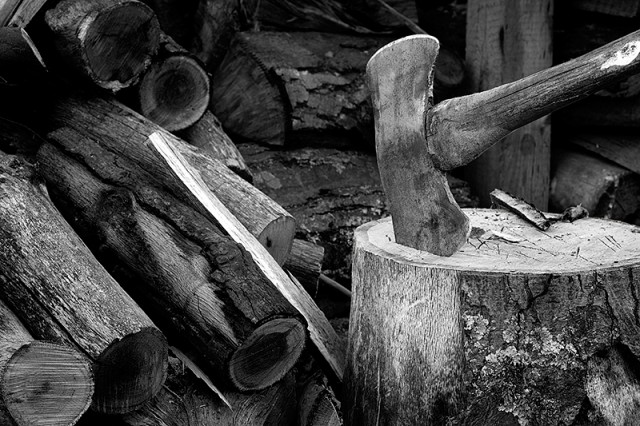
The last murder came at the end of December 1938. Giorgio secretly took his father’s key to the safe of the Register Office and went in to steal money. There, though, he was caught by the watchman, Giuseppe Bernardini, 75, and killed him with an axe.
Police noticed that the safe had been opened with the key, which only the director had. They went straight to Guido Vizzardelli, who handed over his keys. The officer noticed a sticky substance on them, the same one found on the axe. They searched the house and in the cellar found empty bottles smeared with the same substance: the ones Giorgio used to distil his liquor.
At first he denied everything, but there was too much evidence against him:
- the substance on the keys and on the axe
- he had no alibi for the night of the last murder
- he knew the barber
- he attended the school where the first two murders had taken place
Arrest and sentence
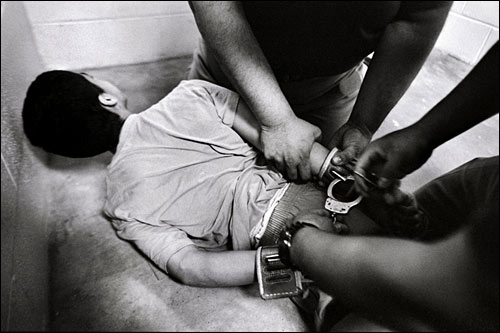
After a few hours of questioning he confessed everything, the murders and the motives. He needed the money from the last job to run away to America, the land of his idol Al Capone. When he was arrested he said that in Italy his crimes had not been understood and that, had he been in America, he would have become a celebrity like his idol.
On 23 September 1940 he was sentenced to life imprisonment, escaping the death penalty only because he was still a minor. The sentence was upheld on appeal in January 1941.
In 1944 newspapers even published a completely made-up story about his escape, his enlistment in the Fascist Black Brigades and his killing by partisans.
In prison, instead, he studied several languages and translated some literary works. His father did everything he could to get him out, and on 29 July 1968 Giorgio was pardoned by the President of the Republic, Giuseppe Saragat. He went to live with his sister in Carrara, where he took his own life five years later, on 11 August 1973.
So ends one of the almost forgotten crime cases that nonetheless left a mark on the history of Italian criminology.
🦋 Emadion lives through its readers. If this story kept you up at night, buy me a coffee: it helps me bring you the next nightmare.
☕ Support Emadion on Ko-fi