 Posted by
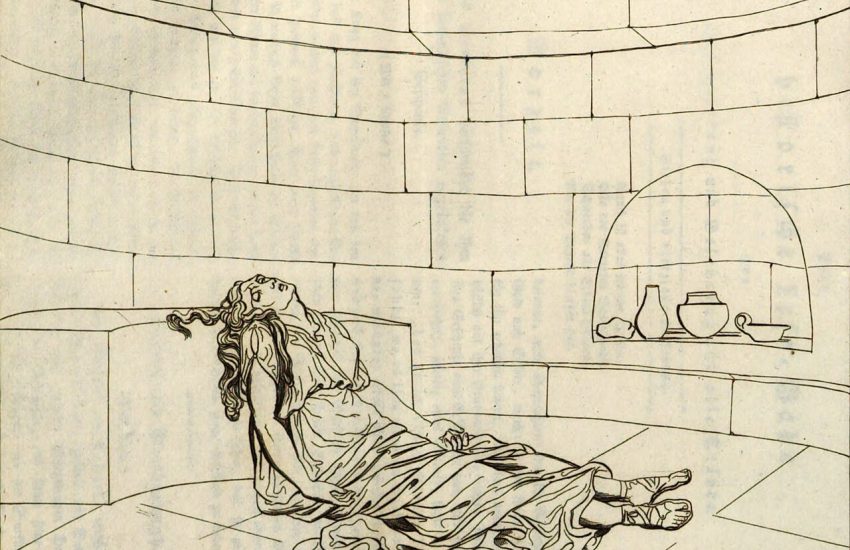
Walling someone up alive, shutting them in a sealed space and leaving them to die of hunger and thirst, is one of the oldest and cruellest punishments. The Romans used it on Vestal Virgins who broke their vow of chastity, but it also appears in the history of Venice, in the life of the Nun of Monza, in castle legends and in the stories of Edgar Allan Poe.
In The Cask of Amontillado, Edgar Allan Poe takes his main character down into the catacombs beneath a palazzo, on the pretext of tasting a fine wine. Then he chains him to a wall and, brick by brick, seals him in. The last thing we hear is the jingling of the bells on his jester’s cap.
It is one of the most frightening stories ever written, and the reason is simple: being walled up alive is one of humanity’s oldest fears. And, sadly, it is not just fiction.
What immurement is
Immurement means shutting a person in a sealed space with no way out and leaving them there to die. There is no executioner striking a blow, no blood: the victim dies slowly, of hunger, thirst or lack of air.
For centuries this punishment had a “practical” advantage for those who inflicted it: it made it possible to kill without shedding blood. That is exactly why it was chosen when the victim was considered sacred, or when killing them directly would have been sacrilege.
The Vestal Virgins buried alive
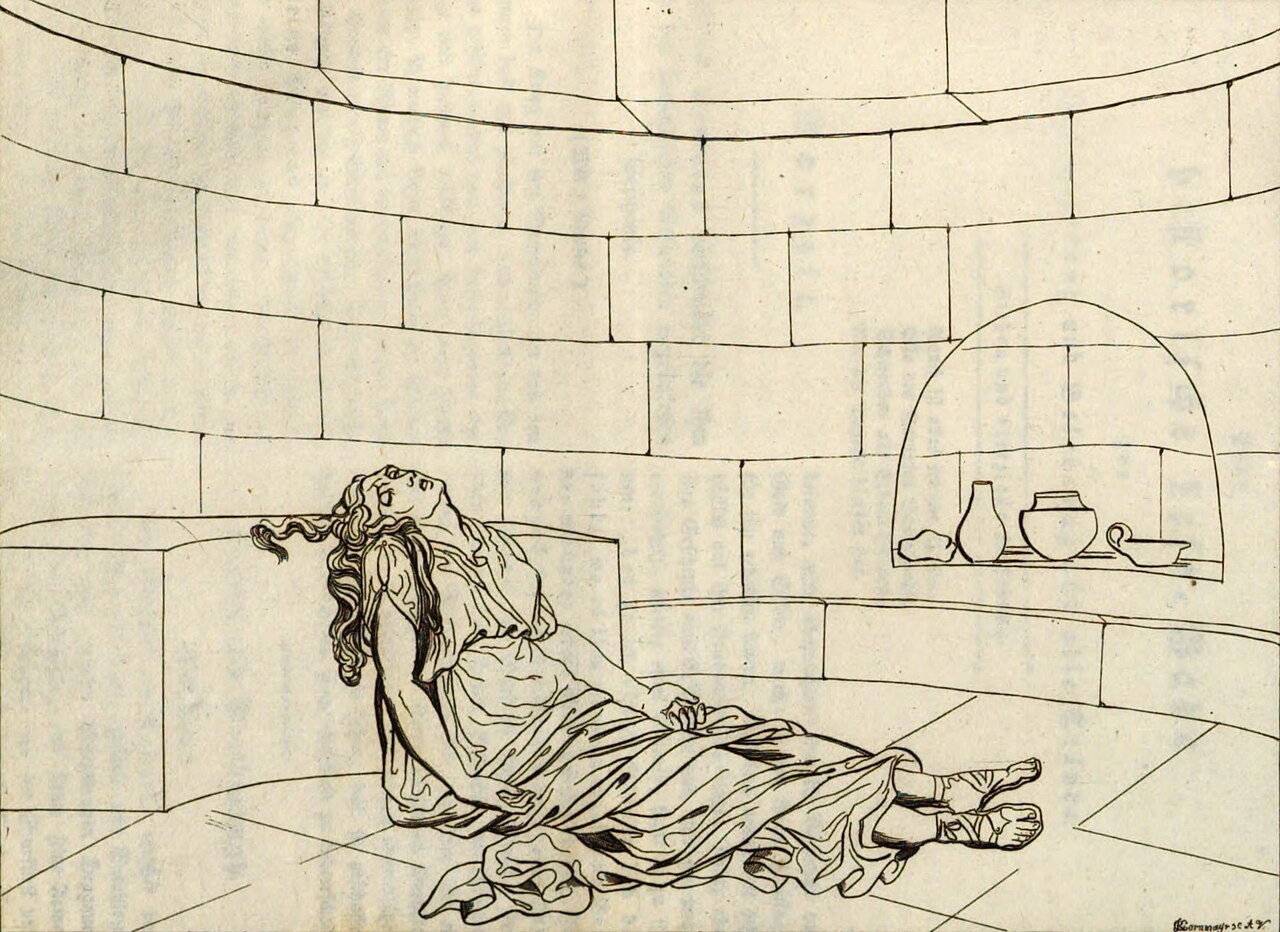
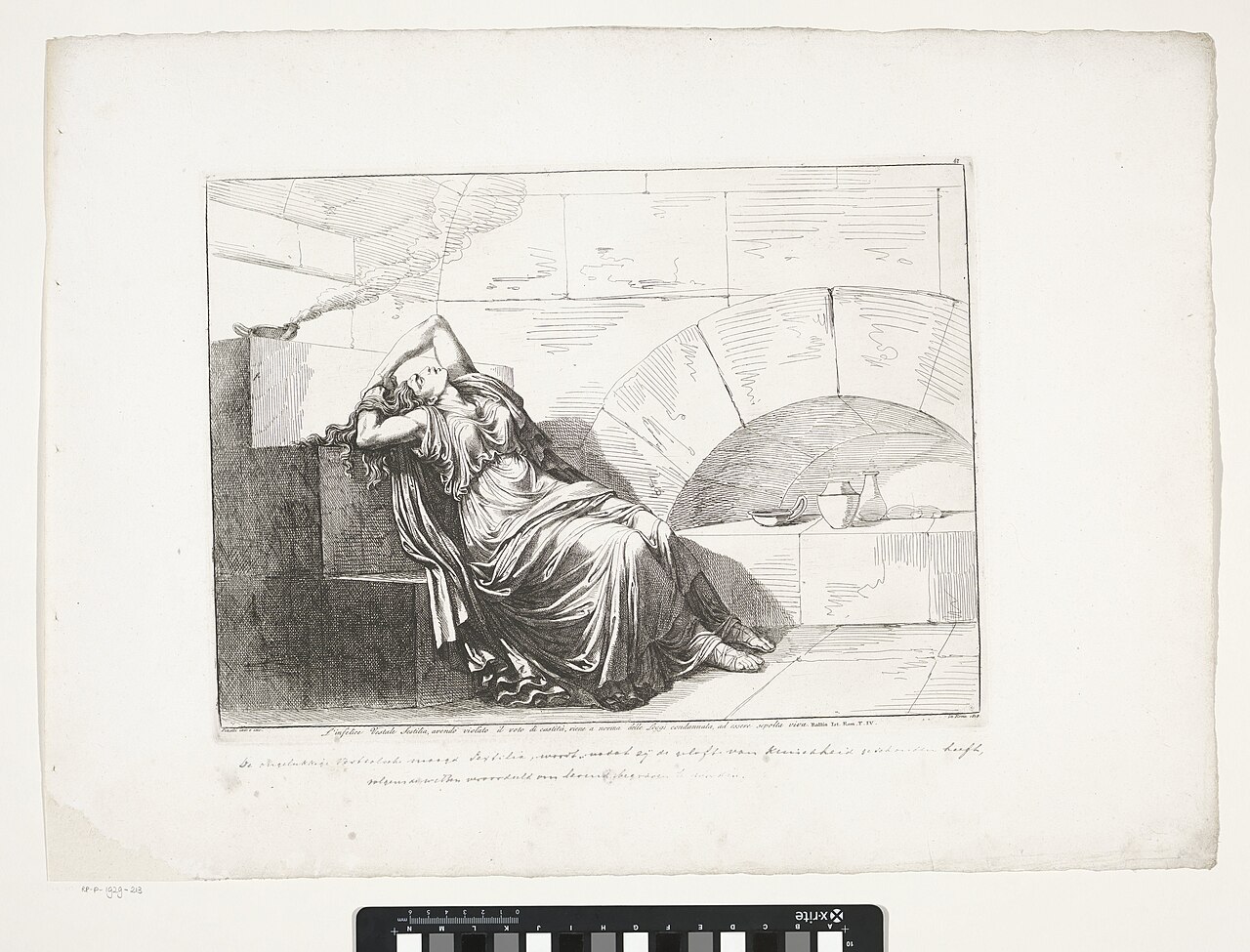
The most famous case comes from ancient Rome. The Vestals were the priestesses who guarded the sacred fire of the goddess Vesta, and they had to remain virgins for thirty years. If they broke their vow of chastity, the punishment was terrible.
A Vestal could not be killed: her blood was sacred. So the condemned woman was stripped of the symbols of her office, flogged, dressed like a corpse and carried in a closed litter through the Forum, followed by her weeping relatives, as in a real funeral. The procession reached the Campus Sceleratus, the “evil field”, near the Colline Gate.
There a small underground chamber had been prepared, with a bed, a lamp and a little food, so that nobody could say Rome had starved a priestess to death. The pontifex maximus recited a secret prayer and led her to the ladder. The Vestal climbed down, the ladder was pulled up and the pit filled with earth until it could no longer be seen.
The order of the Vestals lasted about a thousand years, but sources record only around ten sentences of this kind. One of them was that of Floronia, in 216 BC, the year of the disastrous defeat at Cannae: in a moment of panic, the Romans looked for culprits even among their priestesses.
A patriarch buried up to his neck
Immurement also appears in medieval Italian history. In 1044 the Patriarch of Aquileia, Poppo, a very powerful secular lord as well as a churchman, sacked the city of Grado. According to one tradition, the Doge of Venice, Domenico Contarini, captured him and had him buried up to his neck and left to die. The sources for this episode are uncertain, but the story shows how present this punishment was in the imagination of the time.
Much better documented is the fate of the Byzantine emperor Basiliscus, who was deposed in the 5th century and sent to Cappadocia with his family. There they were shut in a dry cistern, or according to others in a tower, and died of hunger and cold.
The Nun of Monza, walled up for fourteen years
But the most incredible story of a person walled up alive in Italy is that of a woman who survived.
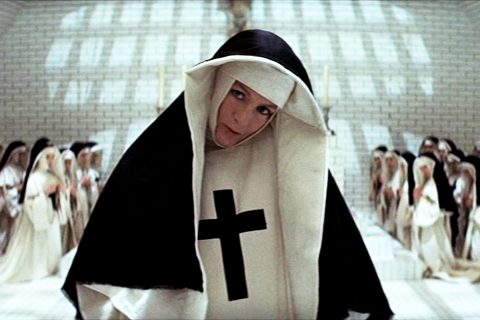
Her name was Marianna de Leyva, but Italians know her as the Nun of Monza, the “Gertrude” of Alessandro Manzoni’s novel The Betrothed. Made a nun by her father’s will, she had a long affair with Gian Paolo Osio, by whom she had children, and was drawn into the murders committed to hide the scandal.
When Archbishop Federico Borromeo found out, he ordered a trial. In 1608 Sister Virginia was sentenced to be “walled up alive” in the Ritiro di Santa Valeria in Milan. She spent almost fourteen years shut in a tiny room about one and a half by three and a half metres, with no contact with the outside world except through a small opening through which food was passed and air came in.
She survived. When she was released in 1622, she was a different person: she stayed at Santa Valeria, living a life of penance, until her death in 1650.
The Blood Countess
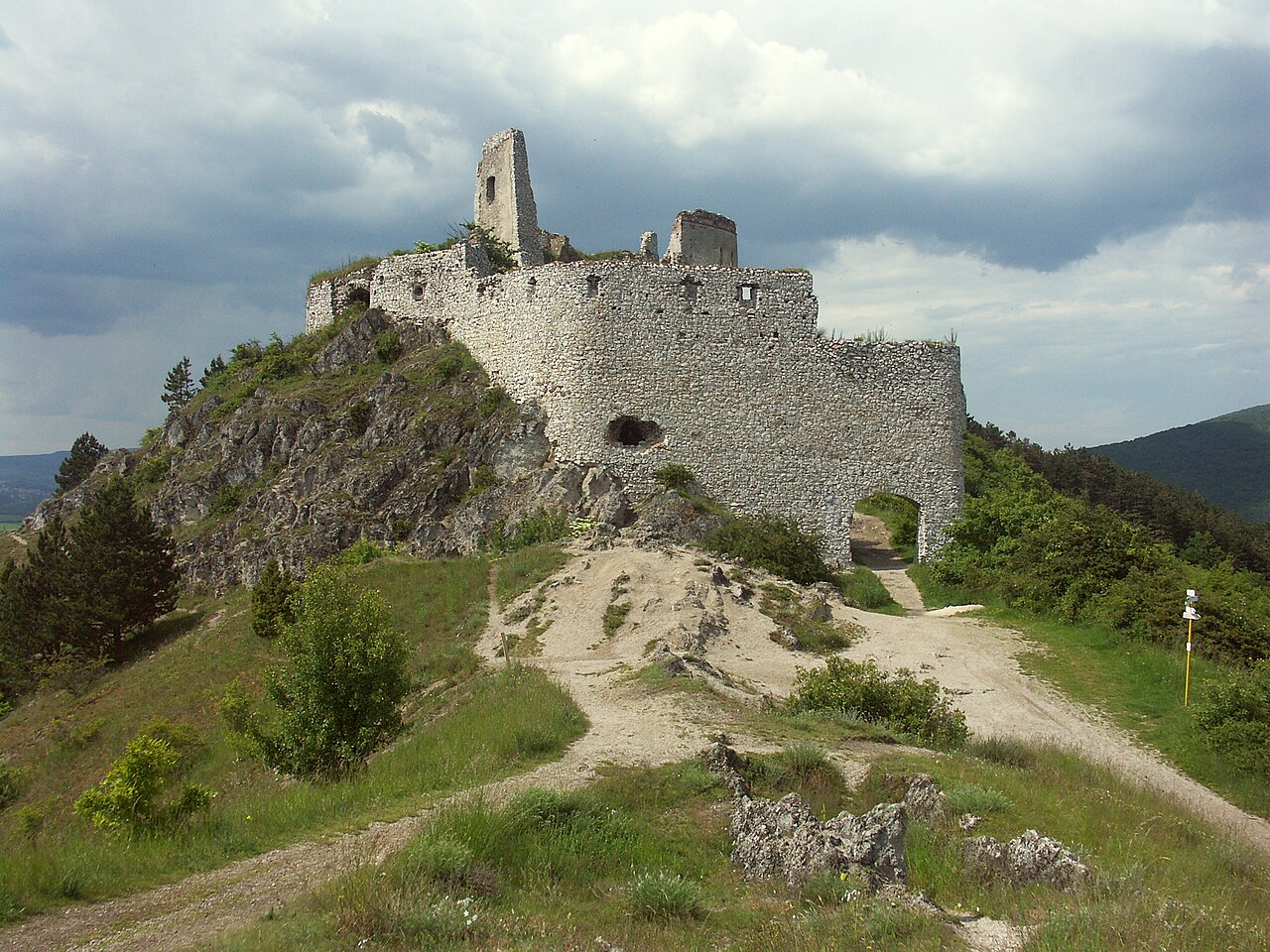
Another famous woman spent her last years shut between four walls: Countess Elizabeth Báthory, accused of torturing and killing dozens of young women.
As a noblewoman of the highest rank, she was never put on trial. In 1610 she was confined to her castle at Čachtice, in today’s Slovakia, and locked in a set of rooms whose doors and windows were bricked up, leaving only small openings for air and food. She died there in 1614.
Walled up by choice
It may seem incredible, but in the Middle Ages some people had themselves walled up alive by choice. They were the anchorites and anchoresses, men and women who wanted to devote their lives to prayer and had themselves shut in a tiny cell, often built against the wall of a church, which they never left again.
They received food through one small window and followed Mass through another. Saint Jerome tells of a follower who spent his whole life in a cistern eating five figs a day, and in the 4th century a woman named Alexandra shut herself in a tomb for ten years.
The women walled up in castles
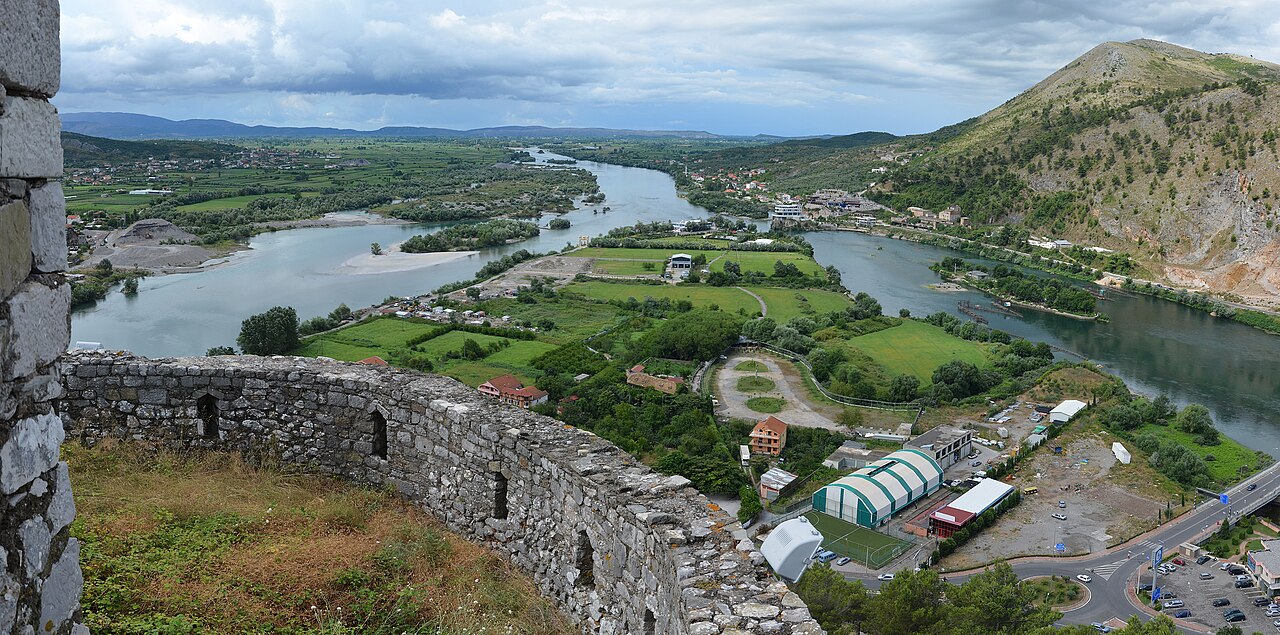
And then there are the legends. All over Europe, and beyond, there are stories of people walled up alive in the foundations of a bridge or a castle to make it stronger, as a kind of sacrifice.
The most famous is that of Rozafa Castle in Shkodër, Albania. Three brothers were trying to build its walls, but every night they collapsed. A wise man told them they had to wall up one of their wives alive. The youngest, Rozafa, was chosen, and she accepted on one condition: that they leave one eye, one breast, one hand and one foot outside the wall, so she could go on seeing, nursing, caressing and rocking her baby. To this day people say the water that drips down one of the castle walls is Rozafa’s milk.
In Finland they tell of a girl walled up in Olavinlinna castle, and on the spot where she died a rowan tree is said to have grown, with flowers as white as her innocence and berries as red as her blood. And in Japan there is even a word, hitobashira, “human pillar”, for the people who, according to legend, were buried alive beneath castles and bridges.
A fear that never leaves us
From the Roman Vestals to the Nun of Monza, from Rozafa to Poe’s tales, immurement frightens us in a way no other torture does. There is no sudden pain, no final blow. There is only darkness, silence and waiting.
And perhaps that is why, after so many centuries, we keep telling its story.
🦋 Emadion lives through its readers. If this story kept you up at night, buy me a coffee: it helps me bring you the next nightmare.
☕ Support Emadion on Ko-fiSources
- Immurement, Wikipedia
- Vestal Virgin, Wikipedia
- Marianna de Leyva, Wikipedia
- Elizabeth Báthory, Wikipedia
- Rozafa Castle, Wikipedia
- Edgar Allan Poe, The Cask of Amontillado, 1846
Images: historical illustration and photo by Radovan Bahna, public domain; Rijksmuseum engraving, CC0; photo by Pasztilla, CC BY-SA 4.0. Via Wikimedia Commons.