 Posted by
We all know James Dean and his reputation as a young rebel, earned above all with Rebel Without a Cause, released in October 1955, less than a month after his death. The actor died at 24 in a road crash, at the wheel of his racing car, which he himself had nicknamed “Little Bastard”. That episode made him a film legend forever.
What perhaps not everyone knows is that, according to legend, his car caused not only James Dean’s death but also a long series of other accidents.
“Little Bastard” was the Porsche 550 Spyder in which James Dean died on 30 September 1955, near Cholame, California. The story of its “curse”, with accidents and deaths among those who bought its parts, was spread mainly by George Barris, who displayed the wreck for years as an attraction. Almost none of those episodes has been confirmed, and the wreck has been missing since 1960.
The Little Bastard
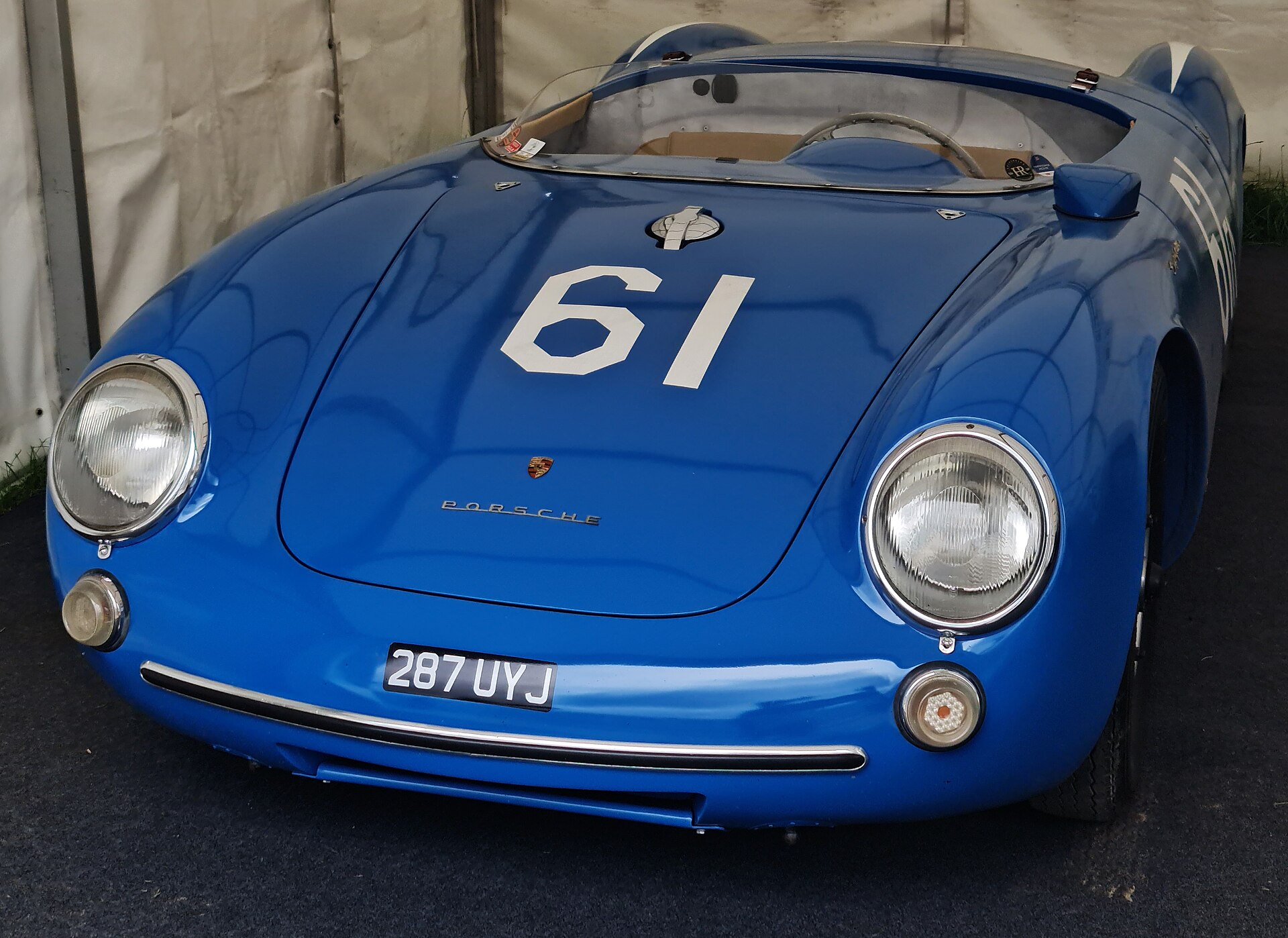
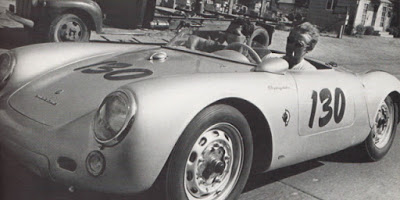
James Dean loved racing. On 21 September 1955, as he was finishing Giant, he traded his Porsche Speedster for a new, more powerful Porsche 550 Spyder and entered the Salinas race on 1–2 October. He had the car decorated by Dean Jeffries, a custom painter whose shop was next to George Barris’s: the number 130 on the hood, doors and rear deck, and the words “Little Bastard” across the back.
There are two versions of where the nickname came from. According to stuntman Bill Hickman, he used to call Dean “little bastard”, while Dean called him “big bastard”. According to two of the actor’s friends, however, it was Warner Bros. president Jack Warner who had called him a little bastard, and Dean named the car that way to spite him.
The crash
On 30 September 1955 Dean set off from Hollywood for Salinas. He had planned to tow the Porsche on a trailer, but his mechanic, Rolf Wütherich, suggested he drive it to put some miles on it before the race. Wütherich rode beside him, while Hickman and photographer Sanford Roth followed in a station wagon. At 3:30 pm Dean was even ticketed for speeding.
At about 5:45 pm, on US 466 near Cholame, a Ford driven by Donald Turnupseed, a 23-year-old student, turned left in front of them. Dean tried to avoid it with a racing manoeuvre, but the two cars collided almost head-on. The much lighter Porsche cartwheeled two or three times and ended up in a gully. Dean suffered a broken neck, fractures of both jaws and both arms, and massive internal injuries. He was pronounced dead on arrival at Paso Robles hospital at 6:20 pm. Wütherich, thrown from the car, survived with a broken jaw and serious hip and thigh injuries, while Turnupseed escaped with a few bruises.
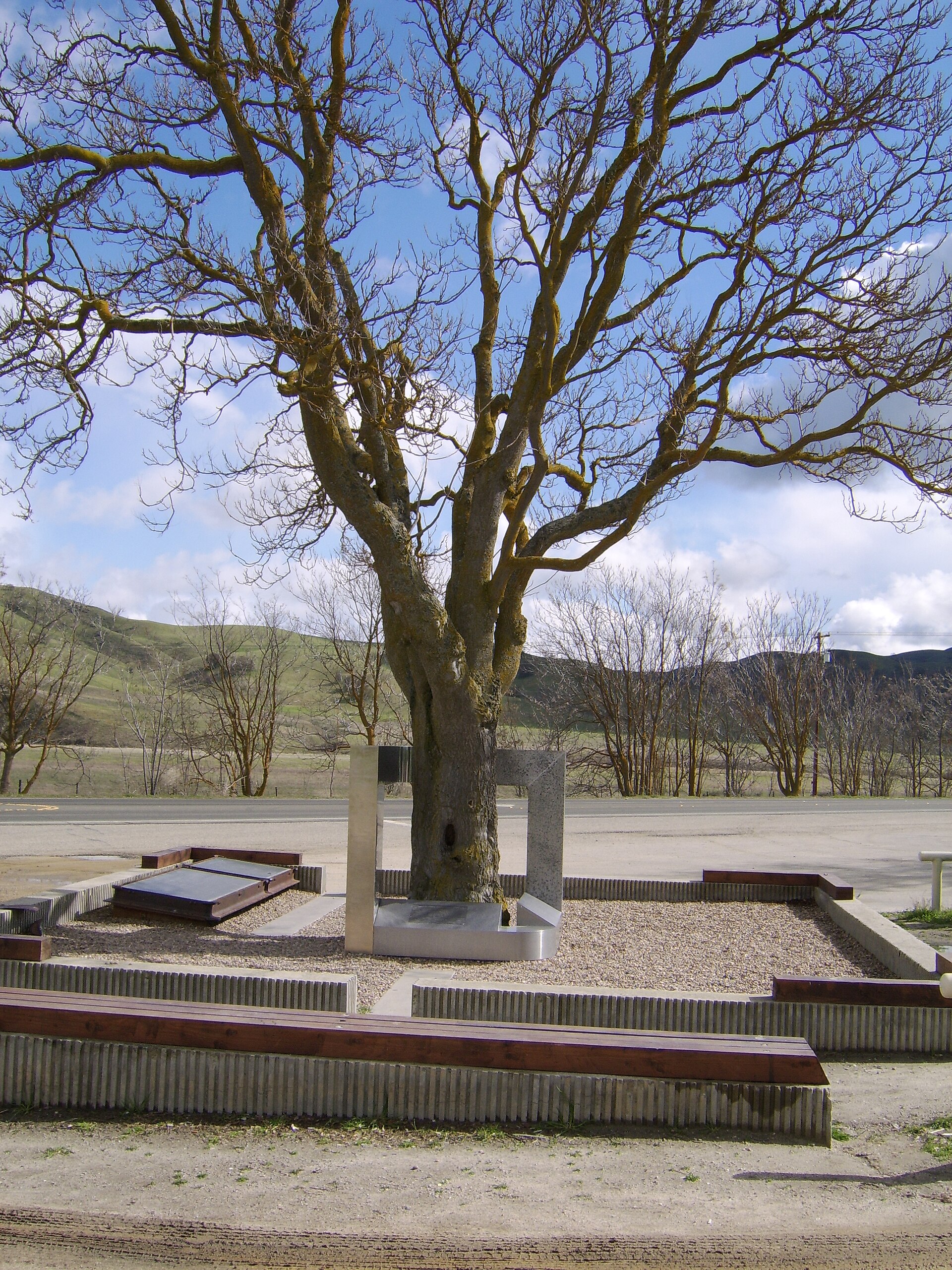
The curse
The story of the curse was told mainly by George Barris, Hollywood’s famous “King of the Kustomizers”, who claimed he was the first to buy the wreck. According to his account, while the car was being taken to his workshop it slipped off the trailer and broke a mechanic’s leg. The parts were then sold: the engine went to a doctor who raced cars and crashed; other parts to a second doctor, who died in a race when he hit a tree. The tyres blew out on another buyer, sending him off the road, and a thief trying to steal a part was badly injured.
Then the wreck began touring California as a road-safety warning. It is said that during one transport the truck carrying it crashed and the driver was killed; that in a Fresno garage the car caught fire; that in New Orleans it fell off its supports and broke into pieces. Finally, in 1960, the car supposedly vanished: Barris said he had shipped it to Los Angeles in a sealed railway boxcar and found the boxcar empty on arrival, with the seals intact.
What is true
According to Porsche historian Lee Raskin and archivist Warren Beath, almost the entire curse story rests on Barris’s 1974 book Cars of the Stars. It is not even certain that Barris was the first owner of the wreck. According to Raskin, the insurer declared the car a total loss and sold it, through a salvage yard, to Dr William Eschrich, a physician who had raced against Dean. Eschrich fitted the engine to his own racing car, and on 21 October 1956 at Pomona he had only a minor shunt.
The only genuine victim connected with the car seems to be a Dr McHenry, who died in a race when he hit a tree. Eschrich, however, said McHenry was not using Dean’s transmission, only the rear swing arms. Barris, meanwhile, was given the wrecked body after Eschrich had stripped it, “fixed” it with aluminium sheets beaten with a plank to simulate crash damage, and lent it to the National Safety Council as an exhibit: “James Dean’s Last Sports Car”.
Of the other episodes, almost nothing is confirmed. The Fresno fire of March 1959 really happened, but according to the local paper only two tyres and some paint burned, and no one was hurt. As for the disappearance, Raskin thinks that when the public lost interest Barris simply “misplaced” the car, feeding the myth at every anniversary.
The wreck has never been found. In 2005, for the fiftieth anniversary of Dean’s death, the Volo Auto Museum in Illinois displayed what was claimed to be a door of the Little Bastard and, together with Barris, offered a million dollars to anyone who could prove they owned the remains. No one came forward. The original engine, on the other hand, is still owned by Dr Eschrich’s family, and the transaxle belongs to a collector in Massachusetts.
Maybe the Little Bastard wasn’t cursed. But it certainly starred in one of Hollywood’s most enduring legends.
🦋 Emadion lives through its readers. If this story kept you up at night, buy me a coffee: it helps me bring you the next nightmare.
☕ Support Emadion on Ko-fi