
 Posted by
At Via XX Settembre 40, in Turin, there is a dark wooden door with a knocker shaped like the devil. It is the entrance to Palazzo Trucchi di Levaldigi, built in the 17th century, and the people of Turin call it the Devil’s Door. Around it grew legends of an imprisoned sorcerer, a dancer murdered during a party and an officer who vanished and was found walled up twenty years later.
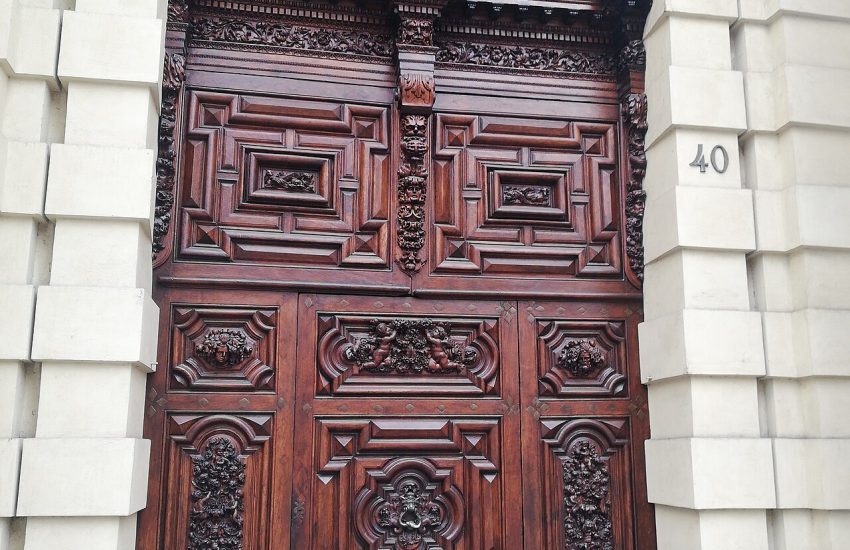
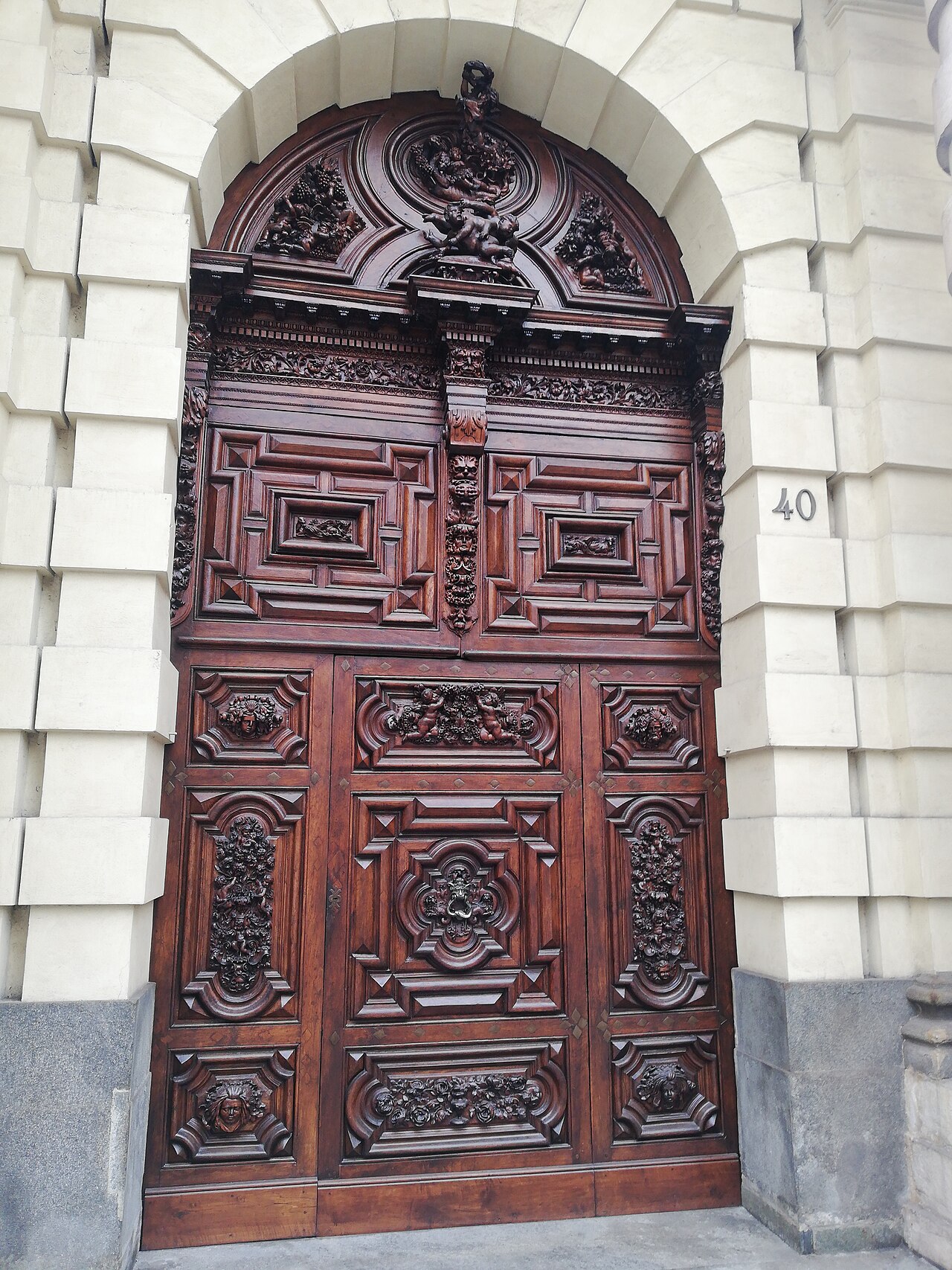
Some doors you walk past without a second thought. And then there is the one at Via XX Settembre 40, in Turin, which makes you stop. From a distance it looks like nothing more than a beautiful Baroque door: huge, dark, covered in carvings. Then you get closer, look at the centre, and it looks back at you: a horned face with a gaping mouth, from which two serpents emerge and coil around each other.
This is the Portone del Diavolo, the Devil’s Door, and today I’ll tell you why Turin has been talking about it in hushed voices for more than three centuries.
The palace of the finance count
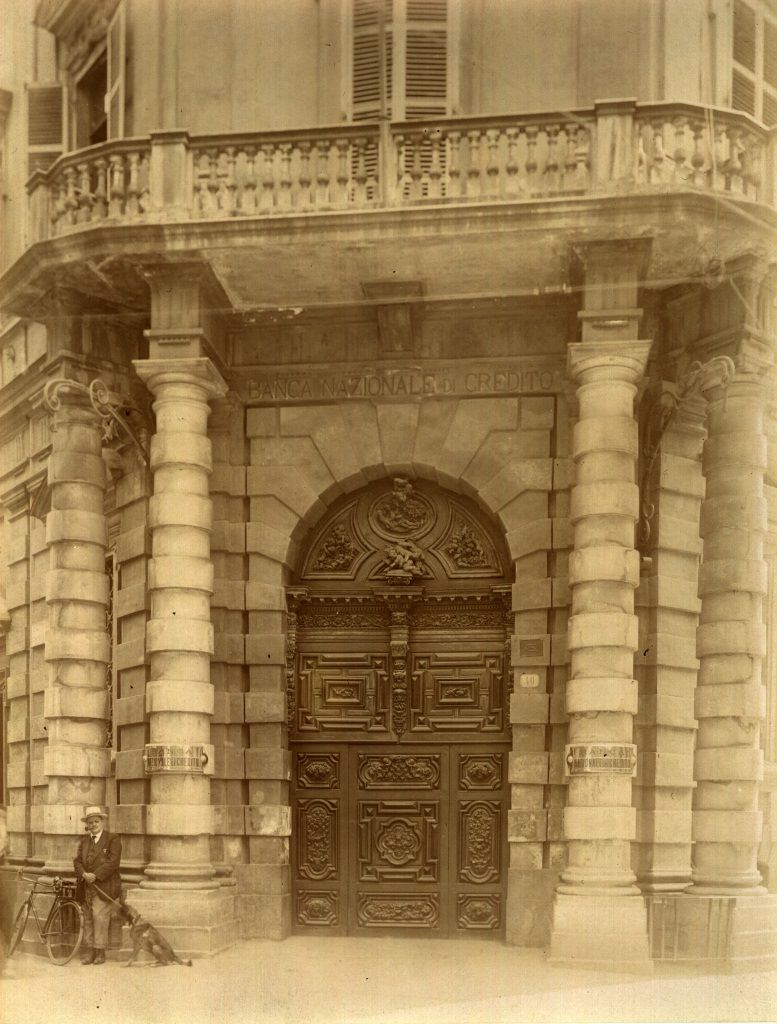
The door is the entrance to Palazzo Trucchi di Levaldigi, on the corner of Via XX Settembre and Via Alfieri, a short walk from Piazza San Carlo. The palace was built in the 1670s for Giovanni Battista Trucchi, Count of Levaldigi and General of Finance to Duke Charles Emmanuel II of Savoy. The design is attributed to Amedeo di Castellamonte, one of the architects who gave Turin its Baroque face.
The door has a story of its own. According to the most frequently cited sources, it was designed in 1675 by Pietro Danesi and carved in Paris, then brought to Turin already finished.
And this is where the mystery begins.
A door that wasn’t there
The best-known legend says the door appeared out of nowhere, in a single night. The day before there was nothing there; the next morning the people of Turin found themselves face to face with that staring devil.
Who could have put it there? The devil himself, of course. The story goes that a sorcerer’s apprentice had dared to summon him for no good reason, and that Satan, annoyed, punished him by imprisoning him forever behind that door, which from then on could never be opened from the inside.
There is also a less supernatural version, which I almost prefer. Count Trucchi had built many palaces in just a few years, and people whispered that his money was not entirely clean. Tired of the gossip, he supposedly decided to play a trick on his fellow citizens: he had the door shipped from Paris ready-made and installed in secret, at night. A prank, in other words. A prank that worked far too well.
What is carved on the door
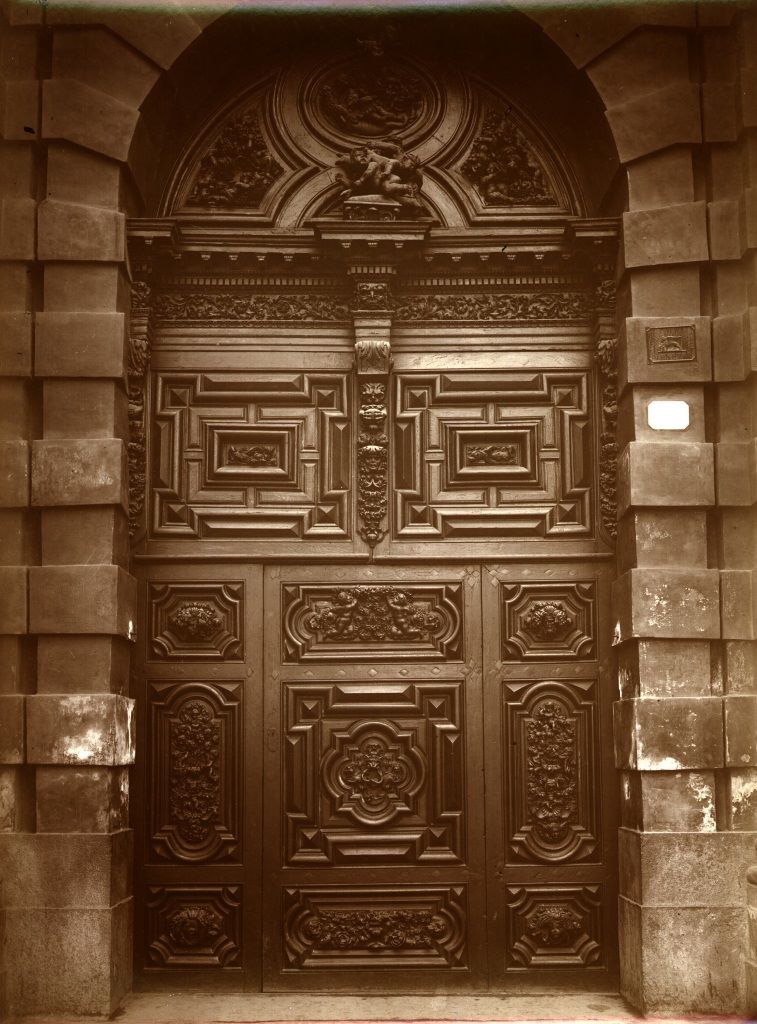
If you ever walk past, take a minute to look at it closely, because the devil is not the only strange thing about it. The wood is covered with flowers, fruit and cherubs, like many Baroque doors. But hidden among these decorations are monsters, dragons and lions, and even a mouse, which some read as another symbol of the devil. On the sides there are two human faces, one young and one old, as if the door wanted to remind everyone who enters that time passes for us all.
In the centre is the bronze knocker: the horned devil with an open mouth, from which come two serpents whose heads meet right in the middle. The knocker is always shiny, because so many people touch it.
The dancer stabbed during Carnival
In 1790, the legend says, the palace belonged to a princess of the House of Savoy, Marianna Carolina, who threw a great Carnival party there that lasted three days and three nights. At the end of the ballroom a hellish scene had been set up: dancers in tiny costumes moved among painted flames, writhing like damned souls.
During the show one of them collapsed, stabbed in the back. The sources don’t even agree on her name: some call her Emma Cochet, others Vera Hertz. The killer was never found, and neither was the weapon.
Ever since, they say, her ghost has wandered the rooms of the palace.
The officer walled up standing
The second story is even darker. Its protagonist is Major Melchiorre Du Perril, an officer who, according to the tale, worked for the army’s secret service and carried top-secret documents. One day he went into Palazzo Trucchi for a quick stop, leaving his carriage waiting outside. He never came out.
About twenty years later, during restoration work, builders knocked down a wall and found behind it a skeleton in uniform, walled up standing. It was him, or so the legend goes.
There is one detail that doesn’t add up, though. The disappearance is almost always dated 1817 and set “during the French occupation”. But the French left Turin in 1814, so one of the two must be wrong. That is exactly how you recognise a legend: it grows as it passes from mouth to mouth, and loses a little precision along the way.
The devil’s number
To complete the picture there are the numerical coincidences that occult enthusiasts love. In the tarot, the Devil is card number 15, and it is said that the palace once stood at number 15 on its street. According to several guides, the building also once housed a tarot card factory. And some add that tram line 15 runs right past it.
Coincidences? Probably. But they are exactly the kind of coincidences that, in Turin, instantly turn a place into a “cursed” one.
Turin and black magic
The Devil’s Door would not be so famous if it stood in another city. According to esoteric tradition, Turin is a corner of two magic triangles: one of white magic, together with Lyon and Prague, and one of black magic, together with London and San Francisco. That is why here every building with a strange symbol, every statue with an ambiguous gaze, immediately becomes part of a bigger story.
How to see it
The Devil’s Door is at Via XX Settembre 40, on the corner of Via Alfieri, in the centre of Turin. Today the palace houses a bank, BNL, so it can’t be visited like a museum, but you can admire the door from the street at any time. It is also a fixed stop on the “magic Turin” tours, especially on Halloween nights.
My advice: go in the evening, when the street is quieter. And if you feel like knocking, think of the sorcerer’s apprentice. Maybe he is still in there, waiting for someone to open the door.
The Devil’s Door is also on Emadion’s Mystery Map, together with all the other places I have written about.
🦋 Emadion lives through its readers. If this story kept you up at night, buy me a coffee: it helps me bring you the next nightmare.
☕ Support Emadion on Ko-fiSources
- The devil’s door, Piemonte Italia (official tourism site of the Piedmont Region)
- Portone del Diavolo (Devil’s Door), Atlas Obscura
- Le leggende dietro il Portone del Diavolo, nel cuore di Torino, La Gazzetta Torinese (Italian)
- L’oscura leggenda del Portone del diavolo, Torino Free (Italian)
- Palazzo Trucchi Levaldigi, Angoli Torino
- Il portone del diavolo. Tutti sicuri che sia solo una leggenda?, GazzettaTorino (Italian)
- Photo of the door: Mastrocom, Wikimedia Commons (CC BY-SA 4.0)
- Historical photos: Mario Gabinio, 1923 and 1925, Wikimedia Commons (CC BY 3.0 IT)