 Posted by
Tik… tik… tik…
In the Philippine countryside, at night, there is a sound nobody wants to hear. A light ticking that seems to come from far away, from the end of the road or from the woods. If you hear it, the elders say, don’t breathe a sigh of relief. Because it is exactly when the sound fades that the creature is closest. It may already be on your roof.
Its name is the Aswang, and it is the most feared monster in the whole archipelago. You might think it is a recent invention by some horror fan, maybe a creepypasta. In fact, people have been talking about it for centuries.
A monster with a thousand faces
Describing the Aswang as a single creature is almost impossible. In Filipino folklore the word is a big umbrella. It covers vampires, corpse-eating spirits, witches, shapeshifters that turn into dogs, cats or pigs, and creatures that suck out their victims’ insides. A bit vampire, a bit werewolf, a bit witch: all of Europe’s horrors in one being. Over time it has had many names, including Tik-Tik and Sok-Sok, and it is almost always imagined as a woman, although there is a male version too.
Its most disturbing trait, though, is another one. By day the Aswang is an ordinary person. It could be the kind neighbor, the market seller, the old woman who lives at the edge of the village. Only at night does it show its true nature.
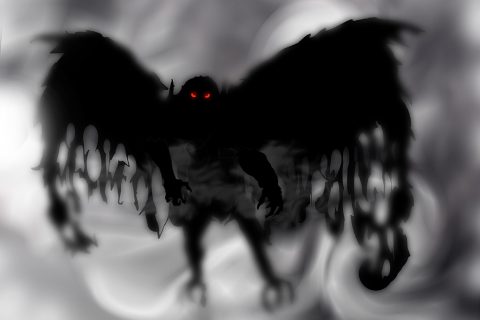
In some versions its night form is a very pale, thin woman with completely white eyes. Her face is empty, her clothes are rags, and she shuffles along like a zombie. In others it becomes a huge black dog with burning eyes, a wolf walking upright or a monstrous pig. And some say that, like vampires and zombies, it can infect its victims with a bite, turning them into Aswang too.
 That is why, in the villages, suspicion could fall on anyone.
Legends say it has bloodshot eyes and a very long, thin tongue, like a proboscis. It would slip it through the gaps in the roof to reach its favorite prey. These are the sick, children and above all pregnant women, whose unborn babies it craves.
The woman who splits in two
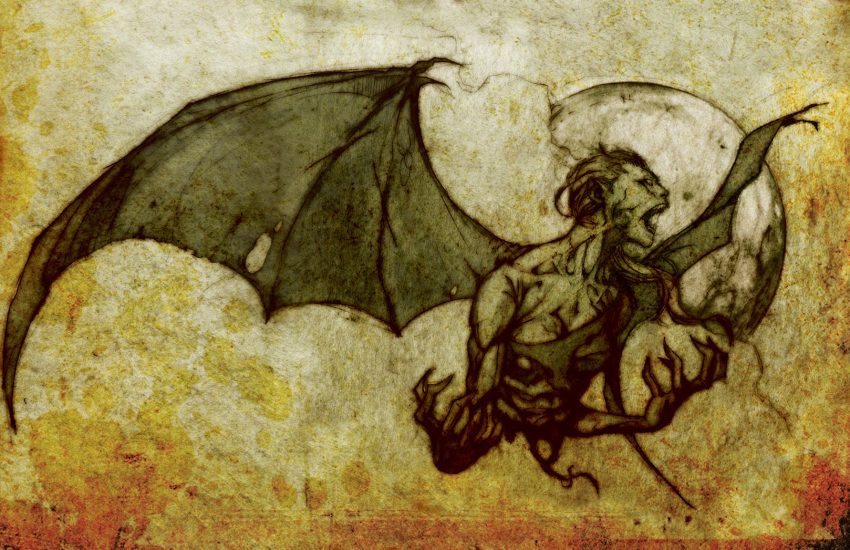
Among the many forms of the Aswang, one has become famous all over the world: the manananggal. By day she is a beautiful woman. At night, in a hidden place, her upper body tears away from the waist down. Two huge bat wings unfold, and the torso flies off into the dark looking for victims, trailing its entrails behind it. The legs stay where they are, still, waiting for her.
According to tradition, that is her weak spot. Whoever finds the abandoned lower half can cover it with salt, garlic or ash: the creature will no longer be able to rejoin her body, and she will die at dawn.
Then there are the tik-tik and the wak-wak, creatures like night birds named after the sound they make. And that sound, as we have seen, is a trick: it is louder when the Aswang is far away and softer when it is very close.
An ancient terror
Anyone who thinks the Aswang is a modern invention, born from some horror movie, is badly mistaken. As early as the sixteenth century, the Spanish colonizers noticed that it was the most feared creature in the Philippines. The Franciscan friar Juan de Plasencia, who studied the beliefs of the local peoples, wrote about beings called “osuang” that roamed the villages. He also described the manananggal, which appeared at night without a head and without entrails.
People know the legend in almost every part of the country. But in one province it runs deeper than anywhere else: Capiz, in the Visayas. Other traditions also place it in Mindanao and on the islands of Bohol and Negros.
A curious belief even explains why the Aswang stays on the islands: it cannot swim, and if it tried to cross the sea it would drown. There, the Aswang is so much a part of local culture that some people still swear they know families “touched by the curse”.
But where does a monster like this come from? Scholars have offered several explanations. For some, the Aswang is the exact reverse of the values of traditional Filipino society: everything a good neighbor should never do. For others, the legend was a way to explain tragedies that medicine could not yet deal with, such as miscarriages, infant deaths and sudden illnesses. And some point out that Spanish missionaries used this figure to demonize the old beliefs and the healers of indigenous communities.
How to protect yourself
Folklore, of course, also offers remedies. People say the Aswang fears garlic, salt and holy water. You can also drive it away with a stingray’s tail, used as a whip. Like vampires, it supposedly cannot stand the crucifix. Lost in the woods with no garlic, salt or crosses? Tradition has some comfort: you can wound an Aswang like any human being.
Garlic on doors and windows, the crucifix… remind you of anyone? To recognize one, you only need to look into its eyes: your reflection in its pupils would appear upside down.
The Aswang and the CIA
The most incredible part of this story, however, is not a legend. It really happened, in the 1950s.
After the Second World War, the Philippine government was fighting the Huks with the support of the United States. The Huks were a peasant guerrilla movement born during the resistance against the Japanese. To help defeat them came an American officer named Edward Lansdale, a former advertising man who had moved into psychological warfare and was already working with the CIA. Lansdale believed that the most effective propaganda had to be built on people’s fears. So his team studied the superstitions of the areas held by the rebels.
And they chose the Aswang.
First, Lansdale’s men spread the rumor in the villages that an Aswang was roaming the hill where the Huks were camped. Then they waited for the rumor to reach the rebels. Finally, they set an ambush along a trail and seized the last man of a patrol. They killed him and punched two holes in his neck. Then they hung him upside down to drain his blood and left the body on the trail, where his comrades would find it.
The next day, terrified, the Huks abandoned the hill. Lansdale told the story of the operation himself in his memoir, published in 1972. According to researchers, Lansdale’s men used the trick only once. Still, it became one of the most famous, and most macabre, examples of psychological warfare in history.
A monster that will not die
Today the Aswang lives on mostly in films, comics and TV series, in the Philippines and beyond. But in the countryside there are still people who shut their windows tight at night and keep a clove of garlic by the bed. Just in case.
After all, you can recognize European vampires: they have fangs, they fear the sun, they sleep in coffins. Not the Aswang. The Aswang could be anyone. Even the person who said good morning to you today.
Had you ever heard of the Aswang? Which of its forms scares you the most?
Watch the story in 30 seconds on our YouTube channel Emadion Dark Tales.
🦋 Emadion lives through its readers. If this story kept you up at night, buy me a coffee: it helps me bring you the next nightmare.
☕ Support Emadion on Ko-fiSources
- Wikipedia, “Aswang”.
- HowStuffWorks, Aswang: Feeding on Baby Blood and Preying on Pregnant Women.
- Mental Floss, False Fang: When the CIA Staged a Vampire Attack.
- Edward G. Lansdale, In the Midst of Wars, 1972.