 Posted by
It is 11:25 a.m. on Monday, 12 September 1994. A man walks into the emergency room of Santa Maria degli Ungheresi hospital in Polistena, in the province of Reggio Calabria, southern Italy, carrying a baby girl. Her name is Maria Ilenia Politanò. She is just over fifty days old and weighs a little more than four kilos. The doctors know at once there is nothing they can do. She has been dead for hours, and her body is covered in bruises. Within a day police will learn she was killed during an all-night family “exorcism”, in front of her parents, her grandmother and several aunts and uncles, all convinced the devil was hiding inside her.
It is one of the most harrowing Italian crime stories of the 1990s, and one of the hardest to understand. To piece it together we compared the original reports in the Italian dailies l’Unità and il manifesto, Calabrian local media, TV documentaries and later criminological analyses.
Polistena, the Villa district
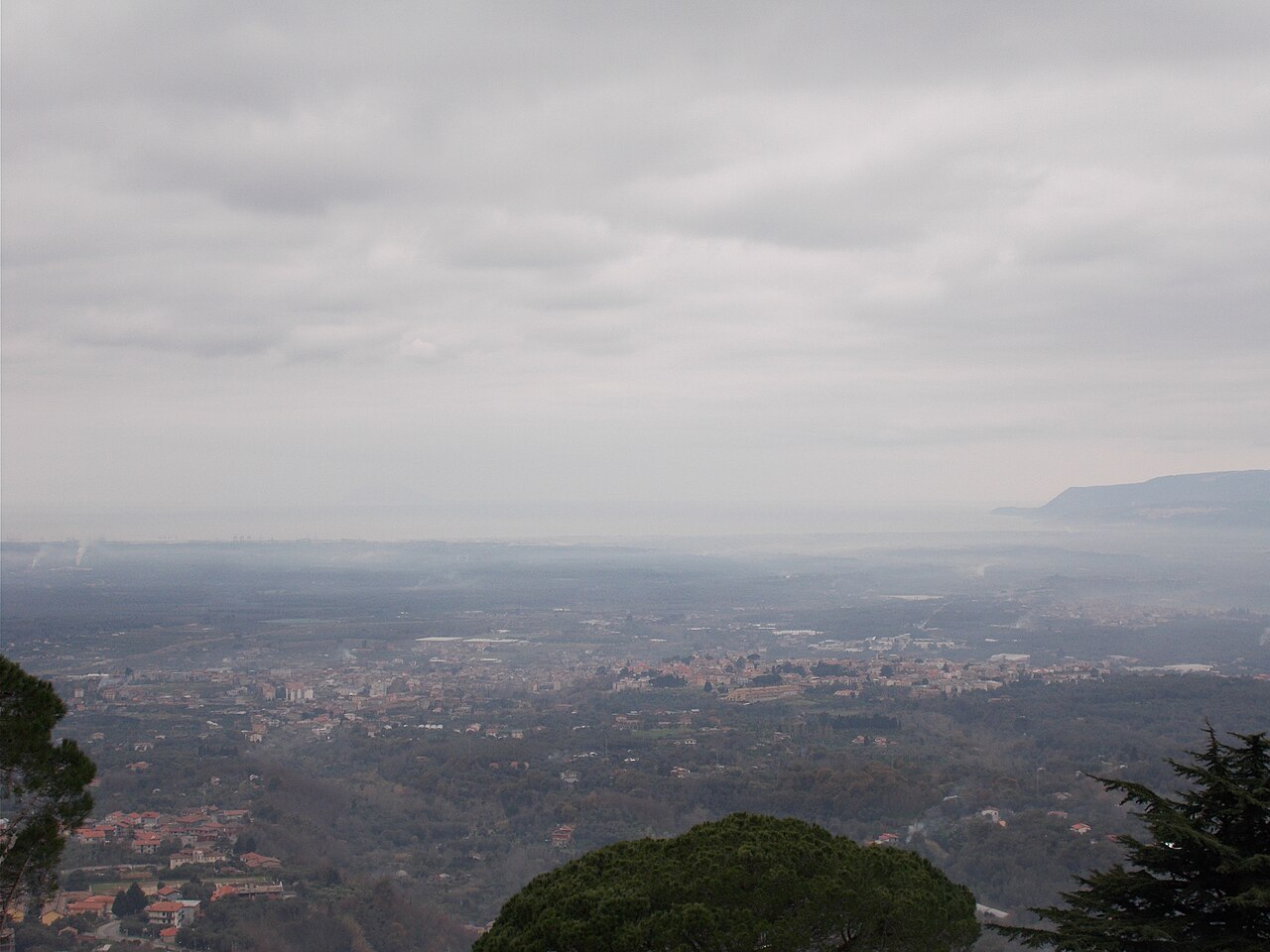
Polistena is a town of about ten thousand people on the Gioia Tauro plain, among citrus groves at the foot of the Aspromonte mountains. The Politanò-Lumicisi family lived on the outskirts, in the Villa district, in a house on the corner of Via Esperia and Via Ammendolea, near the road to Melicucco. Upstairs lived Laura Lumicisi, 20, and her husband Michele Politanò, 23, both farm labourers. Downstairs lived Laura’s mother, Rosina Lumicisi, 47.
After the tragedy, neighbours described them as “lovely people”, a quiet, hard-working family. The parish priest of the town’s main church, Father Giuseppe Demasi, said he had never suspected a thing.
A death and a “haunted” house
It all started about a year earlier, with a death. Laura’s father died of cancer, and the family came to believe the illness had been caused by a curse, the evil eye. Soon afterwards Laura, now pregnant, began hearing strange noises in the house, feeling sudden chills and seeing shadows. According to an analysis by the Italian criminology association AICIS, the family also believed the house had been built on an old, deconsecrated cemetery.
Laura first turned to the Church, and two priests came to bless the house. But the fear stayed. Then Mirella Lumicisi, 39, stepped in. Most sources say she was Rosina’s sister; others call her Laura’s older sister. With her husband Vincenzo Fortini, 41, a baker born in Velletri and living in Genzano, near Rome, she found someone in Rome who, they said, could fix the problem.
“Yvette the witch”
She called herself Yvette Duval. Her real name was Francesca Giananti, a self-styled psychic from Rome. In the summer of 1993 she came to Polistena and stayed in the house on Via Esperia for about two weeks. Her predictions were terrifying. According to later accounts, she said a curse threatened mother and unborn child, that Laura would die in childbirth and that the baby would not live to six months.
To lift the curse she asked for a huge sum for a family of farmhands. Sources disagree on the amount: most say she first wanted 25 million lire and settled for 3 million; the Calabrian site La Nuova Calabria says 24 million, cut to 4. There followed weeks of séances, hypnosis, a moving table and a Ouija board.
The key moment came on 27 August 1993, just before she went back to Rome. According to the family, she “passed on” her powers to three people so they could carry on the fight against Evil: Vincenzo Fortini, Laura’s brother Domenico Lumicisi, 22, and a cousin, Maria Barnabà, 21. From then on the three believed they were guided by holy figures: Fortini by Padre Pio, the famous Italian friar and saint, whose reincarnation he came to believe he was; Domenico by St Francis; Maria by Our Lady of Lourdes.
At trial the psychic told a different story. She said she had only tried to help and had “cleansed” the house with incense, holy water and salt.
A baby who cried
Laura did not die in childbirth. Maria Ilenia was born healthy at the end of July 1994. But she cried a lot, as many newborns do, sometimes inconsolably. No one thought of taking her to a paediatrician. In a family that had spent a year in fear of a curse, the crying became a sign: the Evil One, driven out of the house, had hidden inside the baby.
Some accounts say the psychic came back after the birth and declared the baby possessed. Others, including the court rulings as reported in the press, stress that she was not there on the night of the killing.
The night of 11 September
On Sunday, 11 September 1994, the family gathered for dinner. Michele had come back with the baby from the Santa Caterina citrus grove where he worked. According to l’Unità reporter Aldo Varano, Vincenzo Fortini had already set out the tools for the “rite”: Lourdes water, salt and what was described as “earth from Malta”.
After dinner a long prayer vigil against the devil began. At least eight people were in the house; some reports say ten. They prayed, called on the saints and performed rites on one another for hours. At about 4 a.m., investigators said, came what the papers called the “turning point”: the group became convinced that Satan’s last hiding place was the baby’s body, and decided to fight the “final battle”.
What happened next was reconstructed from the autopsy and from the relatives’ confessions. The baby was undressed and doused with holy water, then struck, including on the head, and violently shaken while held upside down by her legs. The court found that Vincenzo Fortini inflicted the blows. The coroner concluded that Maria Ilenia died of cardiac arrest caused by widespread bleeding in the brain from the blows to her skull and the shaking, with severe internal injuries as well.
By morning she was dead, but no one called for help. At 7 a.m., l’Unità reported, Michele went to Mass, hoping prayer could bring her back. Another account, on the Italian site Vitadamamma, says it was Laura who went to church to pray. Only at 11:25 was the baby taken to hospital.
At Polistena hospital
Who brought her in? Again, sources differ. L’Unità of 14 September 1994 names her uncle Vincenzo Lumicisi; many later accounts say it was Vincenzo Fortini. Some recent articles place the scene in a hospital in Reggio Calabria, but the reports of the time clearly say Polistena.
The emergency room record noted a baby dead for at least six hours, with bruises and signs of violence all over her body. The doctors called the police. Polistena’s police chief was Carmine Grasso; Inspector Antonino Tramontana questioned Laura, who told him: “The devil took her away.” In his first interview Fortini claimed he had briefly brought the baby back to life before the devil snatched her from his hands again.
The arrests
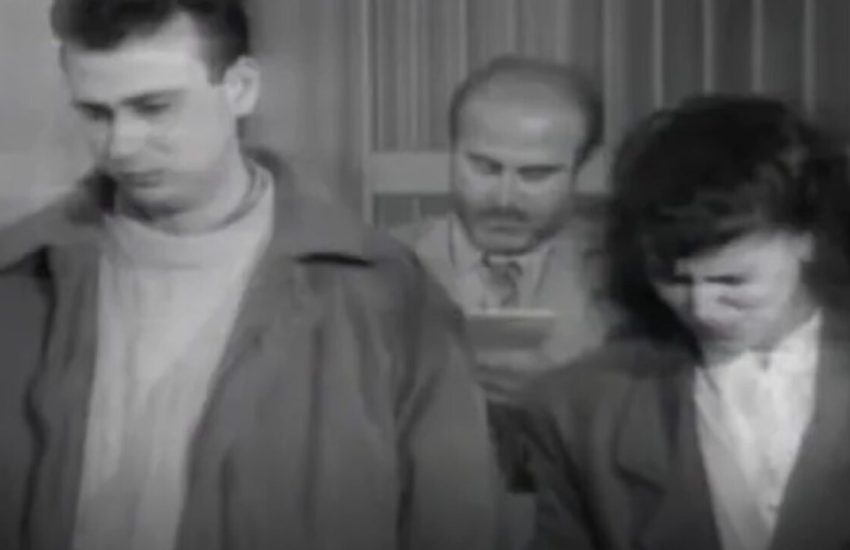
The investigation was led by the chief prosecutor of Palmi, Elio Costa. Vincenzo Fortini and Domenico Lumicisi were detained on aggravated murder charges. The parents, Michele Politanò and Laura Lumicisi, grandmother Rosina, uncle Vincenzo Lumicisi, 28, aunt Marisa Pettè, 22, and cousin Maria Barnabà were also jailed. Mirella Lumicisi, Fortini’s wife, who had multiple sclerosis, was charged but not held.
The story made national headlines. The local bishop, Domenico Crusco, said he was “horrified”, while insisting that Satan does exist. Monsignor Corrado Balducci, a well-known Vatican demonologist, said it was no exorcism: only an authorised priest can perform one, and he would have sent that family to a psychiatrist. The anthropologist Ida Magli told l’Unità that fear of Evil thrives where education is poorest, and accused the Church of feeding it by talking too much about the devil.
The relatives go free
Investigations and expert reports took months. On 30 May 1995, after about nine months in custody, the Palmi Court of Assizes released every relative but one: Vincenzo Fortini. According to the court, il manifesto reported the next day, he alone, “convinced he was the reincarnation of Padre Pio”, had inflicted the injuries that killed the baby.
The 1996 verdict
The trial before the Palmi Court of Assizes ended in May 1996: on the 3rd according to Vitadamamma, on the 4th according to a blog of the newspaper Il Centro.
- Vincenzo Fortini was sentenced to 18 years in prison as the only person who struck the baby. The court rejected the prosecution’s request to add the aggravating factor of cruelty, finding that he was not fully in control of his faculties, convinced as he was that he was Padre Pio.
- The parents, grandmother, aunts, uncles and cousin were acquitted. Press reports summed up the reasoning in three words: “ignorance, superstition and despair”. According to AICIS, the judges saw them as dominated by the climate in the family rather than as accomplices.
- Francesca Giananti, “Yvette”, was not held responsible for the death, since she was not there that night, but was convicted of defrauding the family: one year and eight months according to most sources, one year and three months according to Il Centro.
When the verdict was read, Laura burst into tears. Whatever the judges decided, she said, her daughter was not coming back.
Prosecutor Elio Costa, who later became mayor of Vibo Valentia, said he believed the parents had been driven to behave in ways completely at odds with the love they felt for their child.
What happened next
Here the trail goes cold. In the public sources we checked we found no reliable reports of an appeal or a Supreme Court ruling for Vincenzo Fortini or the psychic. Vitadamamma says Fortini spent thirteen months in pre-trial detention, but not what happened after his conviction. The last court decision reported in the press is therefore the first-instance verdict of May 1996. If you know more, let us know.
Almost nothing has been heard of the people involved since. The case was retold on Italian TV in 1998 by Franca Leosini on Storie maledette, according to La Nuova Calabria, and in 2016 in the first episode of A sangue freddo on the Calabrian channel LaC, as well as in several Italian podcasts.
Real exorcism and DIY exorcism
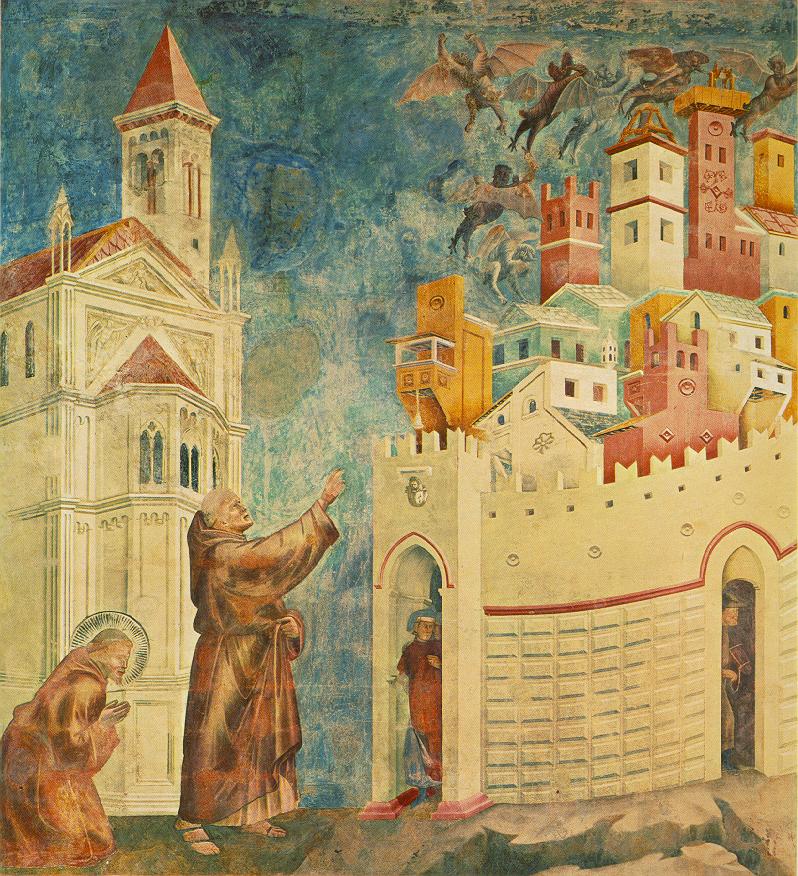
Polistena is often called an “exorcism” case, but for the Catholic Church it was nothing of the kind. Canon law says a solemn exorcism can only be performed by a priest with the bishop’s express permission, and the rite in use since 1999 tells exorcists first to rule out physical and mental illness. What happened in Polistena was improvised by people with no religious authority at all, born of fear, grief and a paid psychic.
It was not an isolated case. Reporters at the time recalled a girl killed a few years earlier in the province of Albacete, Spain, during a family “exorcism”, the case known as the Almansa exorcism. In 2005, at a monastery in Tanacu, Romania, a young novice, Maricica Irina Cornici, died after a priest and several nuns who believed she was possessed kept her tied to a cross for days.
The phenomenon has not gone away in Italy either. In February 2024 in Altavilla Milicia, near Palermo, a woman, Antonella Salamone, and her sons Kevin, 16, and Emanuel, 5, were killed during what investigators described as a series of “purification” rites against the devil. In July 2026 the Palermo Court of Assizes sentenced her husband, Giovanni Barreca, and two self-styled holy figures, Sabrina Fina and Massimo Carandente, to life in prison. It is a first-instance verdict and not yet final: all three are presumed innocent until it is upheld on appeal. The couple’s 17-year-old daughter, tried in juvenile court, was acquitted on appeal after being found unable to understand her actions.
The real demon
What is left of Maria Ilenia’s story thirty years on? A poor family struck by grief, in a place where superstition lived alongside faith. A woman from Rome who turned that fear into money. A man who believed he was a saint, and around him adults who watched, prayed and said nothing for an entire night. And a verdict that, by acquitting almost everyone, mostly described a collective helplessness.
Maria Ilenia Politanò lived for fifty-one days. She cried, as all babies cry. The demon her family tried to drive out was never inside her. It was in the fear, the ignorance and the isolation of a house on the edge of Polistena, where that night no one found the courage to pick up a baby girl and take her to a doctor.
For other “exorcisms” that ended in tragedy, read The exorcism of Almansa, the worst infant homicide in Spain and The true story of the exorcism of Clara Germana Cele.
🦋 Emadion lives through its readers. If this story kept you up at night, buy me a coffee: it helps me bring you the next nightmare.
☕ Support Emadion on Ko-fiSources
- “E in dieci uccidono bimba di due mesi” – l’Unità, 13 September 1994 (PDF archive, Italian)
- Report from Polistena – l’Unità, 14 September 1994 (PDF archive, Italian)
- Esorcismi. Uccisero Ilenia. Scarcerati – il manifesto, 31 May 1995 (Italian)
- La maga Yvette e l’esorcismo della piccola Maria Ilenia – La Nuova Calabria (Italian)
- Esorcismo di Maria Ilenia Politanò, uccisa a soli 50 giorni – Vitadamamma (Italian)
- Analisi del caso Maria Ilenia Politanò – AICIS Criminologia (Italian)
- Uccisa a due mesi dallo zio durante un “esorcismo” – Fanpage (Italian)
- Polistena, la storia di Maria Ilenia Politanò – Zmedia (Italian)
- L’esorcismo di Polistena – Domenico Arcudi’s blog (Italian)
- 12 settembre – Il Centro blog (Italian)
- Documentary: the fatal exorcism of baby Maria Ilenia (A sangue freddo, LaC) – FAVIS onlus (Italian)
- Massacro di Altavilla Milicia, Barreca e i complici condannati all’ergastolo – Il Fatto Quotidiano (Italian)