

 Posted by
On 24 November 1998, at the rubbish dump in Hyvinkää, a quiet town north of Helsinki, someone spotted a human leg among the waste. It was the start of an investigation that uncovered what the Finnish press would call the most gruesome killing in the country’s history. At its centre was a 23-year-old black metal fan and self-declared Satanist: Jarno Sebastian Elg.
Almost thirty years later, very little is known about that night. Not for lack of evidence, but because the judges chose it that way: most of the trial records were sealed for 40 years. What follows is pieced together from what the courts made public, press reports from the time and the few accounts given by the people involved.

Hyvinkää in the late 1990s
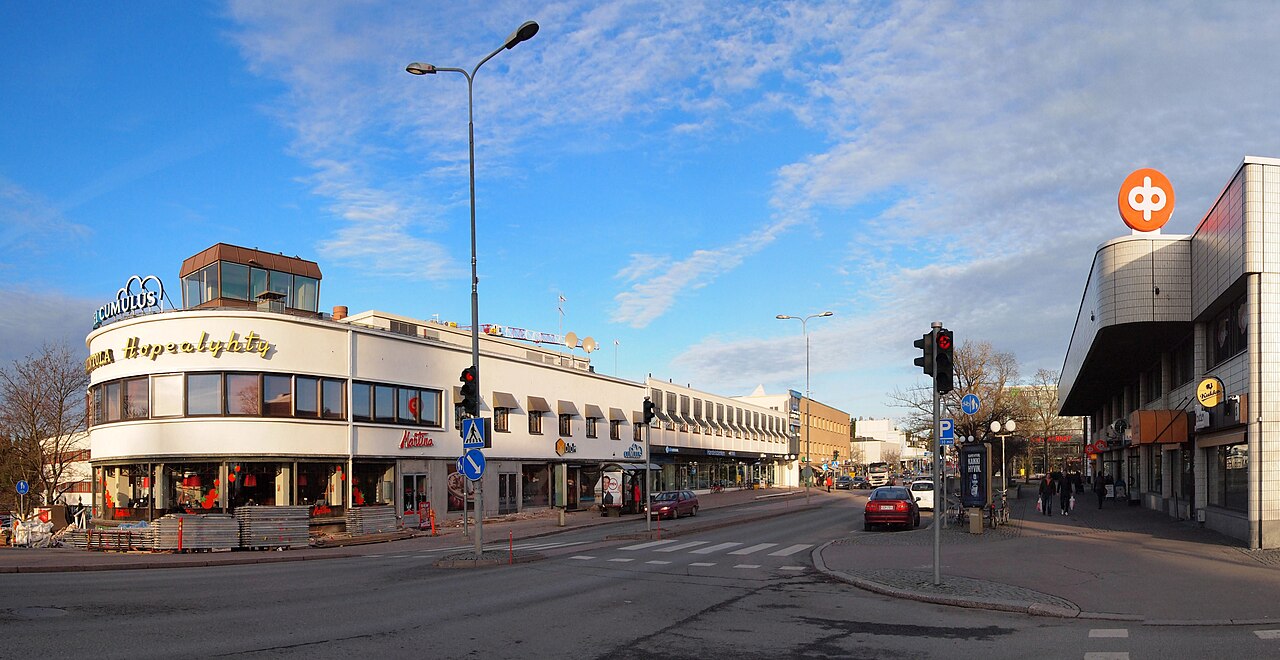
Hyvinkää lies in the Uusimaa region, about 50 kilometres north of Helsinki. In the late 1990s it had around 40,000 inhabitants. It was a provincial town known for its industrial past and its old sanatoriums, linked to the capital by rail. Nearby were the towns of Järvenpää, Kerava and Mäntsälä, home to most of the young people in this story.
These were strange years for Finland. News of church burnings and killings in the Norwegian black metal scene was drifting across the border. In Finland, too, something was building that religious studies scholar Tuomas Äystö of the University of Helsinki has called a “Satanic panic”. In 1993 the tabloids had presented two killings as Satanic ritual murders. Gangs of teenagers had knocked over gravestones and sprayed pentagrams in cemeteries. But until 1998 it was mostly fear and suspicion. Hyvinkää was the case that seemed to make the nightmare real.
The people involved
Jarno Sebastian Elg was born in 1975. He lived in a flat in a block on Torikatu, the market street in the centre of Hyvinkää. He called himself a Satanist and was a black metal fan. According to some press accounts he had already been in trouble with the law as a teenager.
With him were his girlfriend, Terhi Johanna Tervashonka, 17, from Järvenpää; Mika Kristian Riska, 20 (21 according to the Associated Press), from Mäntsälä; and a 16-year-old boy from Kerava whose name was never released. The victim was a 23-year-old man. His name has also been kept private, by court order and out of respect for his family.
The night of 20-21 November 1998
On Friday 20 November 1998 the group spent the evening drinking in Järvenpää. According to English Wikipedia, they also stopped by a parish venue that night and got into a heated debate about Satanism and Christianity. Late that night they all moved on to Elg’s flat in Hyvinkää.
There, in the early hours of Saturday 21 November, things turned violent. Elg punched the victim and knocked him unconscious. The young man was bound with duct tape, and tape was wrapped around his whole head. Elg and Tervashonka then cut him with scissors on various parts of his body. According to accounts of the case, an album by the Norwegian black metal band Ancient, The Cainian Chronicle, was playing in the room.
The victim suffocated because of the tape over his face.
After death
What happened next is why the case entered Finnish criminal history. It is also the part the judges chose to keep hidden. What is known for certain is that the body was mutilated and dismembered, and that Elg was also convicted of eating parts of it. That is why the case is remembered as the “cannibal Satanist” murder. According to accounts of the case, necrophilic acts were also committed on the body.
The remains were divided up and dumped in several of the town’s waste containers. From there, three days later, they reached the landfill.
Discovery and investigation
The first body part, a leg, was found on 24 November 1998. Police began combing the landfill and after about a week also recovered part of the torso. Examination of the remains showed that the victim was a young man who drank heavily. Detectives guessed he might be on social welfare, and that lead gave them a name. A DNA test confirmed his identity.
From there, tracing the people who had spent his last night with him was not hard. On 8 December 1998 police arrested all four. According to press reports, objects linked to Satanic imagery were found in the Torikatu flat. In 2018 the tabloid Ilta-Sanomat published, for the first time, a photo of what officers found in Elg’s wardrobe.
More than 400 articles
As the details leaked out, Finland was horrified. Äystö, who studied the phenomenon in his book Paholaisen perilliset. Satanismipaniikin synkkä historia (“The Devil’s Heirs: The Dark History of the Satanic Panic”), counts more than 400 articles on the Hyvinkää case. It was the peak of Finland’s Satanic panic. From day one, journalists took it for granted that this was a Satanic ritual killing.
The case also earned a section in the Finnish edition of Lords of Chaos, the well-known book on the black metal scene. It split the metal world, too. Many musicians accused the media of using the genre as a scapegoat. Demonos Sova of the Finnish band Barathrum distanced himself from the killing and dismissed the perpetrators as lunatics. But there were other voices. The fanzine I Return to Darkness openly declared its support for the murder, and the influential Norwegian zine Slayer ran a piece defending the killers’ point of view. Years later its author, Jon “Metalion” Kristiansen, called it a “stupid article”.
The trial
The trial was held behind closed doors at Hyvinkää District Court. The verdict came on 11 August 1999. It was reported by the Associated Press and, the next day, by Helsingin Sanomat, Finland’s leading daily, under the headline “Three youths jailed for the Hyvinkää landfill murder”.
- Jarno Sebastian Elg, 24: life imprisonment for murder, for leading the others into the ritual that included the torture, and for eating parts of the victim’s body.
- Terhi Johanna Tervashonka, 17: convicted of murder committed, in the wording of Finnish law, “without full understanding” of her actions. A psychiatric assessment found her partially insane. Sources disagree on her sentence. The AP reported two years and six months. Finnish press reports and English Wikipedia give eight years and six months, the sentence upheld on appeal.
- Mika Kristian Riska: two years and eight months for assault and for violating the peace of the dead, the offence that covers desecrating a body or grave.
- The 16-year-old: acquitted. The court accepted that Elg had forced him to take part.
The judges wrote that the three convicted had been “strongly influenced by Satanism”. The Helsinki Court of Appeal upheld the main sentences but made one point clear: the link to Satanic worship carried no weight in sentencing. The court was judging a killing, not a religion.
The secret
The most unusual part of the case is the secrecy. Hyvinkää District Court held the trial in private and ordered the case file sealed for 40 years, until around 2039. It gave two reasons: two of the defendants were minors, and the facts touched on extremely sensitive aspects of private life, starting with the victim’s. Only the charge, the sentencing demand and a short description of the offence were made public, with nothing that could identify the victim. The judgment itself was secret too, apart from its operative part, the laws applied and a court press release. The Court of Appeal left all of that unchanged.
It was Tervashonka who challenged it. Her lawyers argued that the secrecy hurt her: the prosecution had been able to make its version public, while she had not. The issue went to the Supreme Court of Finland, which partly agreed with her in ruling KKO:2002:28. Secrecy as such was lawful, the judges said, but a fair trial means treating both sides equally, especially in a case followed by the media. Her written defence could therefore be released, without attachments and without details about the victim. The victim’s family had opposed it.
So, on 9 April 2002, Finns heard her side. In her reply to the prosecutor’s summons, filed in March 1999, Tervashonka denied ever being a Satanist. She argued that the young man’s death was an unexpected result of carelessly applied tape, that nothing had been planned, and that what was done to the body after death did not prove the special cruelty the prosecution alleged. Her lifestyle, she added, should not be used to judge her guilt.
“I don’t see it as murder”
Tervashonka also spoke to the press. In an interview with the magazine Alibi (issue 8, 2000) she said that she and the others, very drunk, had tied up and gagged a noisy member of the group with duct tape, without realising he would suffocate. She said she did not consider it murder and denied any link to devil worship. Her account, of course, does not explain what was done to the body, and the courts did not accept it.
What happened to Terhi Tervashonka
Tervashonka was paroled in spring 2003. That was not the end of her story. In June 2007, in Vaajakoski near Jyväskylä in central Finland, she killed a 47-year-old man with a billhook (vesuri in Finnish). By then she had changed her surname. She was convicted of manslaughter: nine years at first instance, as Ilta-Sanomat reported at the time. English Wikipedia and other accounts give a final sentence of ten years.
In 2011 the Finnish press reported that she had absconded from an open prison shortly before her scheduled release, and was caught again. In 2018 Ilta-Sanomat wrote that she had no recent convictions. Since then her name has vanished from the news. Finnish forums are full of rumours about her fate, none of them confirmed.
What happened to Jarno Elg
In Finland a life sentence rarely means life. Since 2006 the Helsinki Court of Appeal has ruled on parole for lifers. Release is normally possible after at least 12 years (10 for those who offended before 21) and is followed by three years’ probation. In recent decades Finnish lifers have served about 15 years on average.
According to some press accounts, in 2011 Elg was involved in a fight at a Helsinki bar while on prison leave and was sent back to a closed unit. In 2012 the Court of Appeal turned down his first parole application. On 23 December 2014 the same court granted him parole, citing, according to these sources, the studies he had completed inside and his progress. He actually walked free on 1 February 2016, after about 17 years behind bars.
Since then almost nothing is known about him. There are no reports of new convictions. He has never given an interview, and his address and job are unknown. If nothing interrupted it, his probation ended around 2019. Mika Kristian Riska, who served his short sentence in the late 1990s, has also disappeared from public view, as has the acquitted boy.
A case still under lock and key
Finnish TV has returned to the case several times. The documentary series Rikoksen anatomia devoted an episode to it, “Hyvinkään paloittelusurma”, aired on 29 October 2020, and the series Rikospaikka covered it as well. But the documents that could explain everything, the psychiatric reports, the witness statements, the police records, will stay closed for years to come.
The secrecy divides people. Some see it as censorship that stops us understanding how four small-town youngsters ended up doing what they did. Others see it as the only way to protect the memory of a 23-year-old man whose name we still do not know, and the grief of a family that opposed any further publicity. When the file can finally be opened, around 2039, more than forty years will have passed since that November night. Perhaps then we will learn what really happened in the flat on Torikatu.
For more cases of Satanism and cannibalism, read the story of Nikolai Ogolobyak, who killed and ate teenagers in the name of Satan, and of Sawney Bean, the Scottish cannibal.
🦋 Emadion lives through its readers. If this story kept you up at night, buy me a coffee: it helps me bring you the next nightmare.
☕ Support Emadion on Ko-fiSources
- Jarno Elg – Wikipedia
- Jarno Sebastian Elg – Murderpedia (with the Associated Press report of 11 August 1999)
- Paloittelusurmasta tuomittu kiisti olleensa saatananpalvoja – Kaleva/STT, 9 April 2002 (Finnish)
- Supreme Court ruling KKO:2002:28 on the publicity of trial records – Minilex (Finnish)
- Paholaisen perilliset – kun saatananpalvonta rantautui Suomeen – Verkkouutiset (Finnish)
- Kirkonpolttajan tunnustukset – Kansan Uutiset, 2008 (Finnish)
- Life imprisonment in Finland – Wikipedia
- Rikoksen anatomia – Hyvinkään paloittelusurma – TheTVDB (Finnish)
- Rikospaikka – Hyvinkään paloittelumurha 1998 – TheTVDB (Finnish)
- Missä Jarno Elg on nyt Hyvinkään murhatapauksen jälkeen? – Viihde.io (Finnish)